Blindness and the Road to Damascus

by Steve Rockwell

The problem of making images of what we see and don’t see, what we believe and don’t believe manifests at critical points in history. As events unfold and are recorded, their divisions and distinctions are made clear.

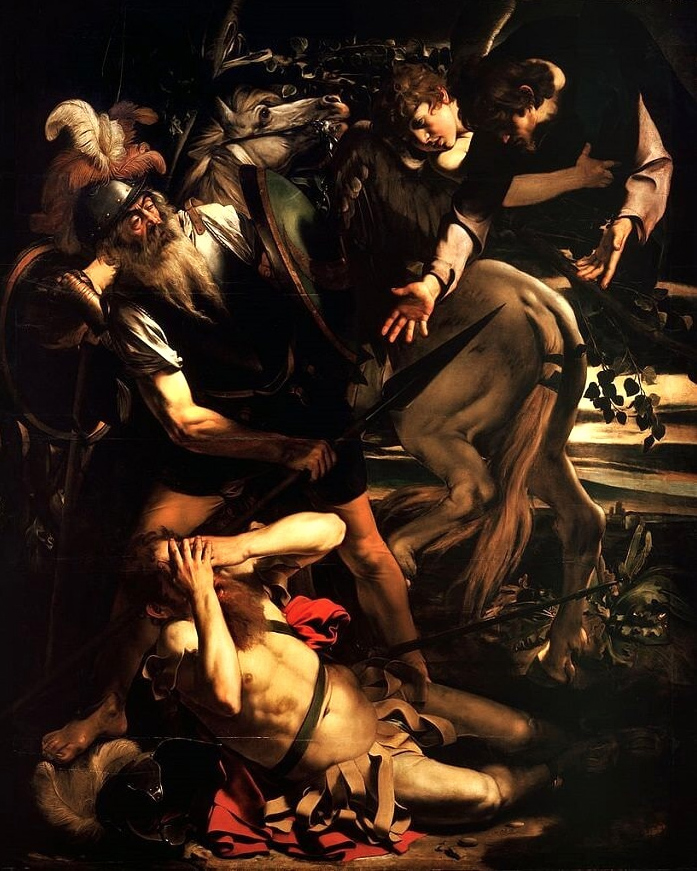
Caravaggio, The Conversion of Saint Paul (c. 1601)Michelangelo Merisi da Caravaggio, The Conversion of Saint Paul (c. 1601), oil on cypress wood (later transferred to canvas). Originally painted for the Cerasi Chapel in Rome but rejected by the patron's heirs, the work is now in the Palazzo Odescalchi
Michelangelo Merisi da Caravaggio, The Conversion of Saint Paul (c. 1601), oil on cypress wood (later transferred to canvas). Originally painted for the Cerasi Chapel in Rome but rejected by the patron’s heirs, the work is now in the Palazzo Odescalchi

The Cerasi Chapel in Rome rejected this 1601 first version of Caravaggio’s Conversion of St. Paul. Crowded, theatrical, and filled with supernatural action, it’s dramatically different from the later more well-known painting. Here, Caravaggio paints a visible Christ in the heavens accompanied by an angel. Saul has just fallen from his horse. Soldiers, a rearing horse, and swirling movement fill the composition as a brilliant light pours downward from the divine apparition.

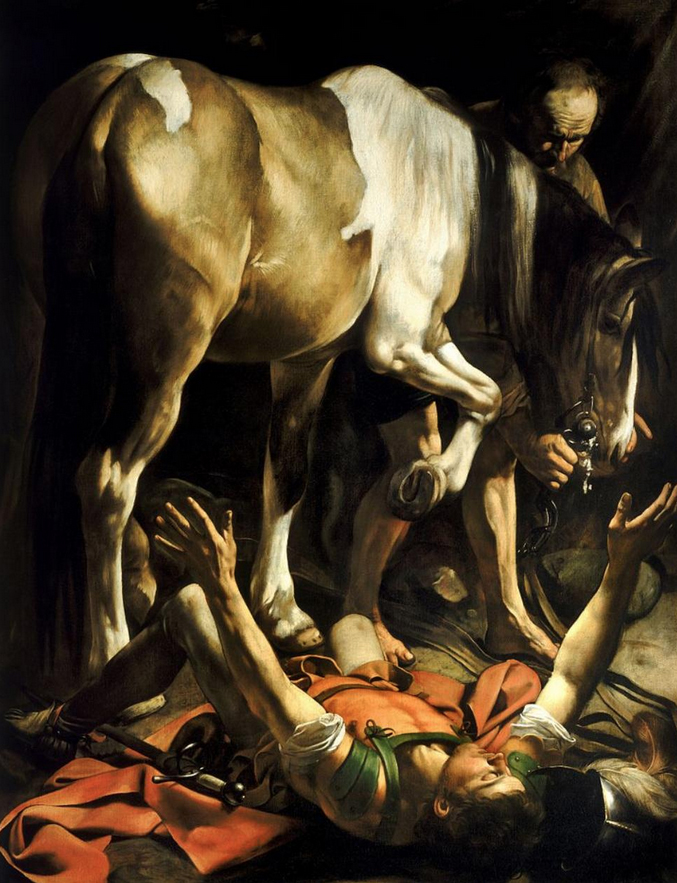
The question remains, “Why did the patronage heirs of the Cerasi Chapel reject the first effort by Caravaggio?” It has been suggested to have been too complicated and unconventional. Significantly, the artist here had painted the miracle as a public spectacle rather than a private spiritual experience. Caravaggio’s early ambition had been to advance the monumental in Renaissance art with his own brand of naturalism. His first version renders the heavenly figures corporeal. In the second version they are invisible. Now with Saul’s physical blinding, the viewer is “blinded” to his heavenly vision, as were Saul’s companions.

Michelangelo Merisi da Caravaggio, The Conversion of Saint Paul (c. 1601), oil on canvas, 230 × 175 cm (approximately 90½ × 69 in), the Cerasi Chapel,Basilica of Santa Maria del Popolo in Rome
Michelangelo Merisi da Caravaggio, The Conversion of Saint Paul (c. 1601), oil on canvas, 230 × 175 cm (approximately 90½ × 69 in), the Cerasi Chapel, Basilica of Santa Maria del Popolo in Rome

Caravaggio’s second treatment is, in fact, more truthful to Luke’s Book of Acts account. Chapter 9:3-4 “And as he journeyed, he came near Damascus: and suddenly there shined round about him a light from heaven: And he fell to the earth, and heard a voice saying unto him, Saul, Saul, why persecutest thou me?” Verse 7: “And the men which journeyed with him stood speechless, hearing a voice, but seeing no man.”

Caravaggio was part of an emergent Baroque art that arose directly from the conflict between the Protestant Reformation and the Catholic Counter-Reformation. While the Catholic Church employed art as a weapon to fight Protestantism, Protestants introduced a new iconoclasm that stripped church interiors of icons, saints, and martyrs, for a secular art, emphasizing landscapes, portraits, and genre scenes. Dutch Baroque and Rembrandt typified this shift.

Image storms, or “Beeldenstorms,” as they were called, swept through Protestant regions, crowds destroying centuries of Catholic art, statues, and stained glass. It is no mystery why Vermeer’s preference was everyday domestic scenes with realistic portraits, landscapes, and still lifes.

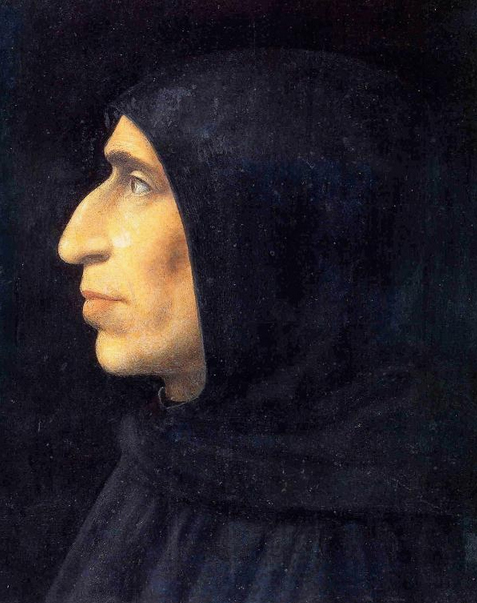
Fra Bartolomeo, Portrait of Girolamo Savonarola, 1498, oil on wood, 47 x 31 cm, Museo di Marco, Florence

The Renaissance and Catholic world had already endured its own “Bonfire of the Vanities” about a century before Caravaggio. A huge pyramid in the Piazza della Signoria was set on fire at the direction of Dominican preacher Girolamo Savonarola. Not just paintings and drawings, but musical instruments, books and manuscripts, jewelry and fine clothing, just about anything associated with beauty, ergo vanity, went up in flames.

The Christian world, however, had essentially “settled” the issue of image depiction by the 8th century at the second council of Nicaea (year 787), in great part courtesy John of Damascus, one of the last great Church Fathers of the Eastern Christian tradition. Monk and theologian, he had summarized in “The Fount of Knowledge” that because God truly became human in Jesus Christ, the invisible God took on a visible human nature. Therefore, Christ can legitimately be depicted in images. The Incarnation affirmed at Nicaea made sacred art theologically defensible. Subsequently, how this has played out through the course of art history speaks for itself in its manifold movements.

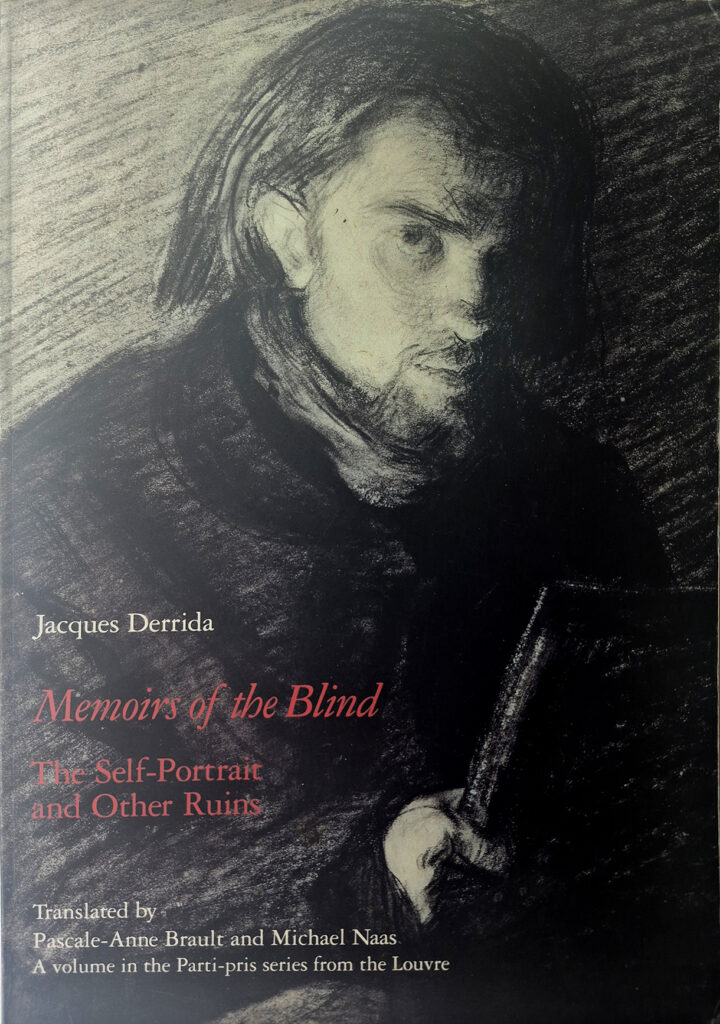
Jacques Derrida, Memoirs of the Blind, 1993, University of Chicago Press. Cover image: Henri Fantin-Latour, Self-Portrait, Louvre Museum, Orsay Museum Collection

The publication of the Jacques Derrida, Memoirs of the Blind (1993), had been a response to a 1990 exhibition at the Louvre of the same name, the first of a series of shows titled Parti-pris or Taking Sides. Its curators had welcomed the gaze of Derrida on this first exhibition about blind men and visionaries. His reflection, they felt, went “to the heart of the phenomena of vision, from blindness to evidence.” Acknowledging perhaps some difficulty for the neophyte, they continued, “…that at end of the journey each one will have found their own light: what one learns here, in the literal as well as the figurative sense, are the ways of opening eyes.

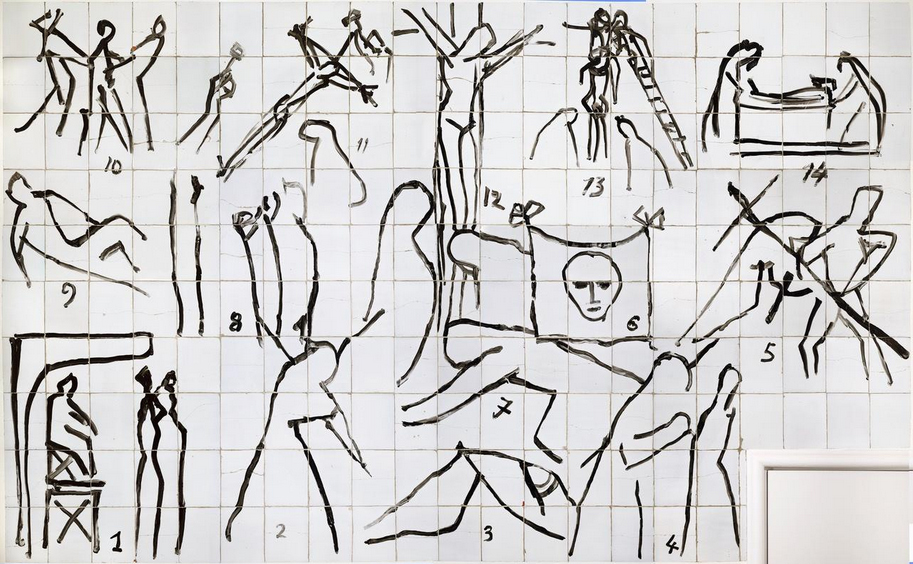
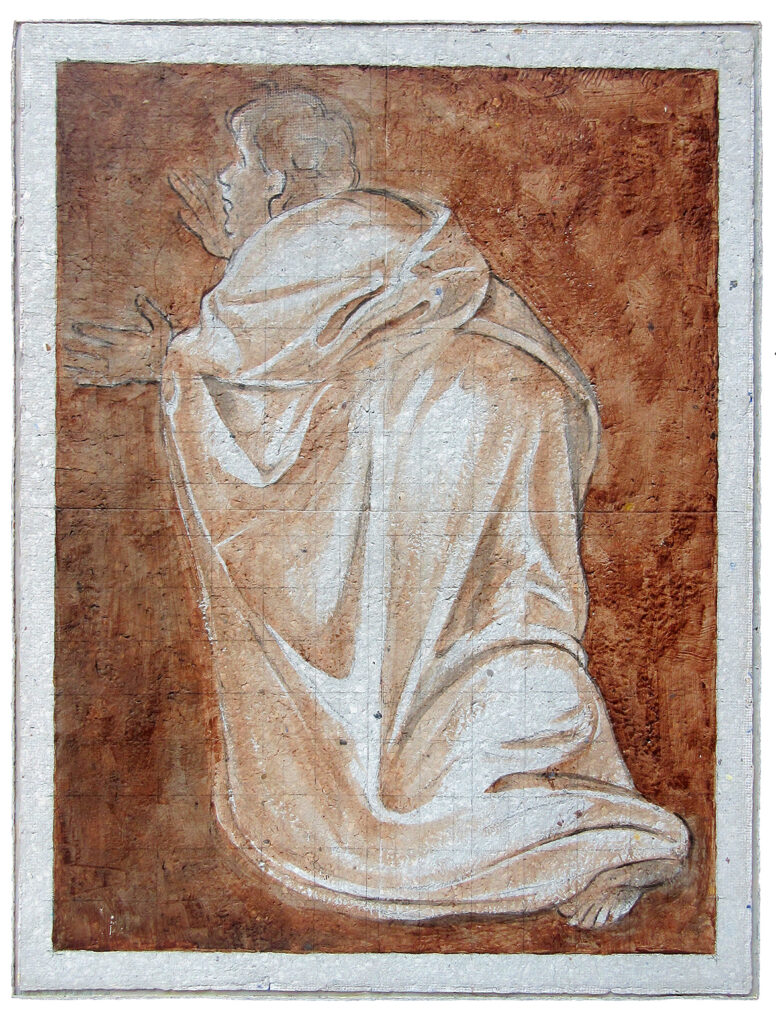
Steve Rockwell, Memoirs of the Blind (Antoine Coypel), 2018, acylic on dArt International paper, 21” x 16”. Grid transcription enlargement of Antoine Coypel's Study of the Blind, Louvre Museum as reproduced on page seven in Jacques Derrida's Memoirs of the Blind
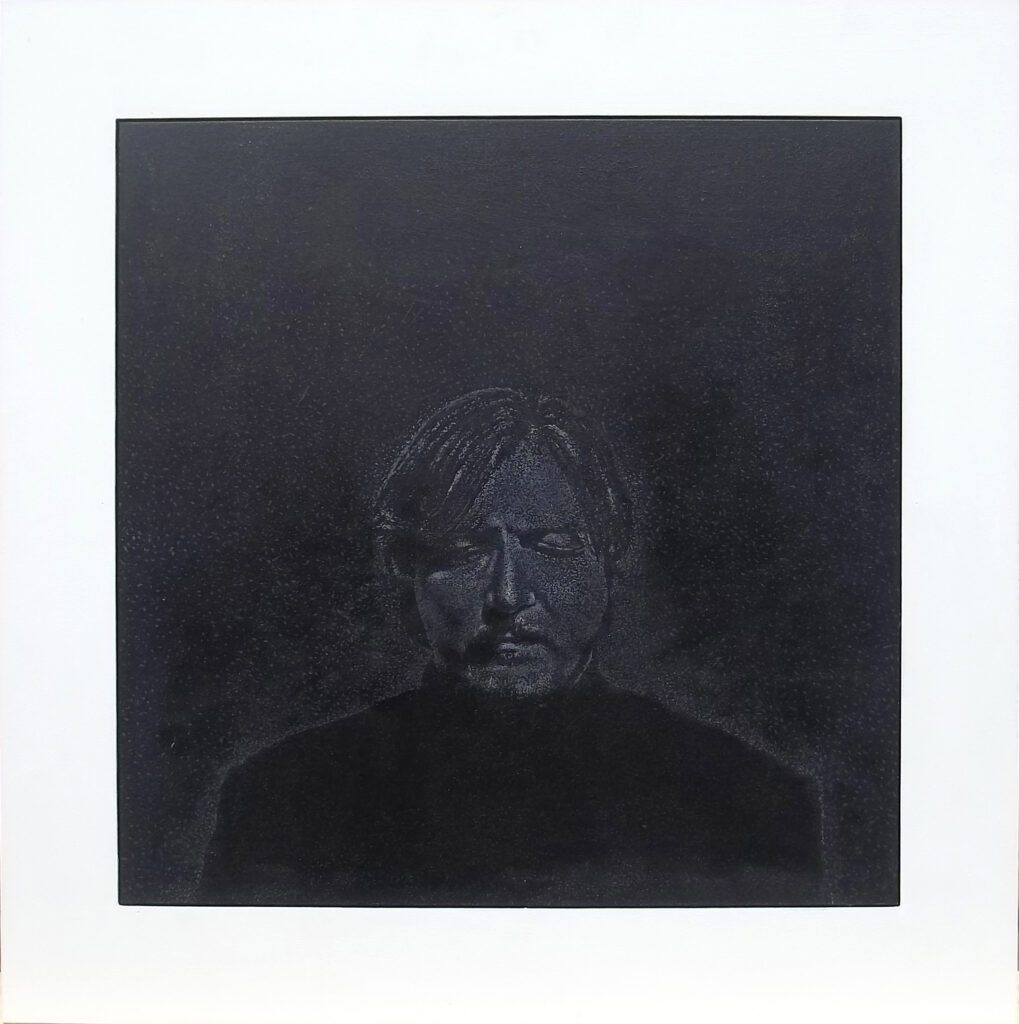
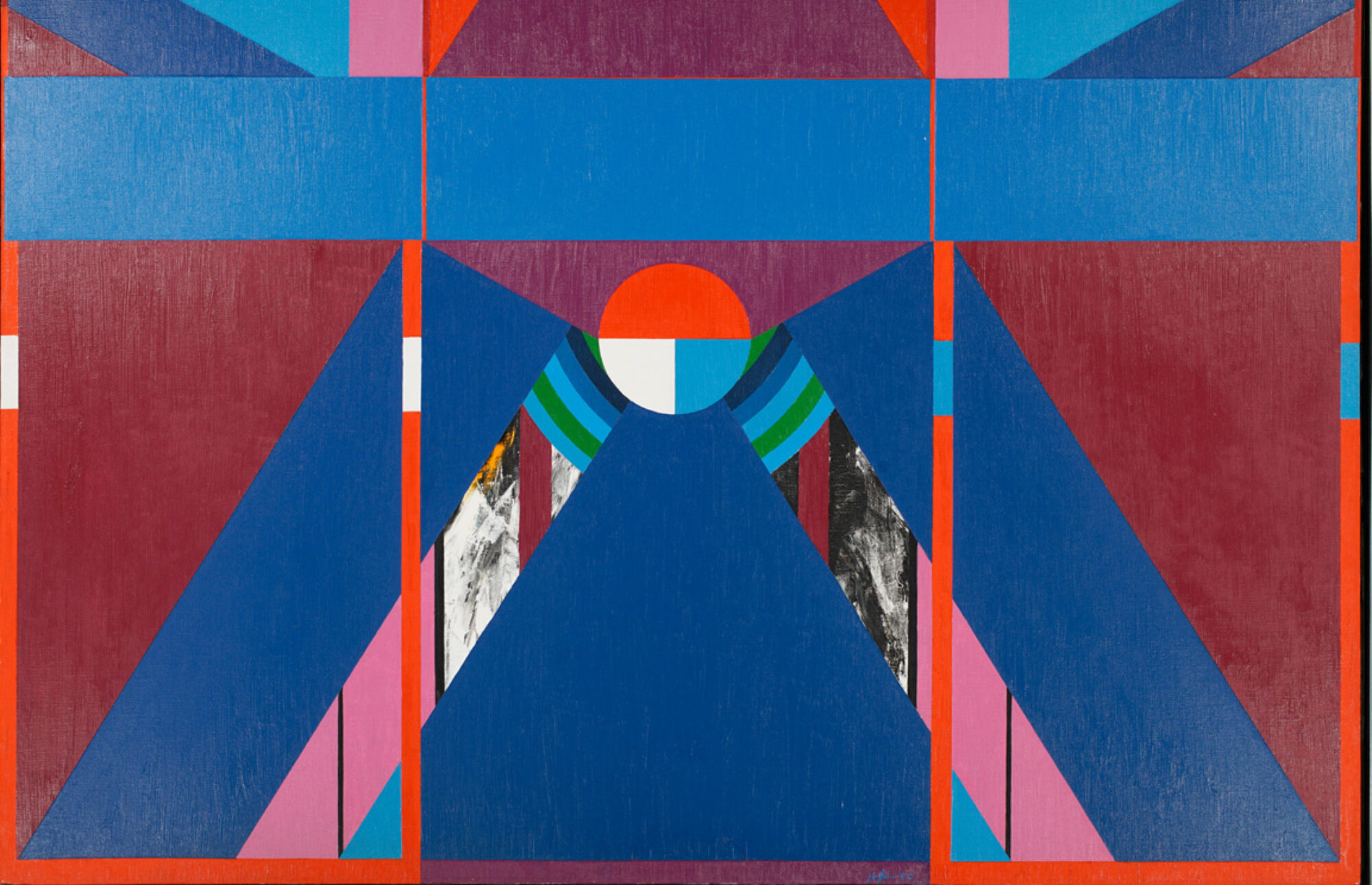
Steve Rockwell, Meditations on Space (Galerie Lahumière, Paris), 1996, acylic on panel painting, 32” x 32”
Steve Rockwell, Memoirs of the Blind (Antoine Coypel), 2018, acylic on dArt International paper, 21” x 16”. Grid transcription enlargement of Antoine Coypel‘s Study of the Blind, Louvre Museum as reproduced on page seven in Jacques Derrida’s Memoirs of the Blind

In his Memoirs of the Blind, Derrida observes that blindness is an interruption of Nature, but also an affliction of the will, the will to see [voir] and the will to know [savoir]. He references Christ’s condemnation of the Pharisees, men of letters whose blindness persisted from a wilful refusal to look inside themselves. Derrida cites Isaiah’s prophecy, where Christ said “…you will indeed look, but never perceive …they have shut their eyes; so that they might not look with their eyes…”

Steve Rockwell, Meditations on Space (Galerie Lahumière, Paris), 1996, acylic on panel painting, 32” x 32”
Steve Rockwell, Meditations on Space (Galerie Lahumière, Paris), 1996, acrylic on panel painting, 32” x 32”

A kind of blindness occurred during the ninth stop of the Meditations on Space, my “odyssey” through art galleries in Europe and North America. It was my first Paris meditation, October 3, 1995. As I described it, ” Galerie Lahumiere was in the process of opening up for the day when the lights blew. Patrice Blanc found the fuse box and told me that the bulk of galleries in the area were at FIAC, the annual Parisian contemporary arts fair. He didn’t think many gallery principals would be available because of the show. He gave me a book on abstract art.” This made it a triple blinding: gallery illumination dimmed, gallery area principals vanished, and the masking of visual figuration within art itself.

My Meditations on Space paintings are the result of a thought experiment on the limits of sight, the edges of what we see within and without. Anyone can do this. In a completely dark room wave your hands before your face as you open and shut your eyes. That visible pattern of tiny points of light that you see is not interrupted or disturbed, suggesting that what you see is entirely within you. The retinal screen within your eye is the tiny wall against which images are projected gradually as the room illuminates. My surprise was the realization of not ever being able to see absolute black. The scintilla are always there, less visible against something white, but always present.

William Jamieson: Shrunken Heads to Ramesses I

by Steve Rockwell

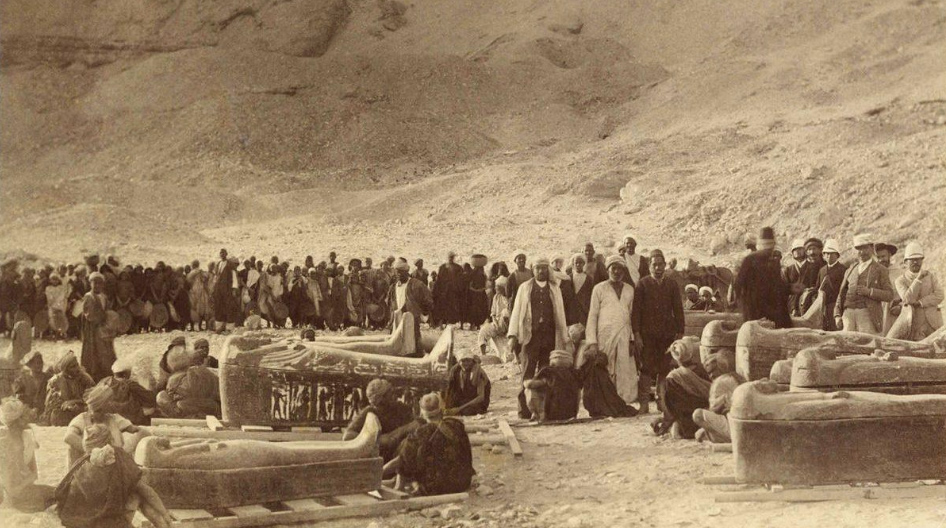
A scene suggestive of the Abd el-Rassul family discovery the royal cache years before officially revealing it in 1881, and their sale of artifacts and mummies through antiquities dealers
A scene suggestive of the Abd el-Rassul family discovery of the royal cache years before officially revealing it in 1881, and their sale of artifacts and mummies through antiquities dealers

I was introduced to Ramesses I, the founder of Egypt’s 19th Dynasty, in his then Wellington Street West residence in Toronto in the late 1990’s by Bill Jamieson. It is difficult to describe my sense of excitement, as the identity of the mummy was just in the process of being confirmed. Egyptologist Gayle Gibson had made evaluations. There had been discussions with the Michael C. Carlos Museum in Atlanta for a possible sale. After scans, anatomical analyses, and comparisons with royal mummies Jamieson’s Egyptian collection went to Atlanta in 1999. Then in 2003, Ramesses I received a ceremonial state welcome and was placed on display in Egypt’s Luxor Museum, barely two miles from where Ramesses I ruled just over 3,200 years ago.

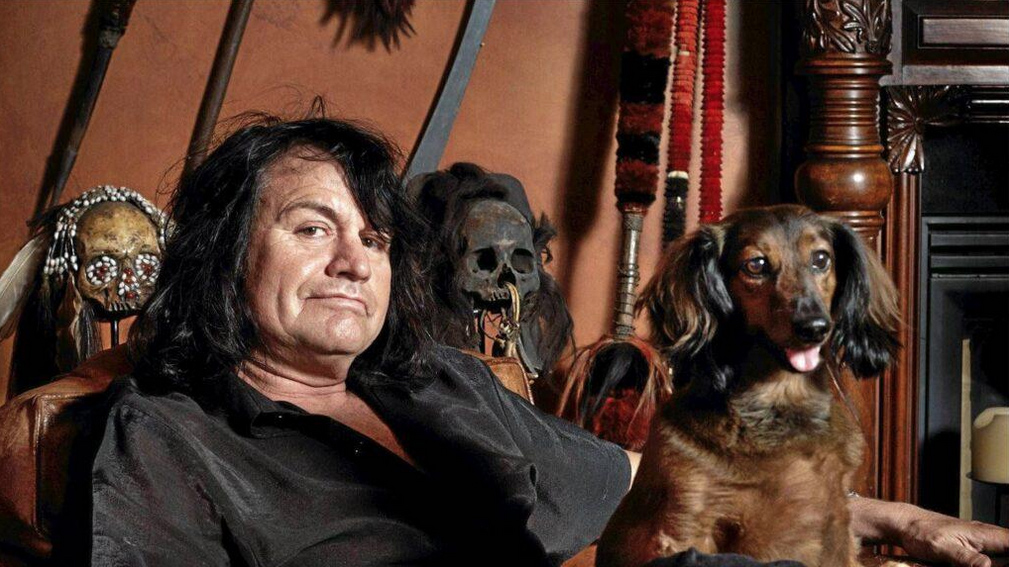
William Jamieson, Treasure Trader. Promotional photo for his 2012 reality television series on (History Canada) Television. Eight half-hour episodes premiered after his unexpected death from heart attack in 2011

Socially, it had been the shrunken heads that broke the ice. Jamieson’s purchase of the Niagara Falls Museum collection, however, was the big story. The timing mattered. He came across as a grand curiosity-cabinet figure at a time when museums were beginning to reconsider the ethics of collecting. Essentially, he had been a Toronto contractor whose loft became a museum, and who now holds a place in history for discovering a lost Egyptian pharaoh.

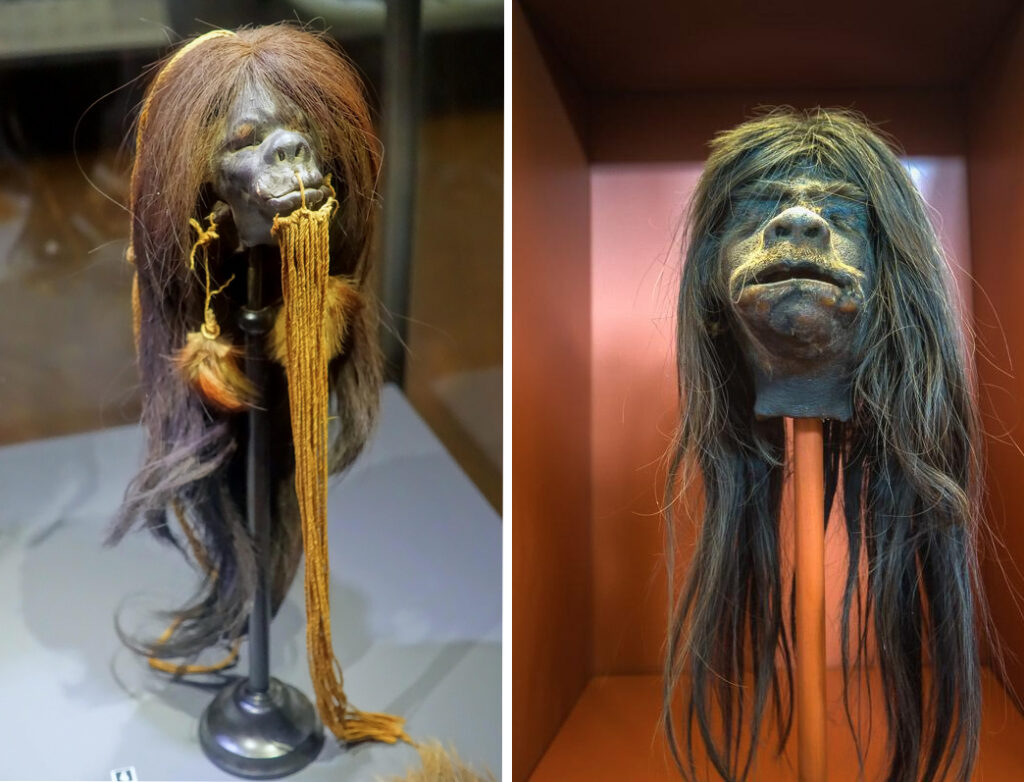
William Jamieson acquired not only the Egyptian collection from the old Niagara Falls Museum but also many of its other ethnographic and natural history objects—including a number of shrunken heads (tsantsas)

Jamieson’s loft was his business headquarters, his client list including the Royal Ontario Museum, the Metropolitan Museum of Art, Christie’s, and Sotheby’s. Objects came and went as he bought, researched, authenticated, and sold. His 6,000-square-foot home with 14-foot ceilings held thousands of objects; Egyptian mummies, one of the world’s largest private collection of shrunken heads (about a dozen), South America, Africa, and Oceania tribal art, electric chairs and Medieval torture devices, coffins, anatomical specimens, and curiosities from around the world. His Halloween parties became legendary. A sweeping curved staircase cut through the loft’s three floors making the panorama equal parts Madame Tussauds and Twilight Zone. Visiting guests reportedly included Tim Burton, Steve Tyler, and Mick Jagger.

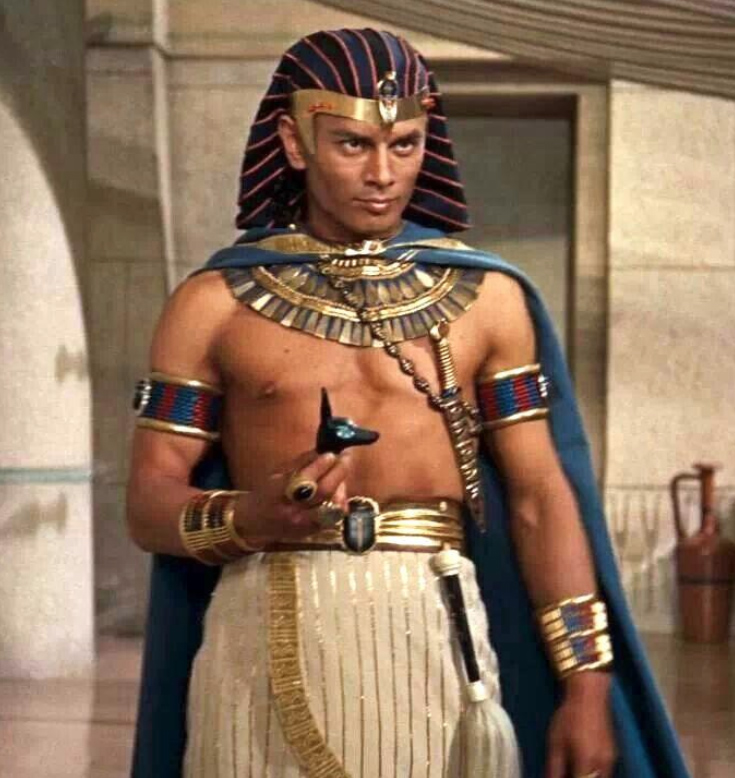
To many, the definitive cinematic Ramesses is Yul Brynner in Cecil B. DeMille's The Ten Commandments
To many, the definitive cinematic Ramesses is Yul Brynner in Cecil B. DeMille’s The Ten Commandments

Historically, Ramesses I ruled a mere two years, leaving little dramatic material for filmmakers. The reign of his grandson, Ramesses II (“Ramesses the Great”), on the other hand, stretched 66 years, with a trail of monumental temples. While traditionally identified as the pharaoh of the Exodus story, scholarship renders this less than definitive. Ramesses I came to the throne around 1292 BC, as Egypt reached the height of New Kingdom power, placing him at the beginning of the last great flowering of Bronze Age civilization, before its collapse a century later.

A Short History of Mining and the Drill Bit

by Steve Rockwell

In broad strokes, civilizations have been defined by their metals; from stone to bronze and iron. The best ages were “golden ages.” The story of the “Bronze Age Collapse,” as told by Eric Cline, tells of collapsing empires through the rupture of supply chains, and a forced innovation. While more difficult, blacksmiths had turned to iron making, setting the stage for the emergence of classical Greece. Bronze Age kingdoms had come to an abrupt end; Minoans, Mycenaeans, Trojans, Hittites, and Babylonians – gone.

Cassels Donation, Grängesberg, Sweden, the local movie theater through the 1950's
Cassels Donation, Grängesberg, Sweden, the local movie theater through the 1950’s

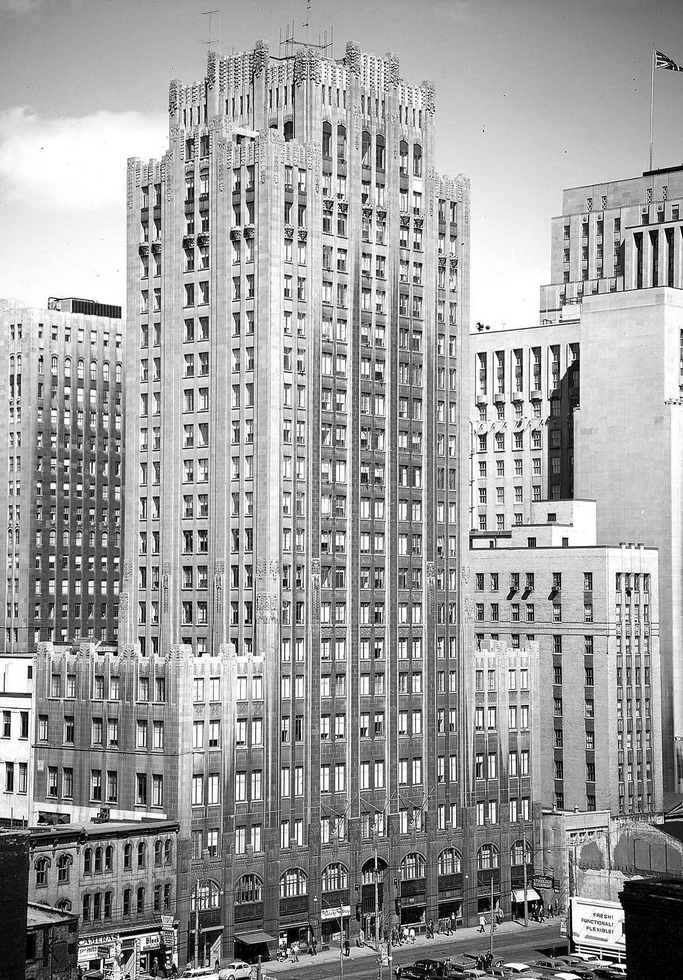
By 1952-53, My father’s employment had drifted from SKF ball bearings to mining iron in Grängesberg, Sweden. British financier, Sir Ernest Cassel, had cast a distinct shadow over the town in the form of his 1900 “donation.” For a while, it became a local theater, where I went to see films, such as Luis Bunel’s 1954 Robinson Crusoe. The Cassels building was designed by architect Agi Lindegren, the facade with its neoclassical columns inspired by the Bank of England building in London.

By coincidence, the Bank of England was founded during the lifetime of Daniel Defoe, the writer of Robinson Crusoe. Prussian-born Ernest Cassel had arrived “penniless” in Liverpool in 1869 with a penchant for mining, infrastructure and heavy industry. His portfolio soon extended to Sweden, the US, South America, South Africa, and Egypt, where he was among the financiers of the Aswan Dam. His daughter Amilia Mary Maud Cassel married Wilfrid Ashley, giving birth to Edwina in 1901, who married Lord Lois Mountbatten in 1922.

By 1957, with our transit to Canada, the metal of the moment became gold near the town of South Porcupine, Ontario. I enrolled at Golden Avenue Public School, its naming a blatant re-gilding of Yellow Brick Road. The mining buzz at the time, however, was uranium, and the wizards of ounce here were, Joseph Hirshhorn and prospector Franc Joubin. Elliot Lake had been birthed on a drafting table of an engineering firm in Toronto, triggered by a 1953 uranium discovery that built the “Uranium Capital of the World.” Forget the Cassels “theater,” this was a whole community, meticulously planned. We lived here at the peak of its boom, and then its “bust.”

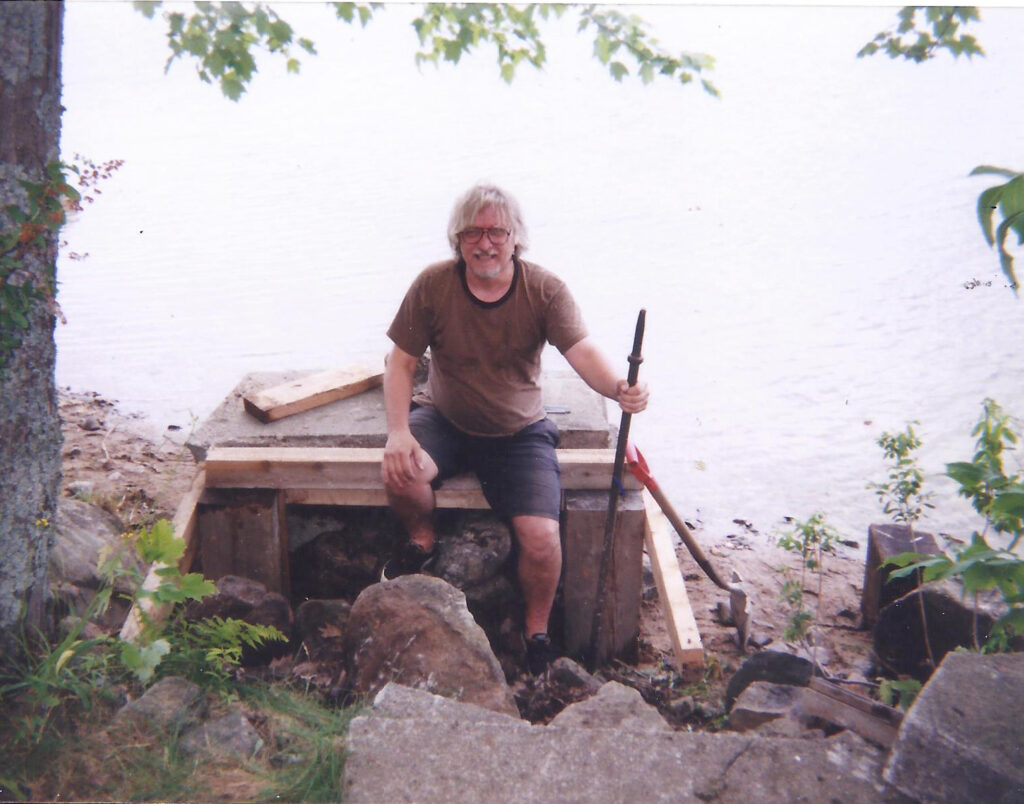
The photo was taken by Sandra MacDonald of myself with a used mining drill in my left hand at the Granary Lake shoreline September, 1995
The photo was taken by Sandra MacDonald of myself with a used mining drill bit in my left hand at the Granary Lake shoreline September, 1995

Franc Joubin had convinced Hirshhorn to finance a proper drilling, not just a surface test. When confirmed, they put together a secret “Backdoor Staking Bee.” Claims totalling 1,400 over 56,000 acres were made in a “Big Z” pattern, a uranium belt running through the Blind River, Elliot Lake region. The photo of myself holding the used mining drill on the Granary Lake shoreline is almost precisely in the center of that Z, the lake situated halfway between Blind River and Elliot Lake. I was on the verge here of a “staking expedition” of my own.

Just a few weeks after photo was taken, I was at the Bruno Bischofberger Gallery in Zürich, Switzerland, the first stop of 175 “meditations” on gallery spaces in Europe and North America. On September 20, 1995, I bought Peter Halley’s Collected Essays 1981-87 for twenty francs from Evelyn at the counter. I still “mine” it for information from time to time. After Paris, New York, and Toronto, the final stop of my “odyssey” was the Zero One Gallery in Los Angeles on January 23, 1997. There, I spoke with artist Kyle Lind, who unwittingly supplied a punctuation to my meditations. To my question regarding zero and one, he had said, “The space between the zero and one is the creative act.”

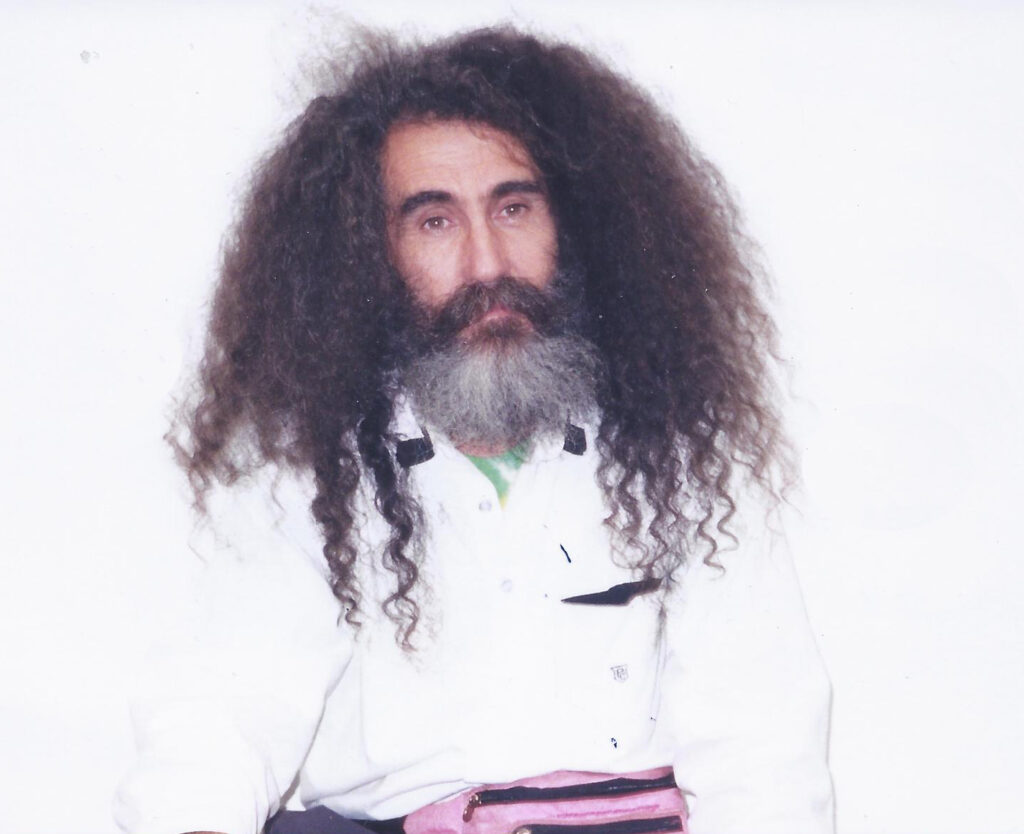
Steve Rockwell photo of artist Kyle Lind at the Zero One gallery in Los Angeles in 1997. Lind's friendship and collaboration with Timothy Leary would have made him a "lotus eater" in the sense that Odysseus might have understood
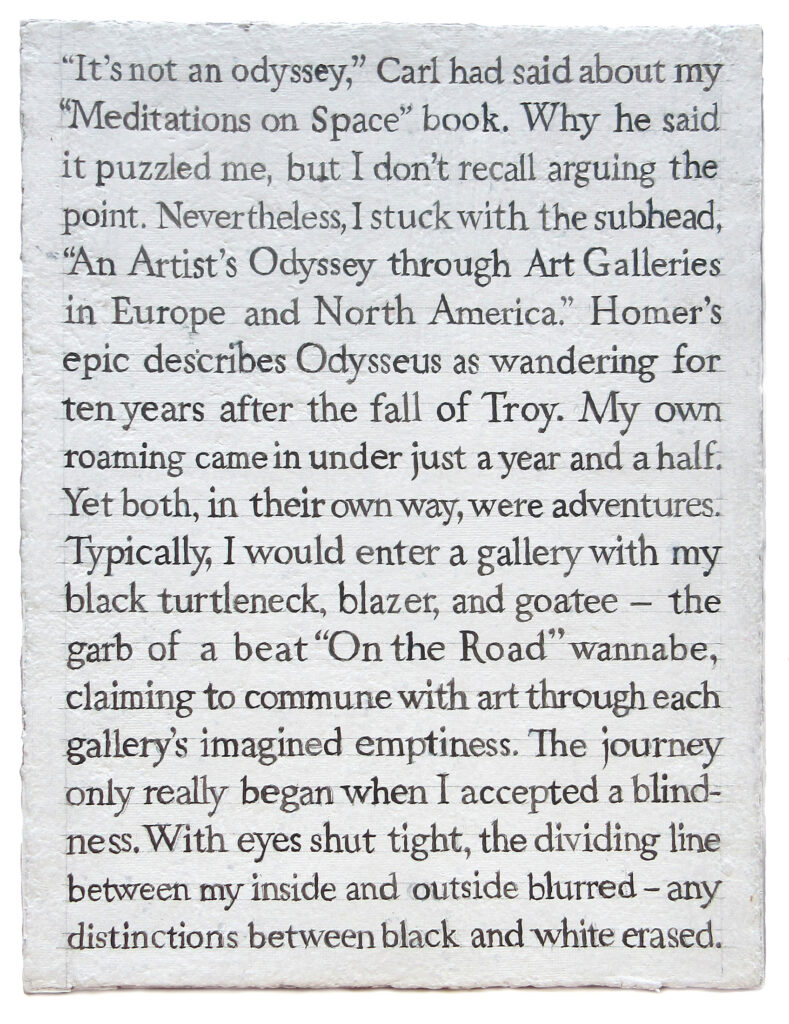
Steve Rockwell, It's Not an Odyssey, 2019, acrylic on dArt International paper, 21 x 16 inches
Steve Rockwell photo of artist Kyle Lind at the Zero One gallery in Los Angeles in 1997. Lind’s friendship and collaboration with Timothy Leary would have made him a “lotus eater” in the sense that Odysseus might have understood
Steve Rockwell, It's Not an Odyssey, 2019, acrylic on dArt International paper, 21 x 16 inches
Steve Rockwell, It’s Not an Odyssey, 2019, acrylic on dArt International paper, 21 x 16 inches

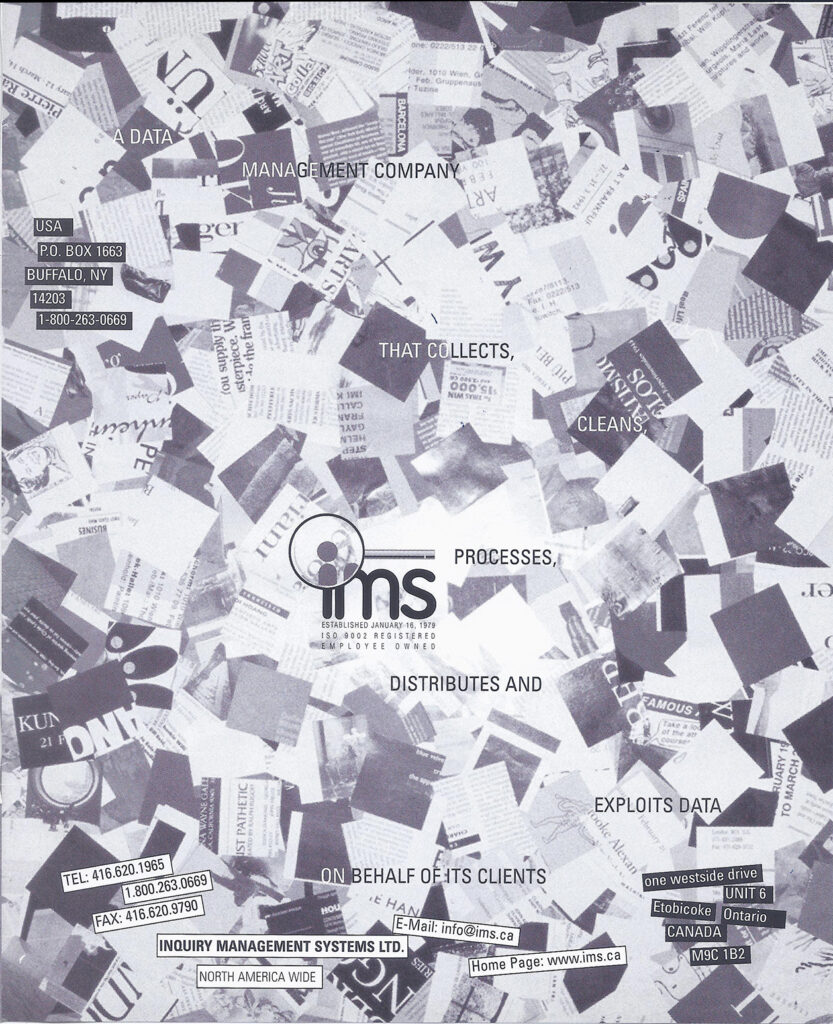
The 1996-97 Meditations on Space book work had set the stage for a new venture. When I launched the premier edition of dArt International in January 1998, I had the advertiser support of the company, IMS (Inquiry Management Systems), also creating a “data mining” ad campaign for my fledgling dArt. Over a chopped-up and scattered copy of Artforum magazine, I laid out the fragmented sentence, “A data management company that collects, cleans, processes, distributes and exploits data on behalf of its clients.”

Steve Rockwell, inside back page ad from Premier Edition of dArt International magazine (1998). Slogan: "A data management company that collects, cleans, processes, distributes and exploits data on behalf of its clients."
Steve Rockwell, inside back page ad from Premier Edition of dArt International magazine (1998). Slogan: “A data management company that collects, cleans, processes, distributes and exploits data on behalf of its clients.”

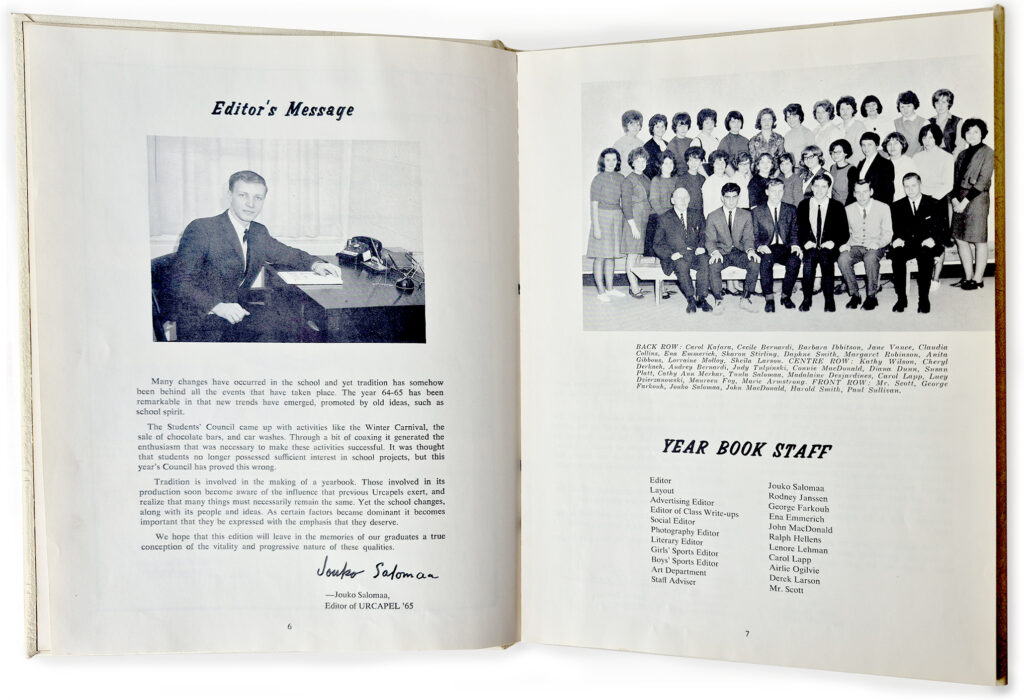
Before moving to Toronto and enrolling at Ontario College of Art in 1965, I had been editor of Urcapel, the Elliot Lake secondary School year book. On the Year Book Staff as Advertising Editor had been George Farkouh, who came to be Mayor of Elliot Lake from 1988 to 2006. After a period of impending ghost town status, he is credited with saving Elliot Lake as its uranium mines were being shut down. The town faced absolute economic collapse, the province even suggesting its abandonment. He staged, instead, a “Retired Living” Miracle, the city buying up hundreds of vacant, high-quality mining homes and turning them into “Elliot Lake Retirement Living.” This masterclass transition blueprint is still being studied globally.

Urcapel Editor, Jouko Salomaa (left), with Elliot Lake Mayor George Farkouh seated second from left

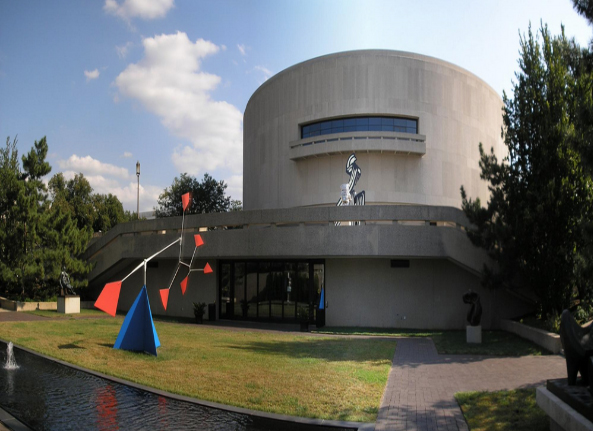
Since the early 1960s, Joseph Hirshhorn had agressively assembled one of the world’s finest collections of modern art. Much of the fortune that had made this possible came from mining ventures, especially the “big Z” uranium discoveries in the Elliot Lake region with geologist Franc Joubin. The Smithsonian Institution had long sought a national museum devoted to modern art. Its secretary S. Dillon Ripley saw Hirshhorn’s collection as a possible fulfillment. With the personal intervention of Lyndon. B. Johnson more than 6,000 of the paintings, sculptures, drawings, and prints collected by Hirshhorn became the foundation of the Hirshhorn Museum and Sculpture Garden in Washington, D.C.

the Hirshhorn Museum and Sculpture Garden in Washington, D.C.
The Hirshhorn Museum and Sculpture Garden in Washington, D.C.

(to be continued)

Black Maria and a Fallen Body

by Steve Rockwell

I travelled with my family to Gothenburg, Sweden in 1951, leaving Espoo, Finland, which had been home to my father’s side of the family for at least four generations. My grandfather had been part of a movement to adopt Finnish names, legally shedding his Kristiansson identity for Salomaa. Steve Rockwell, on the other hand, is a creative persona. My mother had believed that Salomaa was entirely the outcome of the 1918 conflict between the Bolshevik Reds and White Finns, where Johan Nestor Kristiansson defected to the Whites. “He rammed his rifle barrel into ground at the base of a tree, and bolted,” my mother recounted.

Kuusta Rovio, the Helsinki police chief, figures into the story here. Rovio not only sheltered Vladimir Lenin in his Helsinki apartment in August of 1917, but supplied him with Russian newspapers and passed on secrets to his party comrades.

Kuusta Rovio, served as Helsinki chief of police during the 1918 revolutionary war

As it turned out, the anti-socialist White forces under Carl Gustaf Mannerheim won a decisive victory in May 1918. Rovio fled to Soviet Russia, becoming a Communist Party official. A victim of Joseph Stalin’s Great Purge, he was arrested in 1937 and executed the following year. Meanwhile in Helsinki, the police department bleached its Reds. The armored cruiser Sisu “Black Maria” rolled out in the year of his arrest. After the war in 1945, my father had a job painting “Black Marias” at the Helsinki Police Department. He would have been familiar with the armored Sisu since it served until 1951, the year we left for Sweden.

Armored Helsinki police car 1937

My father found employment at SKF ball bearing factory in Gothenburg, an obvious choice, as SKF parts would have regularly been shipped to the Helsinki Police Department, civilian cars being retrofitted as police cruisers. To a five-year-old, the sound of a ball bearing smacking and rolling across the floor had been memorable. Swedish engineer Sven Wingquist’s 1907 invention of the modern self-aligning ball bearing had solved shaft misalignment and machine overheating. It resulted in the foundation of Svenska Kullagerfabriken (SKF), paving the way for a new car company, Volvo (Latin for “I roll”).

In 1913 it had been the churning and friction of the chocolate grinder that erotically overheated Marcel Duchamp’s imagination. In Paris that year he produced the first “readymade,” Bicycle Wheel. The term described works that were selected rather than crafted, although the word did not come into use for another two years. Sven Wingquist’s self-aligning ball bearing was featured at the Museum of Modern Art (MoMA)’s 1934 Machine Art exhibition in New York City, not as readymade, but a “crafted” object. Duchamp’s Bicycle Wheel didn’t appear at the MoMA until 1951, the original wheel not having survived. You can still find Wingquist’s ball bearing piece on display in the David Geffen Wing today.

Sven Wingquist, Self-Aligning Ball Bearing, 1907, Museum of Modern Art, New York City
Marcel Duchamp, Bicycle Wheel, 1951, Museum of Modern Art (MoMA), New York City

Between 1592 and 1610, during his tenure in Padua, Galileo Galilei used ramps to study falling objects, since the high speed of a free-falling entity proved impossible to accurately time. With his “decelerated” brass balls, for instance, observations and measurements were quite feasible. Galileo found that a body fell at the approximate rate of 32 feet per second.

In the case of Vladimir Lenin’s 32 “sealed car” passengers who left Zurich railway station on April 9, 1917 for St. Petersburg, the rate of a falling body is measured in historic terms. The Germans permitted the “sealed train” to cross its territory tactically to destabilize Russia. Within months of arrival at Finland Station, the 1917 October Revolution was successfully staged, giving birth to the Soviet state. Out of the 32 passengers who essentially shaped 20th century as we came to know it, most had by the late 1930s been made enemies of the people, tortured, executed, or been worked to death in the Gulag.

Lenin on the Train by Catherine Merridale 2017 Henry Holt & Company publishers
Lenin on the Train, Catherine Merridale, 2017, Henry Holt & Company publishers

Lenin on the Train had been passed on to me by a couple at the Crane Beach Resort in Barbados some eight years ago. After a poolside chat about reading, I had expressed an interest in the subject. Julia then suggested I pick up the book from the lobby library where they had left it, as it had failed to hold husband David’s interest. It surprised me at the time. Learning that David had just previously been the publisher of Toronto Life Magazine, I had assumed a degree of curiosity in the topic. I now see that it had rather been my own tangled family history which had brought the pertinent immediacy to Lenin’s train ride.

Christmas 1954 we travelled back to Espoo to visit my grandmother on her death bed. Emilia Karolina Salomaa passed away shortly into the new year at the age of 91. The visit entailed a 25-mile train ride through Porkkala, a Soviet naval base. At the western Espoo checkpoint, armed Soviet soldiers boarded the train for document inspection. Heavy shutters were fastened over all carriage windows from the outside. The Finnish steam engine was uncoupled and replaced by a Soviet one, which guided the train through the military zone. Memorable to a nine-year-old was the complete darkness and strict instructions to not look outside or move about the train for the next hour. This had been my own “sealed car” passenger train experience, separated by the one by Vladimir Lenin by just 37 years.

The Charles Ray Ink Box and a Heavenly Vision

by Steve Rockwell

In the dArtles column of the Winter 1999 edition of dArt magazine, I wrote, “At the preview bash of Charles Ray’s mid-career retro at MOCA in Los Angeles, Charles himself stood on the patio roof looking down over the party. He didn’t cut through the party vortex and into the show until artist and teacher Roland Brenner arrived.” From that point in my article it became a list of “who’s who” of the LA art world. Some credit for Ray’s success has to go to the Los Angeles art dealer Burnett Miller, who passed away in 2001.

In her December 13, 2001 obituary for the LA Times, Suzanne Muchnic wrote, “An energetic and insightful entrepreneur who had an eye for quality and a finger on the pulse of contemporary art, Miller is credited with introducing the work of young artists who later achieved international renown. Sculptor Charles Ray – whose travelling retrospective exhibition appeared at Los Angeles’ Museum of Contemporary Art in 1998 – made a breakthrough at Miller’s gallery in 1987 with Ink Box, a giant black-lacquered metal cube filled with 200 gallons of black printer’s ink.”

Charles Ray installation view of his 1986 Ink Box at the Irvine Museum, Orange County

Muchnic quotes the Times art critic Christopher Knight, who wrote of its 1990 showing at Newport Harbor Art Museum, “The quivering meniscus of ink that is the top plane of this menacing black cube forms a threatening surface just begging to be touched, even in the face of disaster.”

In his 1995, performance at the Burnett Miller gallery, artist Skip Arnold delivers an obvious homage to Ray’s Ink Box by replacing its “quivering meniscus of ink” with his own quivering flesh. The image featured here was used in an article by Craig Stephens in the Fall 2002 edition of dArt International titled Pollock to Punk: A Conversation with Skip Arnold.

Skip Arnold, On Display, 1995, performed at Burnett Miller Gallery in Santa Monica
Steve Rockwell, Gallery Space (Shoes), 1988, acrylic, wood floor, shoes, 14 x 14 x 15 inches

My own synthesis of Ray’s Ink Box and Arnold’s 1995 On Display piece is the sculpture Shoes. It was made in 1988, a year after the Burnett Miller exhibition of Ray’s ground-breaking piece. With the Shoes, Ray’s ink and Arnold’s body evaporate, leaving the residual imprint of black shoes overlaid by black print on plexiglass. In 1997 Burnett Miller consented to be included in my Storage project. A unique feature of the gallery’s Bergamot Station building in Santa Monica was its spectacularly convenient second floor skylight, clearly visible in the top left-hand corner of the Skip Arnold photo, and neatly matched in the top right-hand of Steve Rockwell’s Storage photo.

Steve Rockwell, Storage Bernett Miller, Bergamot Station, Santa Monica, 1997, photo by Steve Rockwell
Steve Rockwell, Storage, Burnett Miller, Bergamot Station, Santa Monica, 1997, photo by Steve Rockwell

Unaware of the Charles Ray Ink Box until a couple of decades ago, I had produced the progressive “inking” of a six-by-six-inch square in 1987, the year Ray displayed his “inky box” at Burnett Miller. My square was subsequently cubed as the Shoes sculpture the following year in 1988. It took a hundred and thirty-nine people over a period of nine months to complete the “inky” square, the Pick a Number project eventually leading to the publication of dArt International magazine in 1998.

Steve Rockwell, Pick a Number between 1 and 99, 1987, ink on printed bond paper, 42.5 inches  x 12 feet 10 inches
Steve Rockwell, Pick a Number between 1 and 99, 1987, ink on printed bond paper, 42.5 inches x 12 feet 10 inches

As part of the Meditations on Space project on December 1, 1995, my 36th gallery stop was Mary Boone, then in Soho. The account in the published book work read, “Someone must have been adjusting the lights or changing them. An enormous yellow step ladder rose toward the skylight in the center of the gallery. It made me think of the white ladder in Paris at Galerie Lucien Durand. Ron was busy at the desk by the door wielding a letter opener.” My black and white acrylic portrait staring up at the light suggested layered and cocooned gallery spaces from Paris, New York, and finally Los Angeles.

Steve Rockwell, Meditations on Space (Mary Boone Gallery, New York), 1996, acrylic on panel painting, 32 x 32 inches

Only more recently, having reflected on the sources of my inspiration, did it land on a “dream vision” that I had in 1970. In it, an angel appeared with a shining solidity that shattered my flesh self to the extent that I presumed it to be the “Angel of Death,” were it not for its kind radiant beauty. Absent of spiritual grounding from my family, I was open to its interpretation. In form and perfection, it exceeded anything by Raphael. To a Catholic, it could clearly have been Mary. Pairing the vision with a definition of “boon,” made it a timely benefit, blessing, or something incredibly helpful and advantageous.