by Chunbum Park
Could you introduce yourself? Where did you study art, and how did you first garner an interest in art curation?
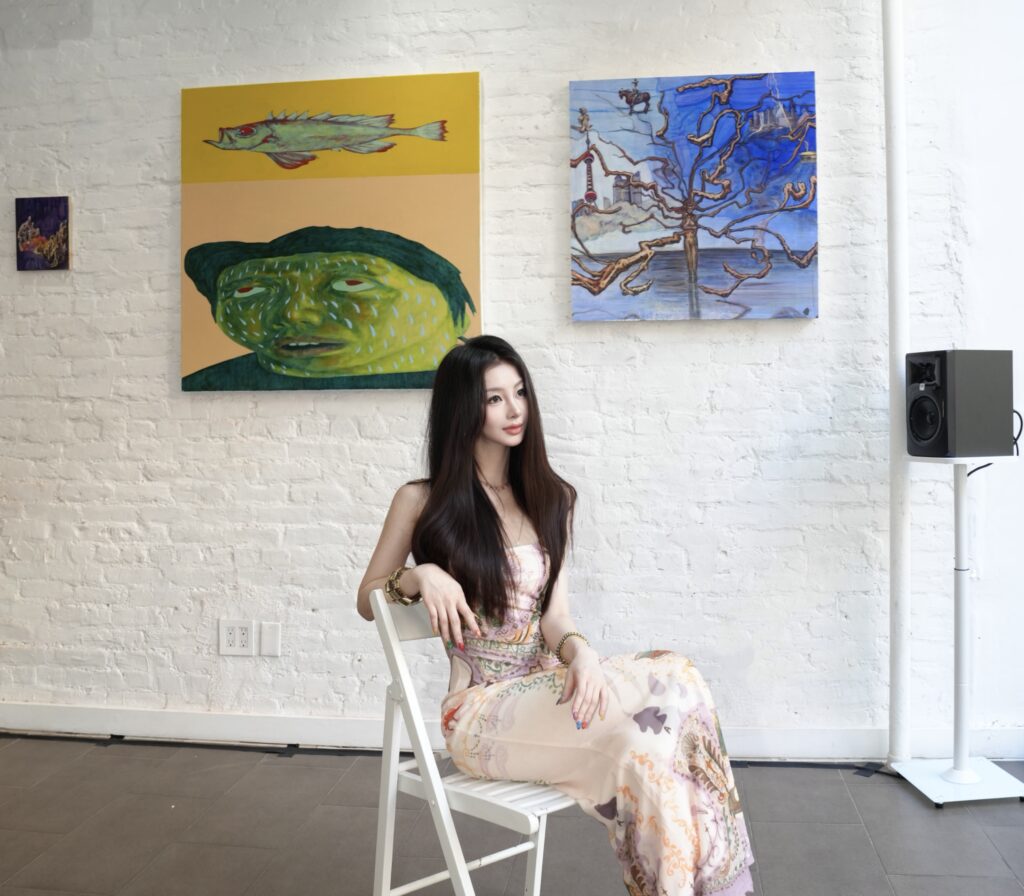
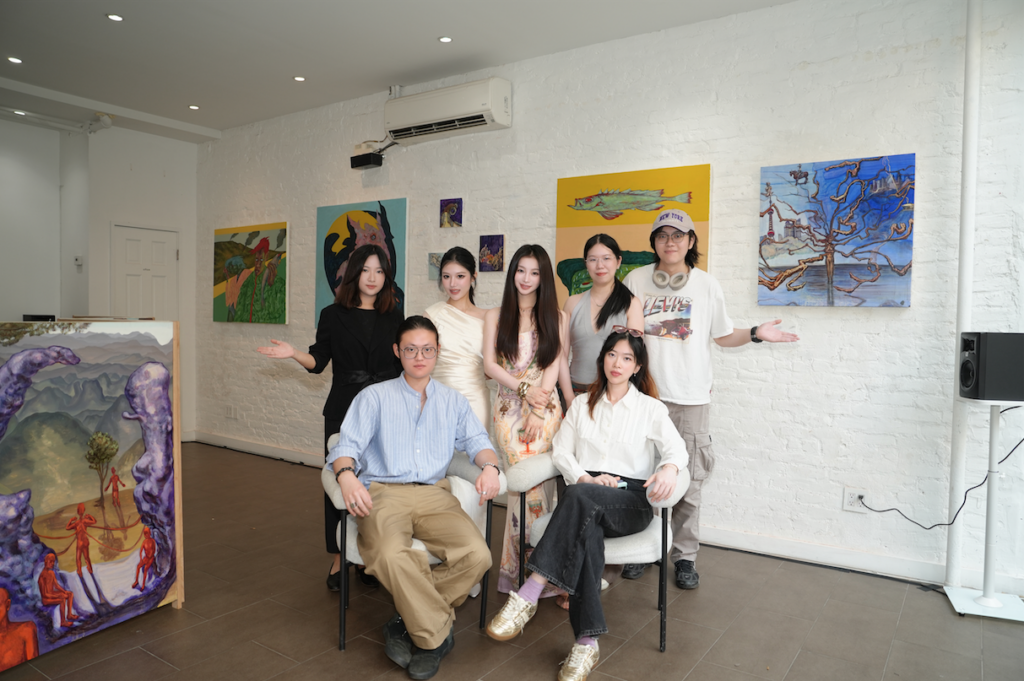
I’m Eliza Xinping Tan, an independent curator based in New York. I studied Strategic Design and Management at Parsons and Visual Arts Administration at NYU. Fashion was a big influence on me. I spent a lot of time doing runway production in school, but eventually my interests grew beyond fashion into other media. That was how I found my way into curation. Whenever I visited an exhibition, I would imagine myself inside its narrative. I loved being an audience member and getting completely pulled into something. Eventually, I wanted to create that spectacle experience myself.
What kind of information do you seek from looking at curatorial work by established gallerists and museum curators? How do you apply it towards your own curatorial practice?
I pay more attention to how an exhibition is actually made than to borrowing its ideas. How is an installation rigged? How is the space arranged? What makes the presentation feel unexpected rather than predictable? Those are things I look closely at. At the same time, I try to leave myself some room. I don’t want to absorb so much that someone else’s approach becomes my first instinct, I want to learn how to make things happen without losing that spark.
What do you look for when you are considering artists for inclusion in an exhibition?
I need to feel something. I’ve had experience, looked at a work for barely a second and started crying before I could even understand why. My immediate thought was: I have to work with this artist. That impact doesn’t have to be loud or dramatic, a very quiet work can do it too. Of course, I then look further into the artist’s practice and how the work might belong in an exhibition. But that first response matters a lot to me.
What are the necessities on either a personal, societal, or universal level that art can see to fulfill? Why is art so important for humanity?
In a world full of rules and schedules, art gives me room to breathe. It’s a language that doesn’t have to be planned in advance. So much of life asks us to explain ourselves or prove that something is useful, however art lets us stay with feelings we haven’t figured out yet. I don’t think it needs to solve everything, sometimes being able to feel something without immediately having to explain it is enough.
Interview: Eliza Xinping Tan
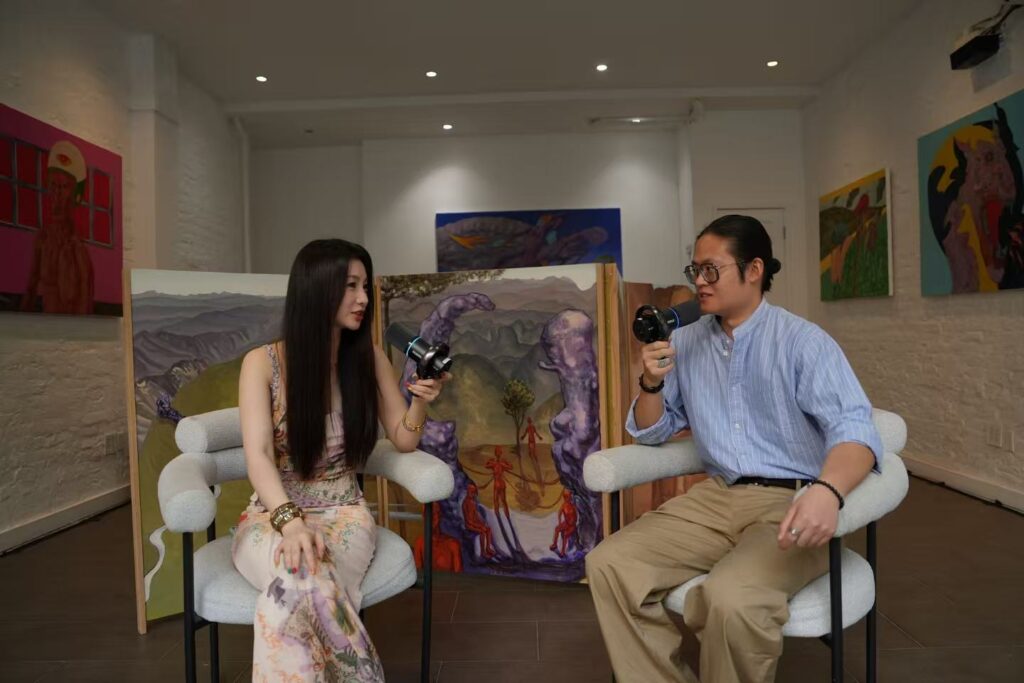
What is the difference between art made purely for spectacle and art based on inner necessity? Which do you think is more authentic and why? How can the differentiation of the two lead the artists and curators to pivot towards more authentic visions and dialogues within contemporary art?
I’m not against spectacle, I want to create it myself. But spectacle should be a way for meaning to happen, not a substitute for it. And sometimes an artist’s inner necessity is exactly what produces a spectacle. I don’t think a quiet work is automatically more sincere than an overwhelming one. I ask myself three questions: Why does this work need this particular medium? If I remove its most eye-catching element, what remains? Am I supporting what the work needs, or forcing it to serve my curatorial concept?
How do you balance the need to learn and apply the knowledge of art history with the desire for novelty of expression and ideas within your art curation? Where can you find the balance between the lessons of historical art and the innovations that we expect of contemporary art, or are the two sides one and the same thing?
Art history gives me coordinates, not instructions. I study it to understand what a work is continuing, moving away from, or pushing against, not to immediately assign it to a movement. I don’t see history and innovation as opposites, an old question can become very different in someone else’s life. I want enough knowledge to recognize those connections, while still allowing a work to take me somewhere I didn’t expect.
Is New York City the center of the art world? How does the art scene in NYC differ from other places like Hong Kong, London, or Paris, for example? How have they evolved over time, and what kind of “personality” or characteristic differences exist between the various major cities around the world? Where do you see to be the next major place that may challenge some of the unique positions of strength that NYC has occupied for nearly a century?
I still see New York as one of the most influential places for art, but I don’t think there’s one absolute center anymore. New York is fast and competitive, art, money, institutions, media, and personal ambition are all very close together. That creates possibilities, but it also makes art easy to turn into a status symbol or social currency. I know New York most directly, so I’m cautious about reducing other cities to a few characteristics. I imagine a more dispersed future, with cities such as Seoul, Shanghai, Los Angeles, and Mexico City contributing in different ways. I’m less interested in who replaces New York than in where artists can actually stay, work, and find an audience. Are the art market and the market value the main means of assessing the value of art, or is the intrinsic value of the art separate from the market value? How do we reconcile our nature of being easily swayed by big money and fame in the art world with the need to respect and care for the art and the artists who never made it big but continued to create, regardless of whether fortune or the backing by an institution rewarded their efforts?
Market value and artistic value overlap, but they aren’t the same thing. A price can reflect visibility, scarcity, collecting history, and institutional support, but it can’t fully account for what a work does to a person. The market can assign a price, but it cannot exhaust the value of a work. I don’t think fame makes an artist less sincere, or obscurity makes them more authentic. Both assumptions avoid looking at the work. I try to ask whether I would still stop and look if I didn’t know the name or price. Artists who haven’t received recognition deserve that same attention, not just admiration for their persistence.
Who are some of your favorite curators and artists? Why do you admire them? How do they impact your curatorial practice?
I’m particularly drawn to Carolyn Christov-Bakargiev and Okwui Enwezor. What interests me about Carolyn is how an exhibition can become an open-ended process of thinking, without rushing toward a conclusion. Enwezor made me more conscious of how curating also determines who gets seen and who gets to tell history. With artists, I’d rather not name a fixed favorite. I have preferences, of course, but I want each project to lead me somewhere, rather than keep returning to an established list.