by Steve Rockwell
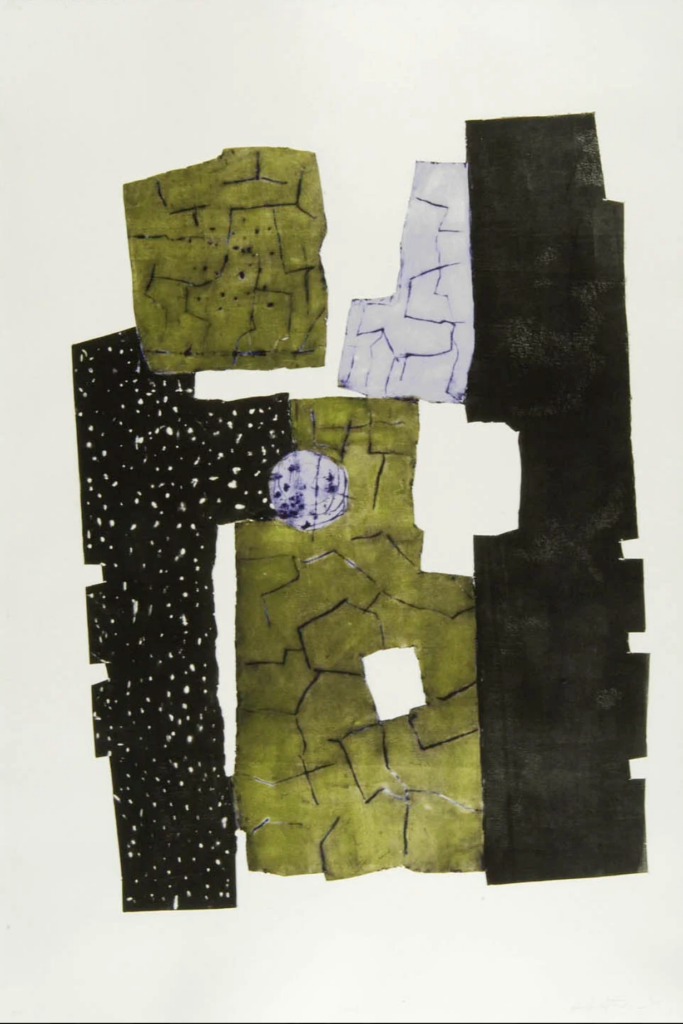
At the core of his practice, Harold Wortsman is a clay sculptor. Printmaking for this Brooklyn-based artist is a productive extension of this discipline. Working in clay is highly tactile. Each mark to Wortsman is an event, the surface recording the cutting, striking and removal of material. To the artist, his hitting of “clay’ notes against the unpredictability of the kiln is not unlike a jazz improvisation.
Wortsman’s solo exhibition at Gagné Contemporary in Toronto is the artist’s first time exhibiting in Canada. The exhibition, A Sculptor’s Work on Paper, features recent prints, drawings, and an exclusive artist’s book. It showcases the sculptor’s heavily textured, physical printmaking practice translated onto paper surfaces.
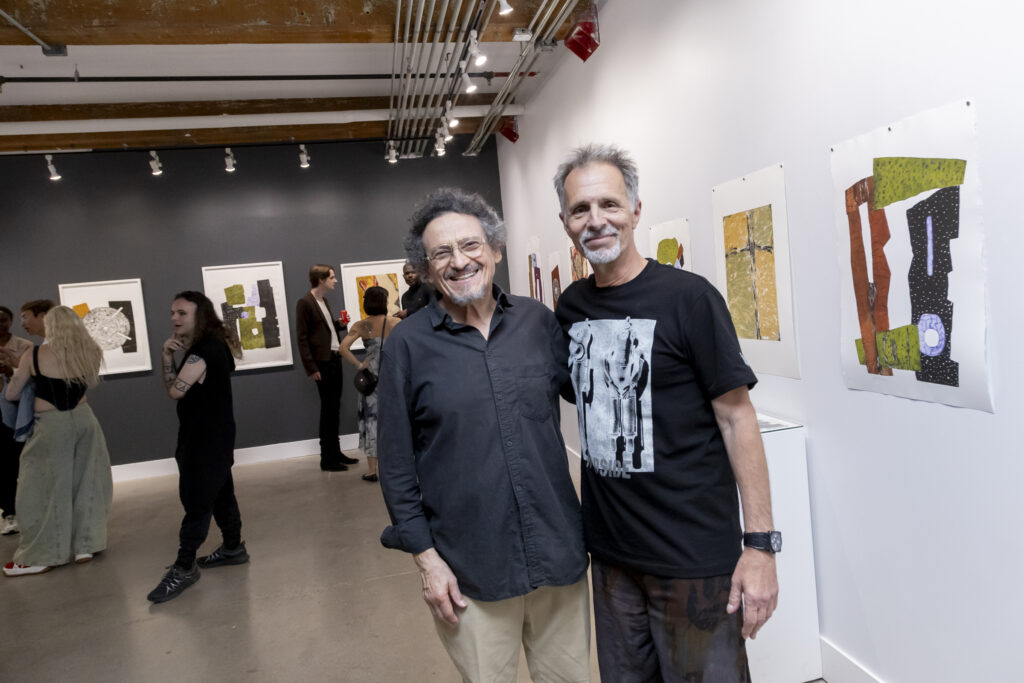
Wortsman’s inclusion in the 2026 Before Time group exhibition at Lichtundfire in New York provides an important insight into a core theme of his work. Jointly curated by Laura Horne (editor of Tussle Magazine) and gallery director Priska Juschka, the exhibition explored things that exist entirely outside our standard human timeline. Within the planet’s history, its deep geological time, are primordial ecosystems. Wortsman’s printmaking, in the physicality of its process, with gouged metal, ink, and paper subjected to pressure, become fragmented inferences to larger events – the intersection of geology and human markings.
A random discovery at Riis Park in Queens, New York sparked a signature mixed-media installation piece, measuring 48 x 78 x 70 inches. Taking years to build, Cube, Pyramid & Sphere (2017 – 2023), Wortsman’s discovery of a green block of wood floating in the ocean one winter, became the foundation for its constituent clay shapes. Nature in the rough, combined with primary geometric shapes presented a massive, multi-sensory environment.
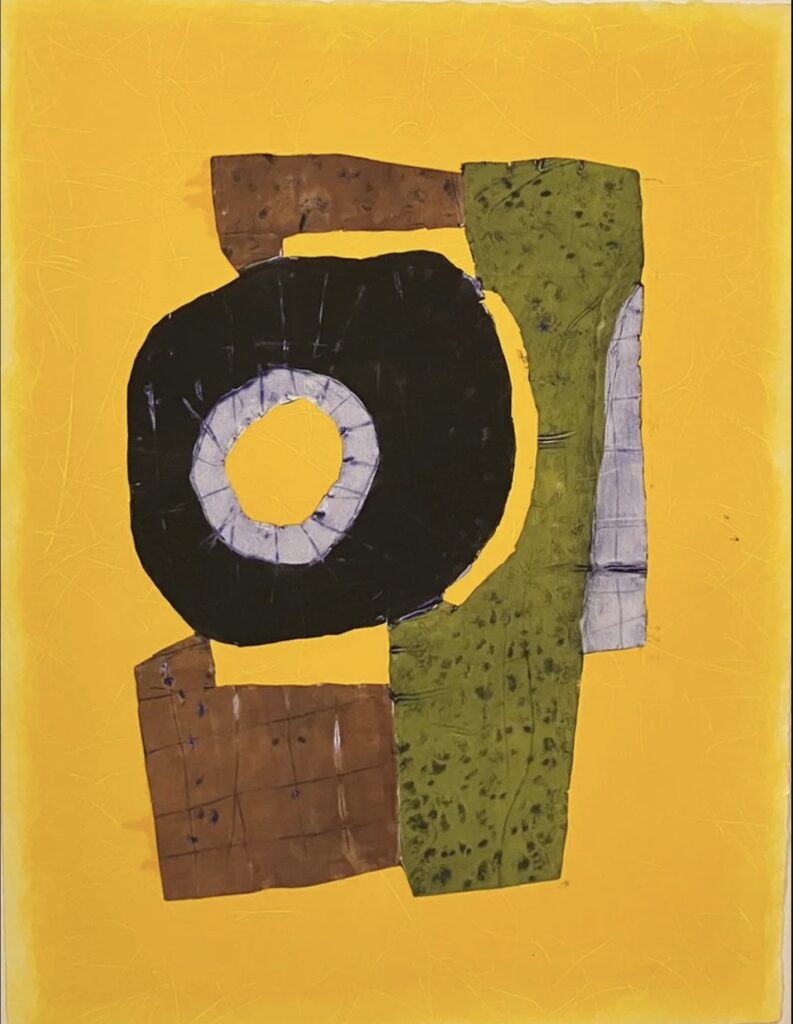
Graphic elements in a Wortsman print such as Balancing Sphere transcend language and culture in that they are simply products of actions – hacking, cutting, scratching, and the like. Forms resembling circles and squares never appear to be mental impositions, but rather the natural outcome of physical activity. Held together in their “imperfections,” they exhibit a curious singularity and unity. The artist’s compositions are quite the opposite of inorganic sterility of some abstraction. Wortsman has found a way to imbue his creations with the “breath of life.”
The artist’s focus with clay as a medium situates his practice both within, outside, and beyond particular cultural epochs and times. Pertinent are markings and their meanings such as the 1799 discovery by French soldiers during Napoleon Bonaparte’s campaign in Egypt. The accidental find of the Rosetta Stone led to the deciphering of Egyptian hieroglyphs, up until then, a “dead” language. Something much older, such as the cuneiform writing on Sumerian clay tablets outlived that particular culture and language of the time. Wortsman’s Riis Park discovery and inclusion of the green block of wood in his Cube, Pyramid & Sphere work might be viewed as his own Rosetta Stone, unlocking “languages” encoded within geological transits of earth, climate, and ocean.
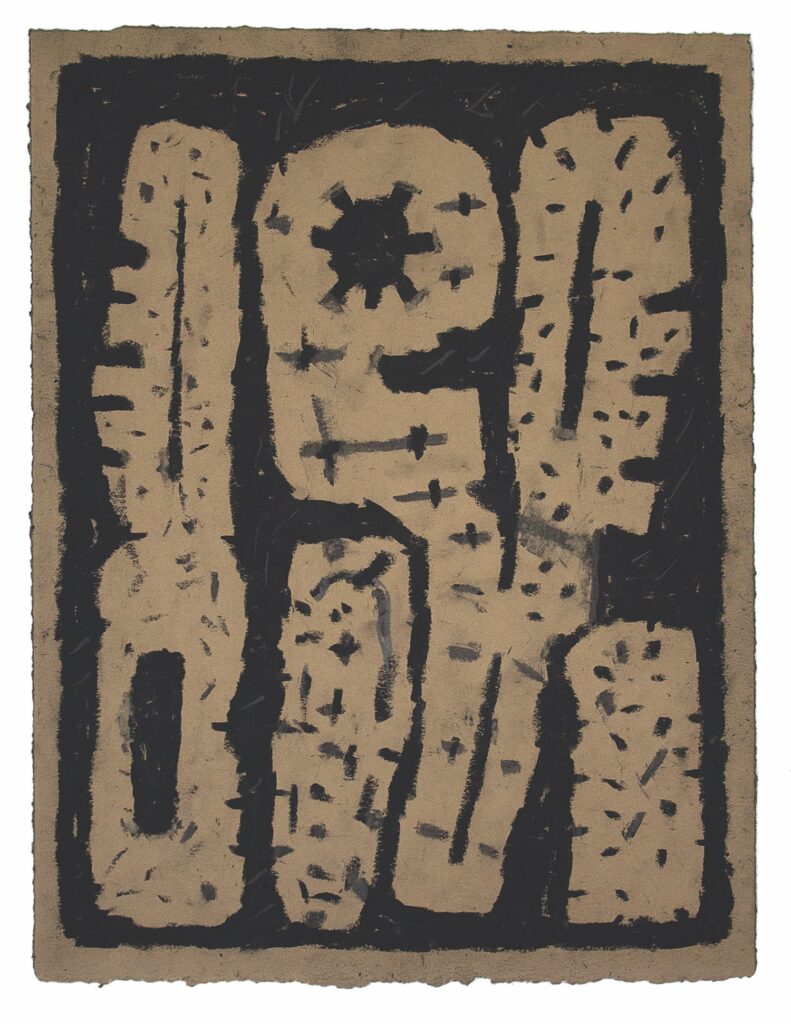
Bound significantly into Wortsman’s practice is bookmaking. The letterpress against conventional lithography tends toward the tactile and sculptural by embossing image and text. His book editions fall generally within 20 or 30 copies making them highly sought after by institutions such as Washington, D. C.’s Library of Congress, the New York Public Library Print Collection, and Yale University Beinicke Rare Book & Manuscript Library.
The sense of timelessness is necessarily reflected and infused in Wortsman’s art. Laboring in the shadow cast by ancient Sumerians and “People of the Book” he is both scribe and artificer. As an installation, the artist has crafted something sculptural which is peculiarly portable, lending an elegant lightness to the exhibition.