Black Mary and a Fallen Body

by Steve Rockwell

I travelled with my family to Gothenburg, Sweden in 1951, leaving Espoo, Finland, which had been home to my father’s side of the family for at least four generations. My grandfather had been part of a movement to adopt Finnish names, legally shedding his Kristiansson identity for Salomaa. When I adopted Rockwell for Salomaa, it had been done for purely creative reasons. My mother held the opinion that Salomaa was entirely the outcome of the 1918 conflict between the Bolshevik Reds and White Finns, where Johan Nestor Kristiansson defected to the Whites. “He rammed his rifle barrel into ground at the base of a tree, and bolted,” my mother recounted.

Kuusta Rovio, the Helsinki police chief, figures into the story here. Rovio not only sheltered Vladimir Lenin in his Helsinki apartment in August of 1917, but supplied him with Russian newspapers and passed on secret deliveries to his party comrades.

Kuusta Rovio, served as Helisinki chief of police during the 1918 revolutionary war

The anti-socialist forces under Carl Gustaf Mannerheim prevailed with a White victory in May 1918. Rovio fled to Soviet Russia, becoming a Communist Party official. A victim of Joseph Stalin’s Great Purge, he was arrested in 1937, and executed the following year. Meanwhile in Helsinki, the police department had been bleached of its Reds sympathizers and released the Sisu “Black Maria.” After the war in 1945, my father had a job painting “Black Marias” at the Helsinki Police Department. He would have familiar with the armored Sisu since it had been service until 1951, when we left for Sweden.

Armored Helsinki police car 1937

(To be continued)

The Charles Ray Ink Box and a Heavenly Vision

by Steve Rockwell

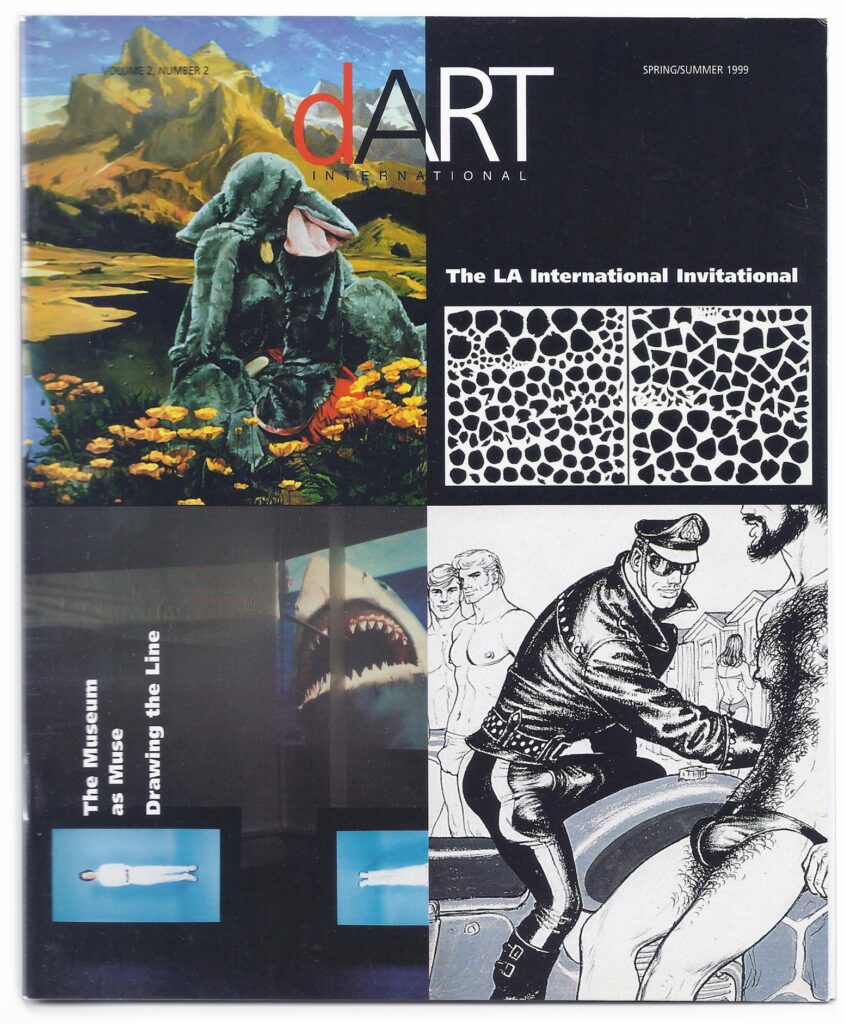
In the dArtles column of the Winter 1999 edition of dArt magazine, I wrote, “At the preview bash of Charles Ray’s mid-career retro at MOCA in Los Angeles, Charles himself stood on the patio roof looking down over the party. He didn’t cut through the party vortex and into the show until artist and teacher Roland Brenner arrived.” From that point in my article it became a list of “who’s who” of the LA art world. Some credit for Ray’s success has to go to the Los Angeles art dealer Burnett Miller, who passed away in 2001.

In her December 13, 2001 obituary for the LA Times, Suzanne Muchnic wrote, “An energetic and insightful entrepreneur who had an eye for quality and a finger on the pulse of contemporary art, Miller is credited with introducing the work of young artists who later achieved international renown. Sculptor Charles Ray – whose travelling retrospective exhibition appeared at Los Angeles’ Museum of Contemporary Art in 1998 – made a breakthrough at Miller’s gallery in 1987 with Ink Box, a giant black-lacquered metal cube filled with 200 gallons of black printer’s ink.”

Charles Ray installation view of his 1986 Ink Box at the Irvine Museum, Orange County

Muchnic quotes the Times art critic Christopher Knight, who wrote of its 1990 showing at Newport Harbor Art Museum, “The quivering meniscus of ink that is the top plane of this menacing black cube forms a threatening surface just begging to be touched, even in the face of disaster.”

In his 1995, performance at the Burnett Miller gallery, artist Skip Arnold delivers an obvious homage to Ray’s Ink Cube by replacing its “quivering meniscus of ink” with his own quivering flesh. The image featured here was used in an article by Craig Stephens in the Fall 2002 edition of dArt International titled Pollock to Punk: A Conversation with Skip Arnold.

Skip Arnold, On Display, 1995, performed at Burnett Miller Gallery in Santa Monica
Steve Rockwell, Gallery Space (Shoes), 1988, acrylic, wood floor, shoes, 14 x 14 x 15 inches

My own synthesis of Ray’s Ink Cube and Arnold’s 1995 On Display piece is the sculpture Shoes. It was made in 1988, a year after the Burnett Miller exhibition of Ray’s ground-breaking piece. With the Shoes, Ray’s ink and Arnold’s body evaporate, leaving the residual imprint of black shoes overlaid by black print on plexiglass. In 1997 Burnett Miller consented to have a part in my Storage exhibition. A unique feature of the gallery’s Bergamot Station building in Santa Monica was its spectacularly convenient second floor skylight, clearly visible in the top left-hand corner of the Skip Arnold photo, and neatly matched in the top right-hand of Steve Rockwell’s Storage photo.

Steve Rockwell, Storage Bernett Miller, Bergamot Station, Santa Monica, 1997, photo by Steve Rockwell
Steve Rockwell, Storage, Burnett Miller, Bergamot Station, Santa Monica, 1997, photo by Steve Rockwell

Completely unaware of the Charles Ray Ink Cube until a couple of decades ago, I had produced the progressive “inking” of a six-by-six-inch square in 1987, the year Ray displayed his “inky cube” at Burnett Miller. My square was subsequently cubed as the Shoes sculpture the following year in 1988. It took a hundred and thirty-nine people over a period of nine months to complete the “inky” square, the Pick a Number project eventually leading to the publication of dArt International magazine in 1998.

Steve Rockwell, Pick a Number between 1 and 99, 1987, ink on printed bond paper, 42.5 inches  x 12 feet 10 inches
Steve Rockwell, Pick a Number between 1 and 99, 1987, ink on printed bond paper, 42.5 inches x 12 feet 10 inches

As part of the Meditations on Space project on December 1, 1995, my 36th gallery stop was Mary Boone, then in Soho. The account in the published book work read, “Someone must have been adjusting the lights or changing them. An enormous yellow step ladder rose toward the skylight in the center of the gallery. It made me think of the white ladder in Paris at Galerie Lucien Durand. Ron was busy at the desk by the door wielding a letter opener.” My black and white acrylic portrait staring up at the light suggested layered and cocooned gallery spaces from Paris, New York, and finally Los Angeles.

Steve Rockwell, Meditations on Space (Mary Boone Gallery, New York), 1996, acrylic on panel painting, 32 x 32 inches

Only much later, having reflected on the sources of my inspiration, did it land on a “dream vision” that I had in 1970. In it, an angel appeared with a shining solidity that shattered my flesh self to the extent that I presumed it to be the “Angel of Death,” were it not for its kind radiant beauty. Having not received spiritual grounding of any kind in my family, I was open to its interpretation. In form and perfection, it exceeded anything by Raphael. To a Catholic, it could clearly have been Mary. Then suitably combined with the definition of “boon,” it transformed into a timely benefit, blessing, or something that is incredibly helpful and advantageous.

Shipwreck: Robinson Crusoe and the Andrea Doria

by Steve Rockwell

Published in 1719, Daniel Defoe’s The Life and Strange Surprising Adventures of Robinson Crusoe of York, Mariner, is generally regarded as the first English novel. Its immediate success might be attributed to its documentary, confessional style of narration. The receptivity by the general public to tales of shipwreck already had the Alexander Selkirk account as a classic example. Lack of lighthouses and the accurate mapping of shoals made naval disasters inevitable in this age.

Scanned image by Philip V. Allingham. The illustrator presents a convincing panorama of the wrecked merchantman off the coast of a remote island off the South American coast (left), with several small figures (presumably, one of them Crusoe). London publisher: Cassell, Petter, and Galpin, 1863-64

To a young Jouko Salomaa living in Grangesberg, Sweden, Defoe’s classic left a deep impression. To him, when screened at Cassels, the local theater, Luis Bunuel’s 1954 Robinson Crusoe was a disappointment. What the film was unable to convey adequately in his mind, and which the book described in intricate detail, was Crusoe’s gradual conversion of his island wilderness into something of a solitary paradise.

Movie poster for Luis Bunel's 1954 Adventures of Robinson Crusoe. It was screened a year or so before the 1957 Atlantic crossing by Jouko Salomaa
Movie poster for Luis Bunel’s 1954 Adventures of Robinson Crusoe. It was screened a year or so before the 1957 Atlantic crossing by Jouko Salomaa at Cassels movie theater in Grangesberg, Sweden

Jouko used one of the illustrations from the book as a basis for his 1957 colored ink drawing of Crusoe and Friday, which he gave as gift to classmate Lennart Hansson. On Jouko’s departure to Canada from Sweden on October 1, 1957, Lennart photographed him at the railway station, the images of which were later emailed to Canada along with one of the Crusoe drawing.

Jouko reser till Canada, October 1, 1957, Lennart Hansson scrap book page with two of his photos of Jouko Salomaa at the train station in Grangesberg, Sweden, taken the day before Jouko boarded the SAL ocean liner Stockholm in the Copenhagen to Halifax, Canada Atlantic crossing
Jouko reser till Canada (Jouko travels to Canada), October 1, 1957, Lennart Hansson scrap book page with two of his photos of Jouko Salomaa at the train station in Grangesberg, Sweden, taken the day before Jouko boarded the SAL ocean liner Stockholm in the Copenhagen to Halifax, Canada Atlantic crossing
Jouko Salomaa, Robinson Crusoe and Friday, 1957, ink on paper. Gifted by Jouko to classmate Lennart Hansson before Jouko's ocean departure
Jouko Salomaa, Robinson Crusoe and Friday, 1957, colored inks on paper. Gifted by Jouko to classmate Lennart Hansson before Jouko’s ocean departure

On his departure, twelve-year-old Jouko and ocean liner passengers endured a storm that produced waves the height of the ship. Seasickness had trapped the lad to his cabin for all but the last day of the voyage. The joy at the release from his confinement came with a boundless excitement to explore the ship. Finding himself at the prow of the liner, on an ill-advised impulse he clasped the jack staff tightly with both hands, hoisting himself up with a quick jerk, legs dangling over the tip of the prow. Looking down, the keel cleaved the relative calm Atlantic waters producing little rainbows. A nervous twist of the head at the fear of discovery, however, brought a quick end to the prank.

The Swedish American Line ship The Stockholm photographed after its 1956 collision with the Andrea Doria in Nantucket Sound

Unknown to the young passenger at the time but common knowledge to crew and many of its passengers, was the ocean liner tragic history. Just a year before on July 25, 1956, in a collision with the SS Andrea Doria, the prow of the MS Stockholm had sunk to the bottom of the sea off the coast of Nantucket in heavy fog. The 75-foot section was repaired within four months at Bethlehem Steel Shipyard in Sunset Park Shipyard, Brooklyn. While the Andrea Doria sunk after eleven hours most of its passengers were rescued.

The ‘Andrea Doria’ in its last hours Harry Trask/Wikimedia Commons

At the moment of impact, 14-year-old Linda Morgan on the Andrea Doria had been asleep. It seems that her cabin, stateroom 52 on the upper deck of the luxury liner had been pierced by the prow of the Stockholm, it somehow sliding under her mattress and catapulting her onto the deck of the Stockholm. Swedish crew heard a girl asking in Spanish, “Where am I?” Puzzled, they realized quickly that she was not part of the Stockholm passenger list.

It is at this point that a dot needs to be connected. Both Linda and Jouko became part of the art world as adults. Linda served as curator at the McNay Museum in San Antonio, Texas. She had married Phil Hardberger in 1968, who served as mayor from 2005 to 2009. Jouko created the art persona Steve Rockwell in 1987 in Toronto, eventually published dArt International magazine, which the city of San Antonio invited to cover their 2008 Luminaria arts festival. I took the photo of Mayor Hardberger, not realizing at the time that his wife and I were curiously connected to the Andrea Doria collision and tragedy. The “miracle girl” after recovery from a broken leg, and fractures, was reluctant in later life to talk about an event where she and her mother survived, while her sister and step-father perished.

The Luminaria in San Antonio edition of dArt International Magazine (2008), featuring the Bill Fitzgibbons light art illumination of the Alamo
Then San Antonio Mayor Phil Hardberger photographed at a 2008 Luminaria event by Steve Rockwell. The Mayor married Linda Morgan in 1968. She had been the "miracle girl" survivor of the Andrea Doria
Then San Antonio Mayor Phil Hardberger photographed at a 2008 Luminaria event by Steve Rockwell. The Mayor married Linda Morgan in 1968. She had been the “miracle girl” survivor of the Andrea Doria

A necessary footnote to the sinking of the Italian luxury ocean liner SS Andrea Doria is the intentional burning and sinking of its American namesake, the USS Andrew Doria on November 21, 1777. The geographical distance between the two wrecks is approximately 277 miles, one about 50 miles south of Nantucket, Massachusetts, the other at the bottom of the Delaware River near Petty’s Island, near Philadelphia. During the American Revolutionary War, rather than surrendering the valuable asset to the advancing British fleet, Captain Isaiah Robinson had the ship packed with combustibles, and watched it burn to the waterline and sink beneath the waterbed. The USS Andrew Doria is historically famous as the first American warship to receive an official salute from a foreign power at Sint Eustatius in 1776. The painting by Phillips Melville depicts the Continental Navy Brig flying the Grand Union flag, the first national flag of the United States.

Phillips Melville (Colonel, USMC, Retired), Continental Brig Andrew Doria depicts the warship receiving its historic first official salute from the Dutch at St. Eustatius on November 16, 1776. Courtesy of the U.S. Navy Art Collction, Naval History and Heritage Command (NHHC), Washington,D.C. Gift of Colonel Phillips Melville, 1977. Public Domain (as a work of the U.S. federal government/U.S. Navy
Phillips Melville (Colonel, USMC, Retired), a 1974 depiction of the Continental Brig Andrew Doria warship receiving its historic first official salute from the Dutch at St. Eustatius on November 16, 1776. Courtesy of the U.S. Navy Art Collection, Naval History and Heritage Command (NHHC), Washington,D.C. Gift of Colonel Phillips Melville, 1977. Public Domain (as a work of the U.S. federal government/U.S. Navy)

Uncollage—Seamless Unison

Essay by Todd Bartel

Mildred I. Washington Art Gallery/Dutchess Community College
Todd Bartel, Curator

The term ‘Uncollage’ uses the prefix ‘un’ to denote when collage is not glued physically, but is glued intellectually. Uncollage – Seamless Unison examines the neologism by showcasing various practices of imagery fusion and providing comparative examples of cut-and-paste collage demonstrating the differences between physical gluing and immaterial gluing across a wide range of media.

Budd Hopkins, Collage for Mahler's Castle, 1970, collaged paper, paint, 16 x 20 inches (photo Todd Bartel)
Budd Hopkins, Collage for Mahler’s Castle, 1970, collaged paper, paint, 16 x 20 inches (photo Todd Bartel)
Budd Hopkins, Study for Mahler's Castle, 1972, acrylic on canvas, 36 x 53 inches (photo Todd Bartel)
Budd Hopkins, Study for Mahler’s Castle, 1972, acrylic on canvas, 36 x 53 inches (photo Todd Bartel)

I first used the term ‘Uncollage’ in 1999 to describe paintings that depend on image collection and are painted without physical additions glued to the surface—such as the work of Archibaldo, Grandma Moses, Mark Tansey, and Julie Heffernan, all of whom I have also published articles on. All too often, what comes to mind when the word ‘collage’ is uttered is glued paper, but collage is so much more. Collage is an operation that does not require paper or glue, and can be appreciated any time a creative process involves composite incorporation. I presented my thesis at the first annual Kolaj Fest, in New Orleans in the summer of 2018, a multi-day festival & symposium about contemporary collage and its role in art, culture, and society hosted by Kolaj magazine. After that, I expanded the concept in a series of 4 articles, published by Kolaj magazine in 2019 and another four articles since then, as well as written several exhibition essays for shows in the U.S., Portugal and Spain, which has led me to assemble the essays in a forthcoming book, Uncollage & Immaterial Glue — the Collected Essays of Todd Bartel that will be available in early July, 2026.

Julie Heffernan, Self-Portrait as Growth, 1994, oil on canvas, 55 ¼ x 69 x 1 ¾ inches (photo Todd Bartel)

Uncollage—Seamless Unison assembles the art of thirty-one emerging, well-established, and historically notable artists, including the Abstract Expressionist painter Budd Hopkins (1931 – 2011). Hopkins, who wrote the influential essay, Modernism And The Collage Aesthetic, often made facsimile collage studies for his abstract paintings, and examples of each are the first works visitors encounter inside the gallery. The show includes paintings by Julie Heffernan, Bo Joseph, Fern Apfel, Brian Bishop, D. Dominick Lombardi, Ginnie Gardiner, Talin Megherian, Justin Richel, Denise Shaw, and Amy Talluto, who all fuse collage-based strategies to import and juxtapose collected imagery. Lombardi’s painting is noteworthy for repurposing a previously “completed” painting with complementary stylistic additions.

Ginnie Gardiner, Interlusion 45, 2022, oil on linen, 40 x 60 inches (photo Ginnie Gardiner)

The exhibition includes several examples of trompe l’oeil drawing and painting, including works by Brian Bishop, Laura Christensen, Ruth Marten, Leo Sousa, and Amy Talluto, and a trompe l’oeil sculpture by Justin Richel. In all of these pieces, the genre is enhanced by the incorporation of ideas, brought into the work, if not known references to other artists’ works. Similarly, Julie Blankenship, Christensen and Marten explore ‘Uncollage’ through altered readymade, employing various drawn and painted enhancements.

Amy Talluto, Alchemical Wasteland, 2021, oil on canvas, 40 x 50 inches (photo James Petrozzello)

Uncollage—Seamless Unison showcases several works that involve image transfer processes, including a Xerographic print on vintage paper by Michael Oatman, a hand-transferred Xerographic photo presented as an “original photograph” by Roma Megherian Bartel, and a painting with multiple acrylic gel-medium transfers by Denise Shaw.

Denise Shaw, Targeting, 2021, acrylic, photo transfer on linen, 60 x 30 inches (photo Katie Zaptka)

The exhibit highlights an iconic multi-negative gelatin silver print by Jerry Uelsmann (1934 – 2022), whose analog work may be said to have anticipated Photoshop, and, emerging photographer Max Labelle, who photographs cutout photographed images of quotidian objects in real-world settings, which confuse flattened depictions of real objects in actual spaces. The show counterbalances these analog photographic processes with the works of veteran digital collage artists Fran Forman and Maggie Taylor, as well as the work of Leslie Fry, Samplerman (Yvan Guillo), Wendy Seller, and Rowan Buffington, whose hybrid piece provides a blended example of analog and digital applications of collage.

 Jerry Uelsmann, Untitled, 1991, gelatin silver print, 3 negatives – sky ripples, rock, background, 14 x 11 inches (digital scan of original photo Jerry Uelsmann)
Jerry Uelsmann, Untitled, 1991, gelatin silver print, 3 negatives – sky ripples, rock, background, 14 x 11 inches (digital scan of original photo Jerry Uelsmann)
Maggie Taylor, Happiness, 2015, digital collage, archival inkjet print, 15 x 15 inches (courtesy of the artist)

Also included in the show are several sculptures that more or less conceal their composite origins, such as D. Dominick Lombardi’s recycled refuse sculpture and Justin Richel’s stretched-canvas trompe l’oeil brick. There is also a objet trouvé bicycle by Jack Massey, an assisted readymade with an intellectual coupling to a well-known work by Pablo Picasso, as well as the conceptual sculptures of Darryl Lauster and Bo Joseph that expand the neologism into the time-honored practices of lost wax bronze sculpture.

Bo Joseph, Caput Mortuum: Create Yourself from Darkness, 2018, bronze, 20 ¼ x 24 ⅝ x 11 inches, Collection of Eliane van Reesema (photo Bo Joseph)
D. Dominick Lombardi, CC 113 UC (The Impossibility of a Skinned Knee), 2021, found objects, sand, papier-mâché, gesso, acrylic medium, 11 ½ x 12 x 9 inches, photo courtesy of the artist

The show also includes examples of static and moving AI image generation by artists Joann, Will Close, and Máximo Tuja, as well as a multimedia installation by James Andrew Scott that blends analog drawing with pixelated digital video, using an array of four 4 x 4-foot LED panels to display looped video imagery incorporating abstracted versions of many of the works in the exhibition.

Máximo Tuja / Max-o-matic, 126 sextillion collages (A Microcosm), 2022-24, Digital Files Created with Custom-made Generative Art Software, Running Time: 120 min, (photo Máximo Tuja and Pardon Collection)

The unexpected diversity of media and imagery showcased in Uncollage—Seamless Unison reveals the term’s inclusivity, which credits collage in places not often considered collage-based. Máximo Tuja (Argentina/Spain, a.k.a. Max-o-matic), one of the creative forces behind The Weird Show, an independent platform dedicated to exploring and redefining contemporary collage since 2010, and an artist featured in Uncollage – Seamless Unison, described the concept this way: “Uncollage reminds us that the art of collage is not confined to tangible materials but extends into the realm of the immaterial. It highlights the versatility of collage as an artistic practice, allowing artists to explore and combine various elements, whether physical or conceptual, to create entirely new and meaningful compositions.”

Rowan Buffington, Fin, Rites of Passage series, 2024, digital collage (printed and assembled on vintage and photographic papers), 5 x 7 inches (photo courtesy of the artist)

The unofficial first exhibition of Uncollage paintings appeared at the Knoxville Museum of Art, where I was invited to peruse the museum’s online catalog of holdings and select half a dozen works from the collection that exemplified the concept for inclusion in the museum’s Currents exhibition as part of 2021 Kolaj Live Knoxville. I gave tours of the exhibition and spoke about the differing strategies of collage and uncollage. There was no invitation, title, or museum didactic for that show, which makes the Mildred I. Washington Art Gallery show the first of its kind. Unlike the unofficial show, the official version showcases a much wider breadth of the concept.

Uncollage – Seamless Unison is one of ten satellite exhibitions presented by the Transforming Collage Hudson Valley Exhibition Series this summer. The exhibitions are organized in conjunction with Making Meaning: A Collage Symposium, taking place July 22–24 at the Vassar Institute for the Liberal Arts in Poughkeepsie, NY. From their website, “This important gathering celebrates the evolving language of collage and the role of contemporary artists in shaping cultural dialogue, experimentation, and community connection.” There, I will present a slideshow about Uncollage and the exhibition at the Mildred I. Washington Art Gallery as one of the presenters of the Making Meaning Collage Symposium. Both the exhibition catalog and my forthcoming book, featuring the collection of my Uncollage essays, will be available at the symposium and on Lulu.com. Interested individuals can register to attend the symposium at: https://www.transformingcollage.com

The artist’s reception and gallery talk for Uncollage – Seamless Unison is scheduled for Friday, July 24, 3-6 PM. The exhibition runs from June 29 to July 31st, 2026
Making Meaning, organized and directed by Andrea Burgay & Monica Church, is from July 22 to July 24, 2026.

“Fingindo ou Fingimento (Pretending)”

by D. Dominick Lombardi

Braço Perna 44 in Lisbon and Atelier Ghostbirds in Caldas da Rainha, Portugal, D. Dominick Lombardi, curator

The online Oxford Dictionary defines pretending in this way: “speak and act so as to make it appear that something is the case when in fact it is not.” Most of us can still remember playing as a child; dressing, behaving, claiming to be something we were not but hoped to be one day. Some of those pretend characters were the classic princess, an adventurous astronaut or explorer, a ballet dancer, a sneaky spy, or simply a person that operates a car, boat, train or plane. What is common with artists, is that childhood pretend playing often occurred with aspects of drawing, painting or just simply creating in an imagined world that was funneled through the images and installations produced by the pretenders.

(top) Braco Perna 44, Lisbon, Portugal, (bottom) Atelier Ghostbirds, Caldas da Rainha, Portugal

As a child, I clearly remember drawing crazy looking fish on paper, cutting them out and playing with them on the floor as if I was immersed in an underwater world. Luís Almeida remembers making drawings where he would represent what it was like living in an underground world where there were traps, bugs and warring soldiers. He also remembers making drawings of tall buildings with a childhood friend, where the windows would show what was going on inside each floor. When Run Jiang was a child in kindergarten, she remembers drawing a picture of a couple all dressed up and getting married. Soon, other children gathered around asking her to draw one for them, all pretending to be all grown up and getting married. Izumi Ueda Yuu remembers her home in Japan, where there was a window between the living room and the hallway that had many wooden slats. Ueda Yuu used those slats as shelves to display her found treasures: pieces of glass with rounded corners that she picked up on the street, scrap metal, some rusty and some still shiny, dried flowers, seeds, especially large camellia seeds, souvenir wrapping paper, and whirring oil paper as she made installations of those precious things every day in her little private gallery.

As adults, that ability to move into an alternative place that is under control solely by the creator, that form of pretending, is still very much alive in the work of the four artists in the exhibition: Izumi Ueda Yuu, Luís Almeida, Run Jiang and myself.

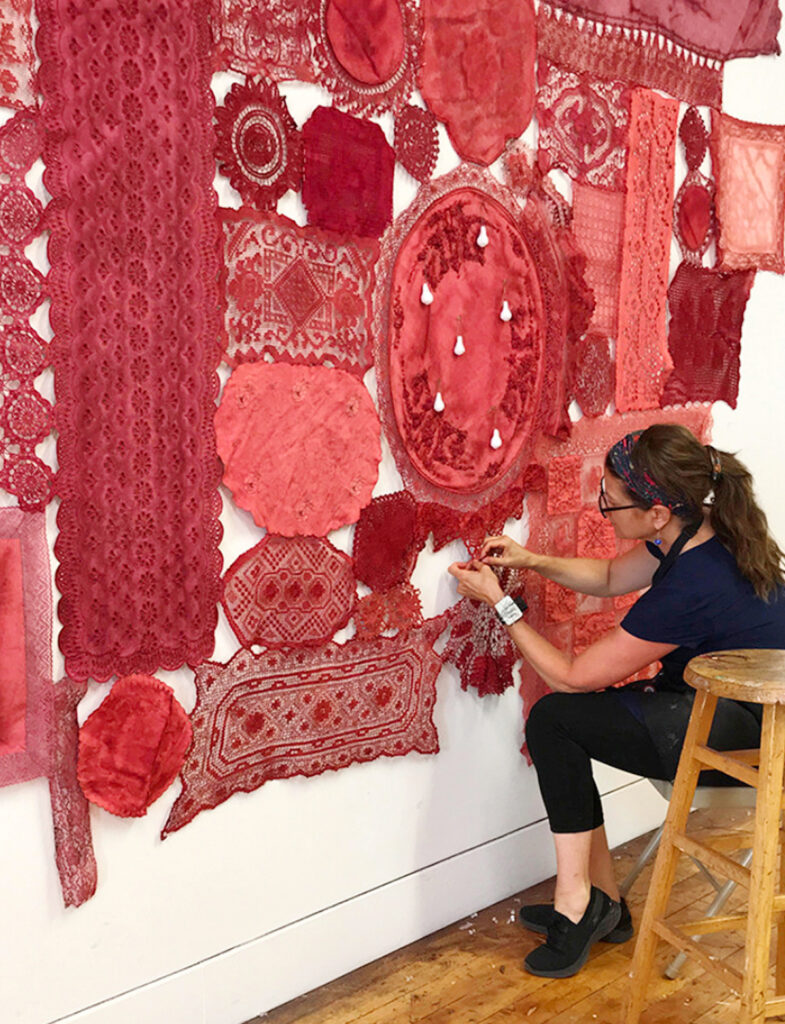
(Left) Izumi Ueda Yuu, Dreamboat (2024), painting, gouache and collage, 53 x 39 cm, (Right) Izumi Ueda Yuu, River, 2022, Mixed media painting, drawing, Sumi painting, water color, shibori, collage and oil stick, 154x118cm
(Left) Izumi Ueda Yuu, Dreamboat (2024), painting, gouache and collage, 53 x 39 cm, (Right) Izumi Ueda Yuu, River, 2022, Mixed media painting, drawing, Sumi painting, water color, shibori, collage and oil stick, 154 x 118 cm

The art of Izumi Ueda Yuu relates very much to Symbolism in the way it conjures up dreamy narratives through pure, poetic, potent iconography. Everything, every belief, emotion, realization is boiled down to its essence, waiting to re-emerge in the mind and thoughts of the viewer. Once the conversation begins between the art and the viewer, the mysterious spiritual aspect of the art comes forward. The artist’s imagined, created place of make believe is one built of memory, childhood dreams, things that sometimes happen in the periphery that later become central and Ueda Yuu’s art lives in that space where the mind transcends the matter.

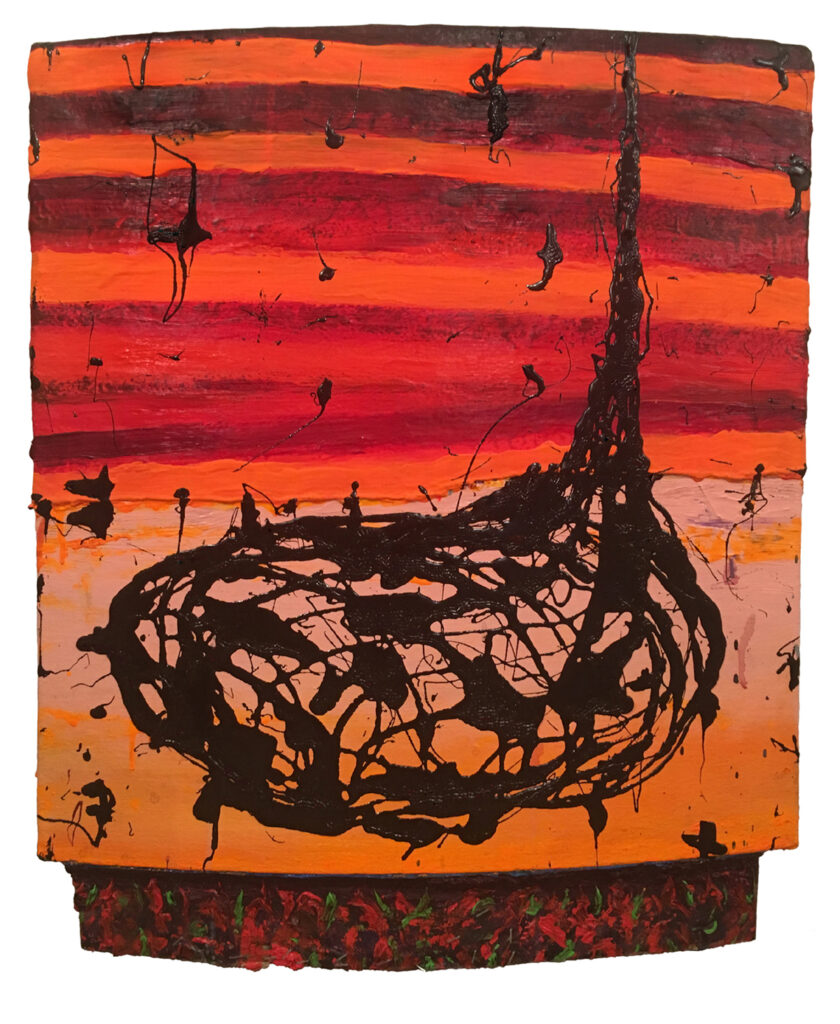
(left) Luís Almeida, Pool Johnny (2025), oil on canvas, 200 x 175 cm, (right) Luís Almeida, Crazy Movement (2023), pastel and charcoal on paper, 150 x 140 cm

Luís Almeida’s art goes back and forth between fantastical, heroic imagined worlds to a brutal form of representation. His ability to reveal a mystical imagining overrun with narratives to the simple truth of the absurd or benign aspects of the everyday, all with an element of wild humor is the core of Almeida’s art. A brilliant draftsman and a provider of unadulterated color theory, this artist is still very much connected to that inner child that once ruled all his thoughts. The message here is: “There is no art without total freedom of thought and expression.” A mental state that hinges solely on his ability to leave it all out there for everyone to see.

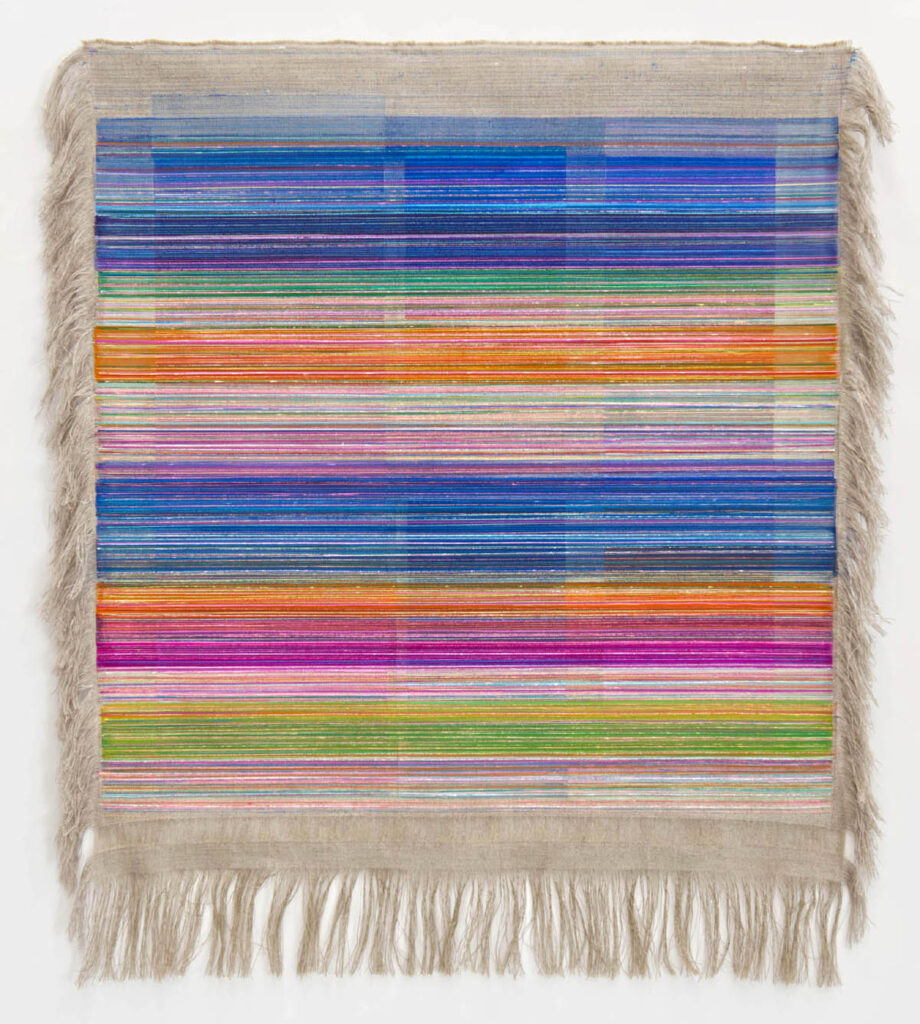
(left) Run Jiang, Sono (2022), ink marker and watercolor on paper, 32 x 24 cm, (right) Run Jiang, Mixed Dream 3 (2022), charcoal pencil and collage on paper, 73 x 110 cm

Run Jiang’s art is a perfect blend of being and pretending. Jiang’s more colorful works focus on the waking dream state, when one’s thoughts are completely unrelated to one’s physical place. In this instance, Jiang puts forth her own unique way of portraying the multi-planar reality theory whereby previously unseen worlds collide. In her black and white ink drawings which she notes as a Dream series, Jiang brings together lifelong experiences, both real and imagined, into a precious series of vignettes and vistas that can at one moment seem bucolic and the next imperiling.

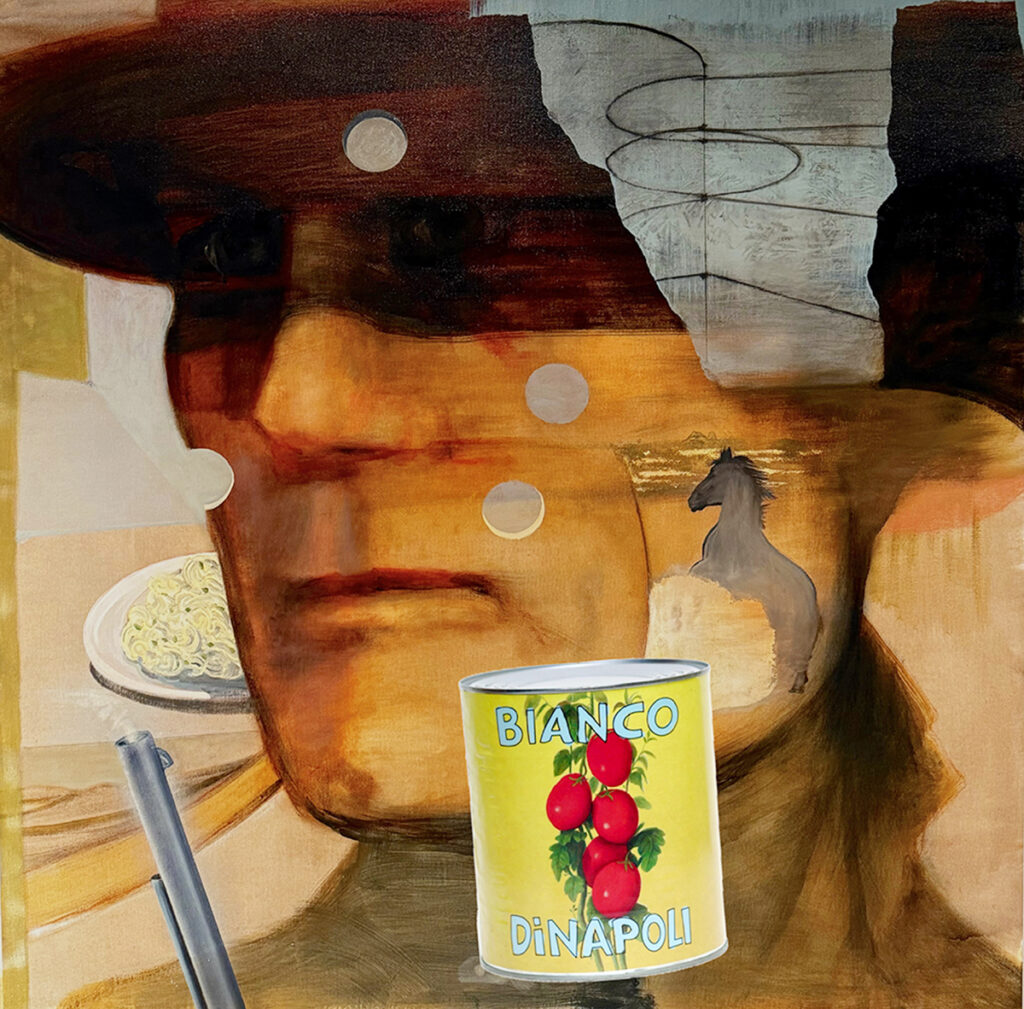
(left) D. Dominick Lombardi, CCWSI 189 (2025), acrylic, oil, canvas, 60.3 x 45 cm, (right) D. Dominick Lombardi, CCWSI 192 (2025), oil, acrylic medium, magazine page, museum board, 125.4 x 19 cm

In my paintings, I am repurposing the thousands of small drawings I made when most of the world was sheltered in place. For an artist, this state of being sheltered and alone is not so unusual. In fact we crave it. However, the danger that lurked just outside the studio door and windows in the time of the worst COVID days was very imposing. Studying, mining and resolving a few of the numerous, relatively automatic drawings I made back then, recreating them into oil on repurposed canvases or on 1960’s and 70’s printed materials gives me the chance to return back to a time when I pretended everything, one day soon, was going to be okay.

The exhibition “Fingindo ou Fingimento (Pretending),” which will include the work of Izumi Ueda Yuu, Luís Almeida, Run Jiang and myself (D. Dominick Lombardi), will be held at two compelling venues. The first will open on October 30, 2025 at Braço Perna 44 in Lisbon. Run by João Fernandes, Braço Perna 44 is one of the more charming spaces in town, where they always present some of the most visually stimulating, intimate and intriguing art in the capital city of Portugal. Luís Almeida and Run Jiang are represented there. The second venue opens on November 7, 2025 at Atelier Ghostbirds, which is run by Mika Aono. Located in Caldas da Rainha, Atelier Ghostbirds is a formidable and central institution in an area where there are many artists living and working. In addition to eye opening and fun exhibitions, the gallery also offers printmaking workshops and art related events.