by Roy Bernardi
Julius Rolshoven (1858-1930) was an American painter whose professional trajectory connected European academic conventions with the artistic landscape of the American Southwest. Best known for his portraits, figure paintings, and later depictions of the American Southwest. Rolshoven held membership among the twelve founding artists of the Taos Society of Artists and created some of the finest depictions of New Mexico’s Pueblo communities.
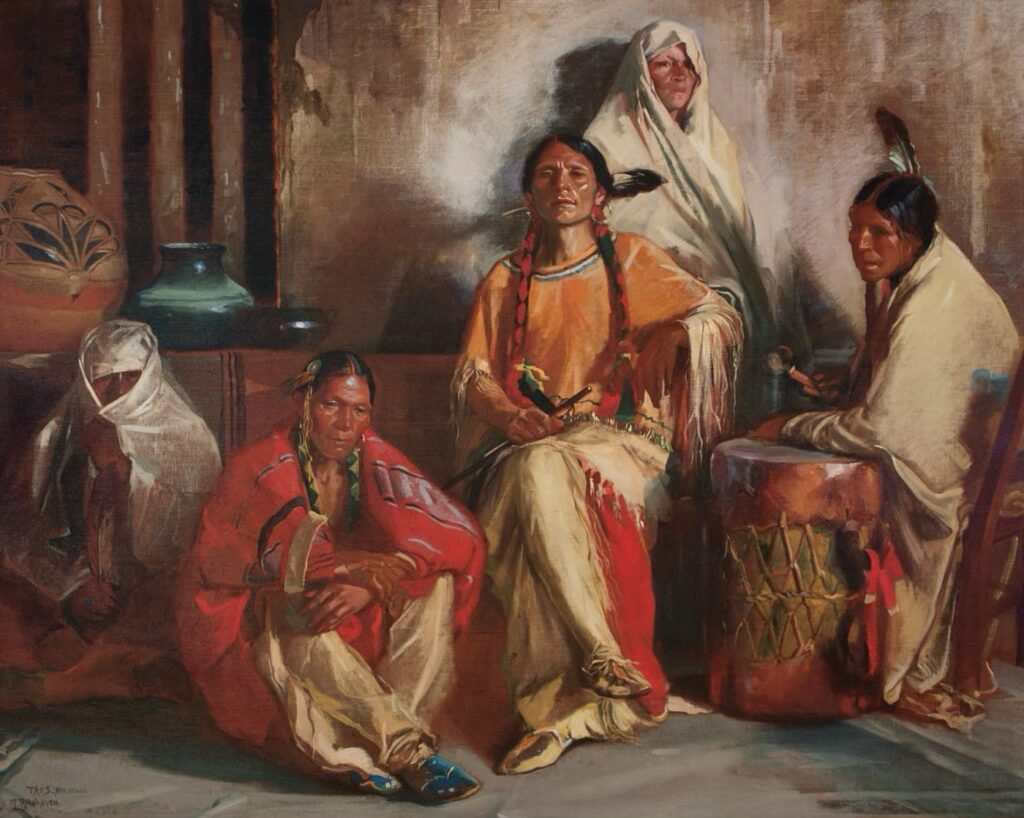
Julius Rolshoven, The Indian Council, ca.1916. oil on sized burlap-laid canvas, 72 x 90-1/2 inches. Collection of the New Mexico Museum of Art, Santa Fe, New Mexico
Julius Rolshoven was born in Detroit, Michigan, on October 28, 1858. His artistic training was unusually international for an American painter of his generation where he studied at Cooper Union in New York. Continued at the Düsseldorf Academy in Germany. Studied in Munich with Frank Duveneck (1848-1919), becoming one of the famous “Duveneck Boys” and later worked and studied in Paris at the Académie Julian.
Rolshoven dedicated his existence to traversing primarily among three significant locations: Detroit, Michigan, his birthplace and formative residence; Florence, Italy, where he maintained a residence and undertook the restoration of a medieval estate known as Castello del Diavolo (“Devil’s Castle”), which was the formal residence of Lisa Gherardini (1479-1542), the muse for Leonardo Da Vinci (1452-1519) and his iconic painting, the Mona Lisa; and Santa Fe, New Mexico, where he established a residence and maintained a studio within the Palace of the Governors.
During the 1870s, Munich had emerged as the foremost destination for American art students. In contrast to Paris, the Munich Academy emphasized dynamic painting techniques, dramatic light, and rich earth colours. During the year 1878 in the city of Munich, Frank Duveneck, founded an independent atelier where instruction was notably casual and experiential. Students observed his painting methodology, subsequently implementing identical techniques in their own artistic work. The most prominent members of the Duveneck Boys cohort included John Henry Twachtman (1853-1902), John White Alexander (1856-1915), Otto Henry Bacher (1856-1909), Julius Rolshoven, Joseph DeCamp (1858-1923), Theodore Wendel (1859-1932), and Herman Wessel (1878-1969). Though frequently associated with this collective, William Merritt Chase (1849-1916) functioned primarily as a distinguished colleague and associate rather than a formal student, despite his artistic development occurring in parallel with Duveneck’s artistic circle. Rolshoven studied with Duveneck in Munich before accompanying the circle to Italy in 1879. He absorbed Duveneck’s vigorous handling of oil paint but gradually developed a more refined, cosmopolitan style while living in Florence and traveling throughout Europe. Rolshoven’s professional career exemplifies that the Duveneck Boys operated as independent practitioners rather than stylistic imitators, with each artist developing Duveneck’s foundational principles through their own distinctive artistic directions. Although “Duveneck Boys” was originally a nickname, the group is now recognized by art historians as one of the pivotal circles in nineteenth-century American painting. By means of their exhibitions, teaching endeavours, and professional accomplishments, they facilitated the transition of American artistic practice from rigid academic traditions toward increasingly liberated and emotionally resonant aesthetic approaches that ultimately gave rise to American Impressionism and early modern realism. They modernized American realism.
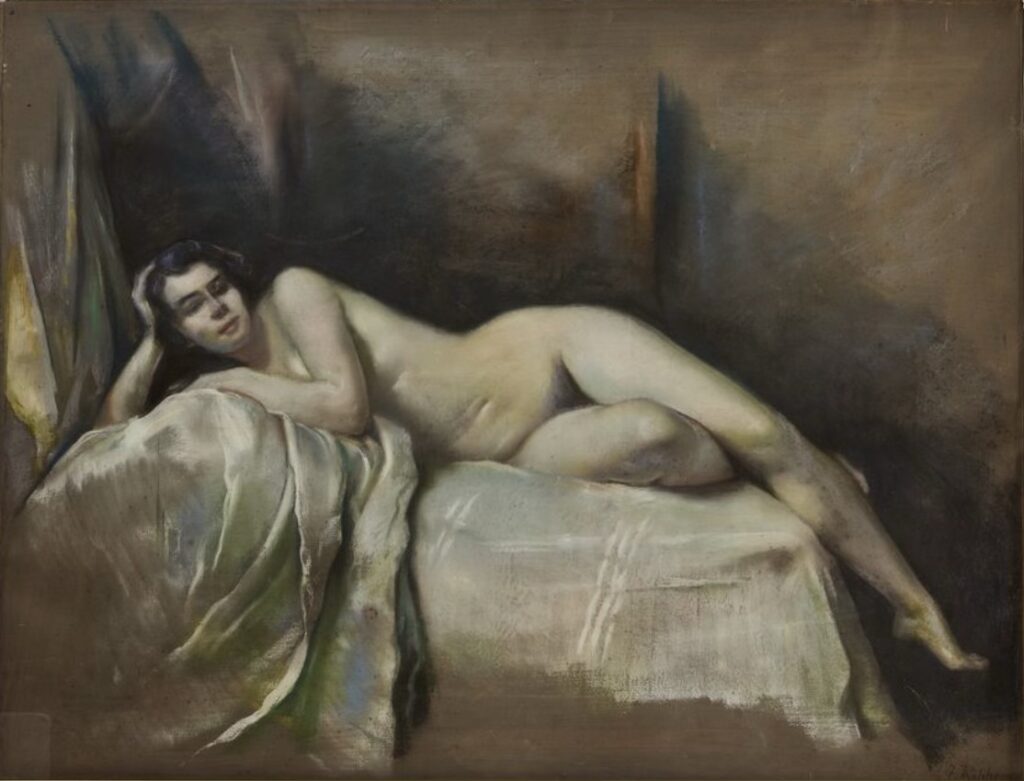
One work executed during Rolshoven’s formative years in Europe, Reclining Nude, ca. 1878–1879, pastel on paper, mounted on canvas is an accomplished academic figure study that reflects the rigorous training he received in Munich during his association with the circle of Frank Duveneck. The composition demonstrates Rolshoven’s exceptional command of draftsmanship and his sensitive handling of the pastel medium, employing subtle tonal transitions to model the figure with remarkable naturalism. The work belongs to the period when Rolshoven and his fellow American expatriates later known as the “Duveneck Boys” embraced the direct observation and painterly realism that distinguished the Munich School from the more polished academic traditions of Paris. Working with pastel, with its capacity for both painterly softness and precise linear definition, proved ideally suited to the study of the human figure, allowing Rolshoven to explore the effects of light across flesh while maintaining structural integrity.
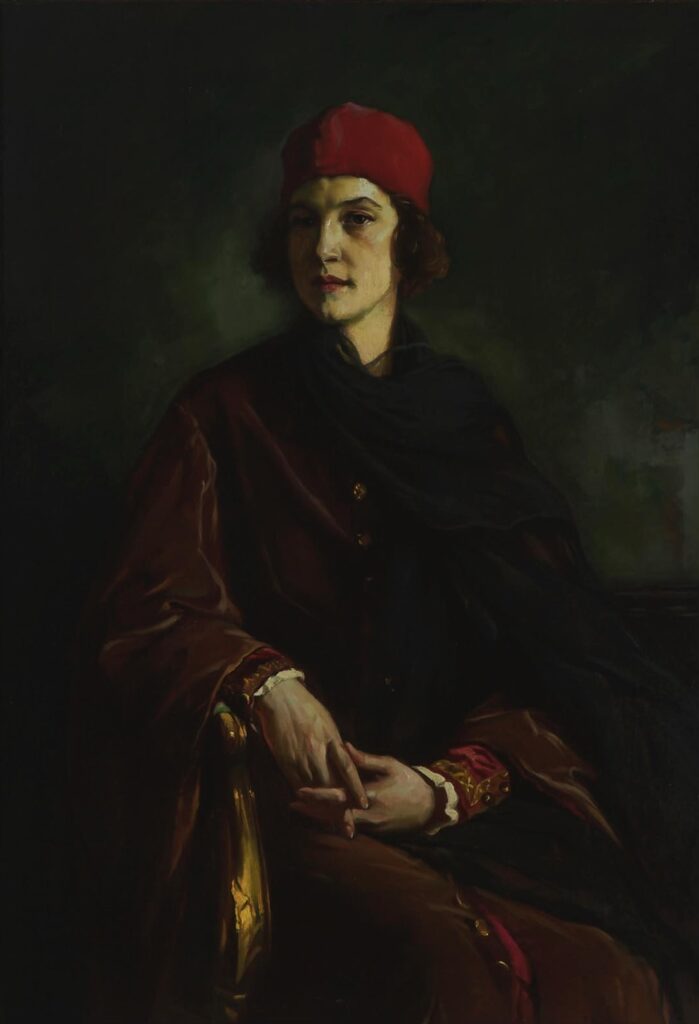
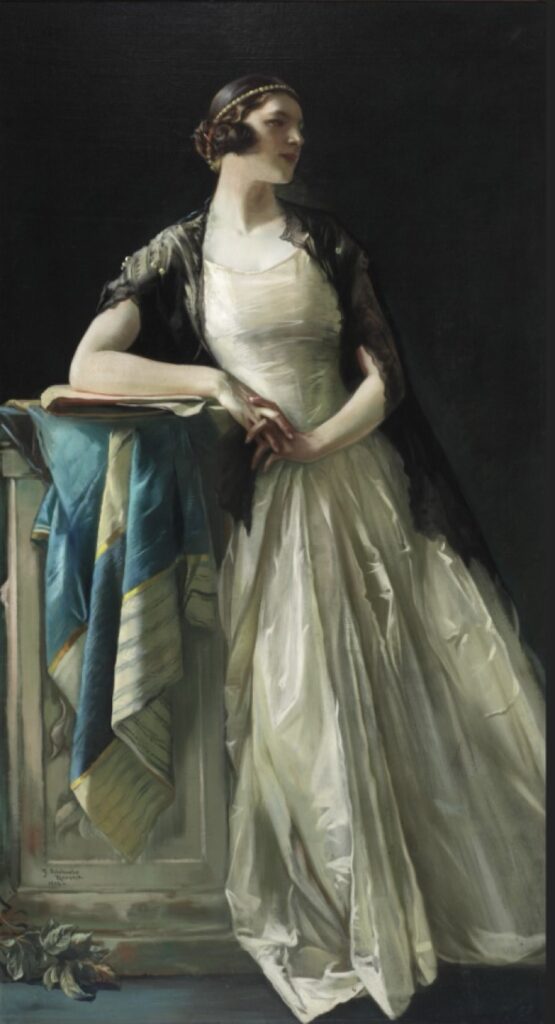
Rolshoven’s European career earned him accolades at major international expositions held in Paris, Munich, Berlin, Brussels, Florence, Buffalo, St. Louis, and Chicago preceding his eventual connection with the American Southwest. One of Julius Rolshoven’s most significant accomplishments was his unwavering dedication to maintaining classical academic painting methodologies during an era characterized by substantial artistic transformation. As Impressionism and contemporary artistic movements were fundamentally reshaping the artistic landscape, Rolshoven steadfastly upheld his commitment to representational art, rigorous compositional principles, and meticulous technical precision. His artistic works exemplify exceptional craftsmanship and demonstrate a sophisticated comprehension of the human form.
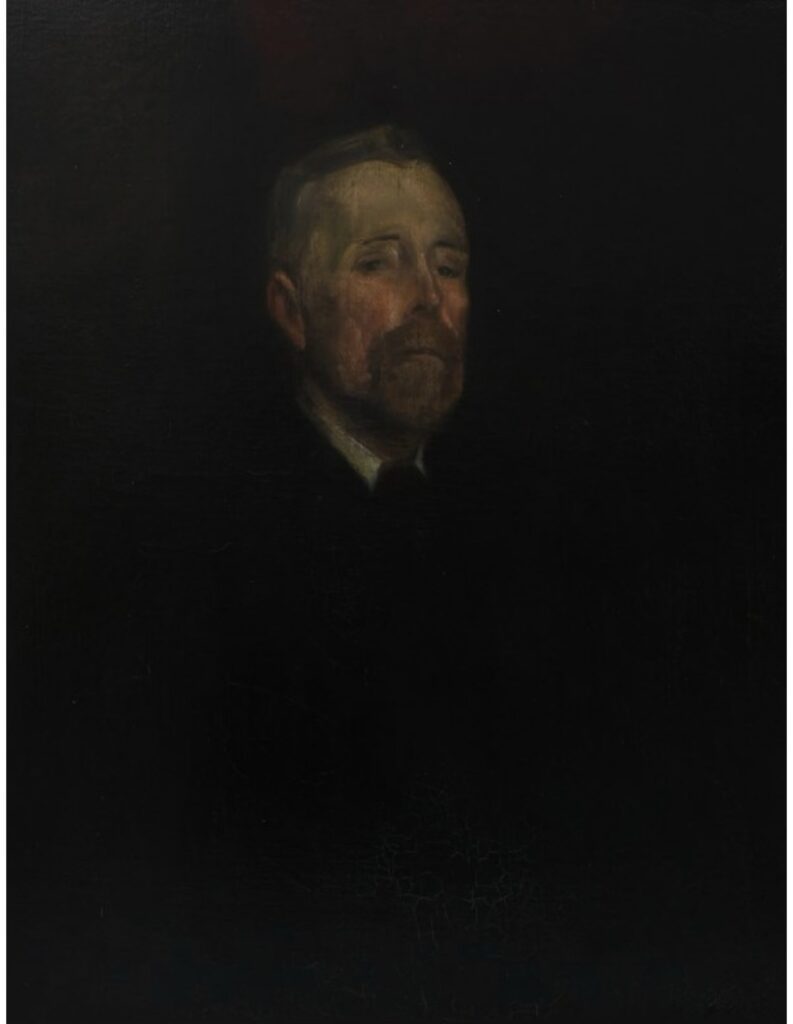
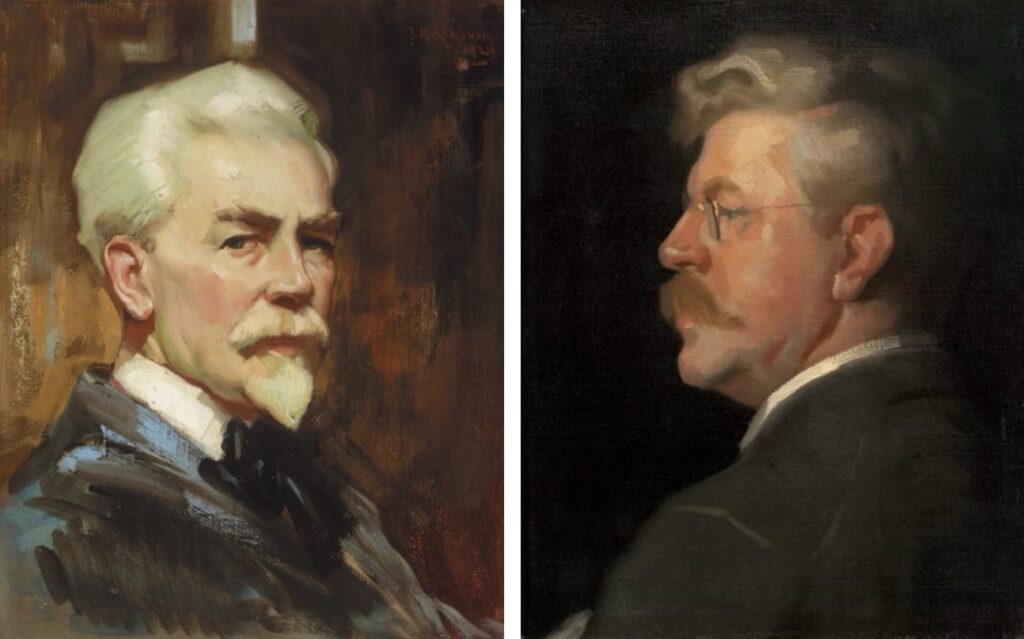
Rolshoven distinguished himself particularly as a portrait artist, best known for his portraits of high-society figures in Europe, and Pueblo Indians in New Mexico producing compositions that successfully captured not merely the physical resemblance of his subjects but also their individual character and social position. His portrait compositions continue to be esteemed for their psychological sophistication and superior technical execution. By the close of the nineteenth century, Rolshoven had established himself as one of the foremost American expatriate painters working in Europe, attracting an elite clientele that included members of the aristocracy, diplomats, intellectuals, and prominent figures in European society. One such portrait of Charles Lyttelton, 8th Viscount Cobham, 1898, oil on canvas, is an outstanding example of Julius C. Rolshoven’s accomplished portraiture during the height of his international career. The present portrait reflects the sophistication and psychological sensitivity that distinguished his finest commissioned works. Charles George Lyttelton (1842–1922), who later succeeded as the 8th Viscount Cobham in 1898, belonged to one of Britain’s oldest and most distinguished noble families. Rather than relying solely upon the conventions of formal aristocratic portraiture, Rolshoven presents his sitter with a compelling sense of individuality and quiet authority. The composition balances dignity with naturalism, revealing both the social stature and personal character of the subject through restrained gesture, direct observation, and an understated elegance.
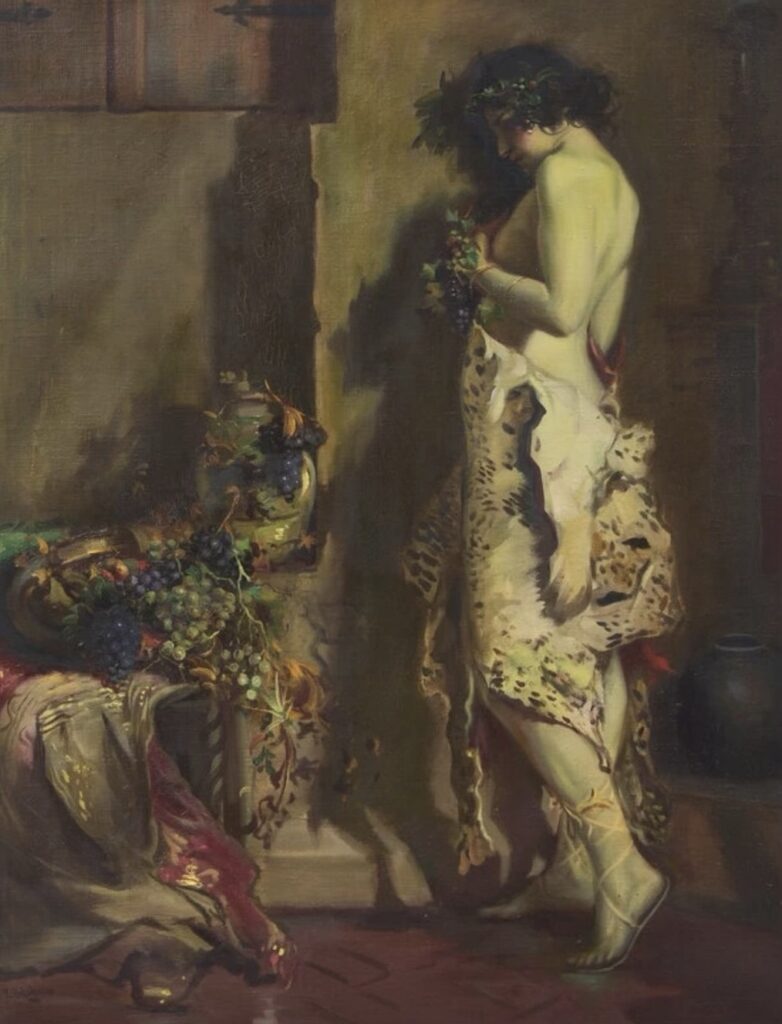
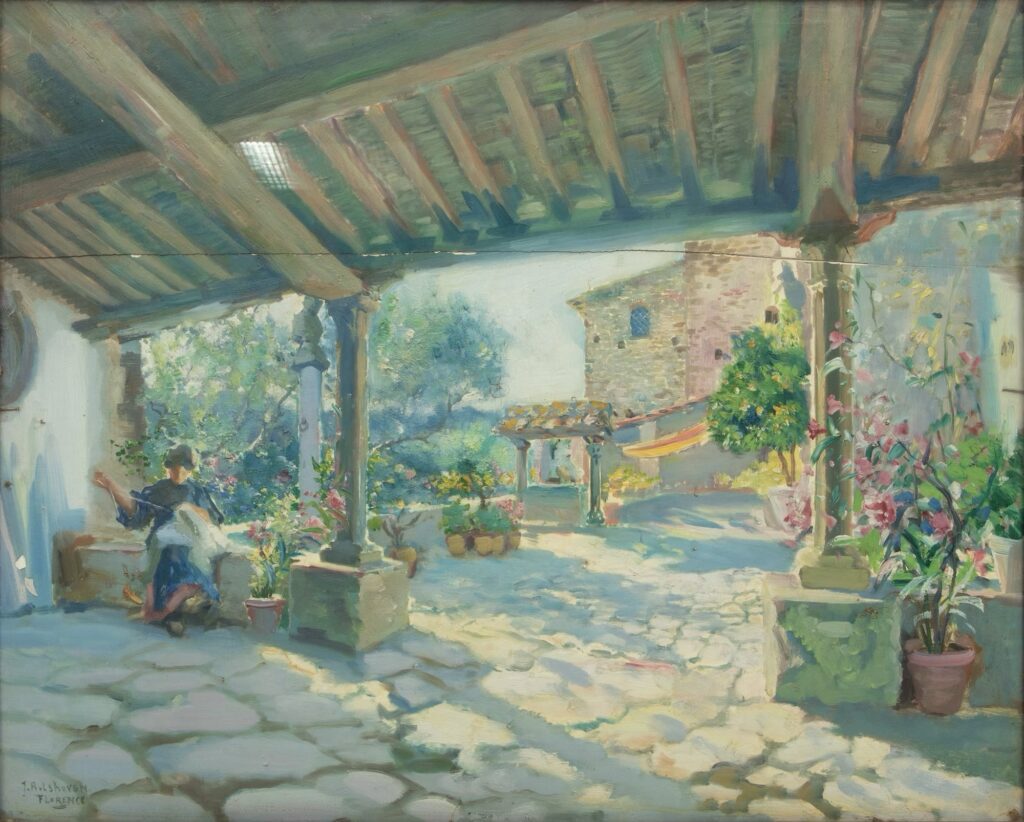
Upon the outbreak of World War I and its consequent disruption of European society, Rolshoven made his return to the United States. In 1916, he established his residence in Santa Fe, where he commenced his artistic endeavours depicting Pueblo ceremonial practices, portraiture of Native American subjects, and landscapes of New Mexico. His artistic output synthesized European academic realism with the vivid illumination and chromatic richness characteristic of the Southwestern region. While in Santa Fe Rolshoven befriended the original founding members of the Taos Society of Artists known as the “Taos Six” when it was established in July 1915; Joseph Henry Sharp (1859–1953), Eanger Irving Couse (1866–1936), Oscar E. Berninghaus (1874–1952), William Herbert “Buck” Dunton (1878–1936), Ernest L. Blumenschein (1874–1960) and Bert Geer Phillips (1868–1956), Later, the society expanded to include six additional active and associate members: Walter Ufer (1876–1936), Victor Higgins (1884–1949), Julius Rolshoven, E. Martin Hennings (1886–1956), Catharine C. Critcher (1868–1964) the Society’s only woman member, and Kenneth Miller Adams (1897–1966). Although Rolshoven joined after the six founders, he was already an internationally respected painter with decades of European experience.
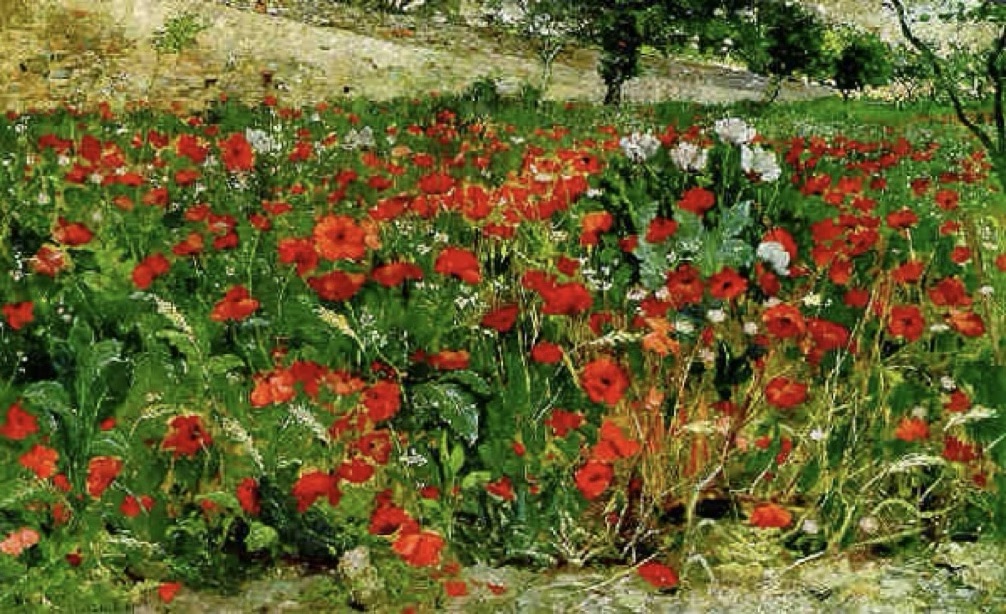
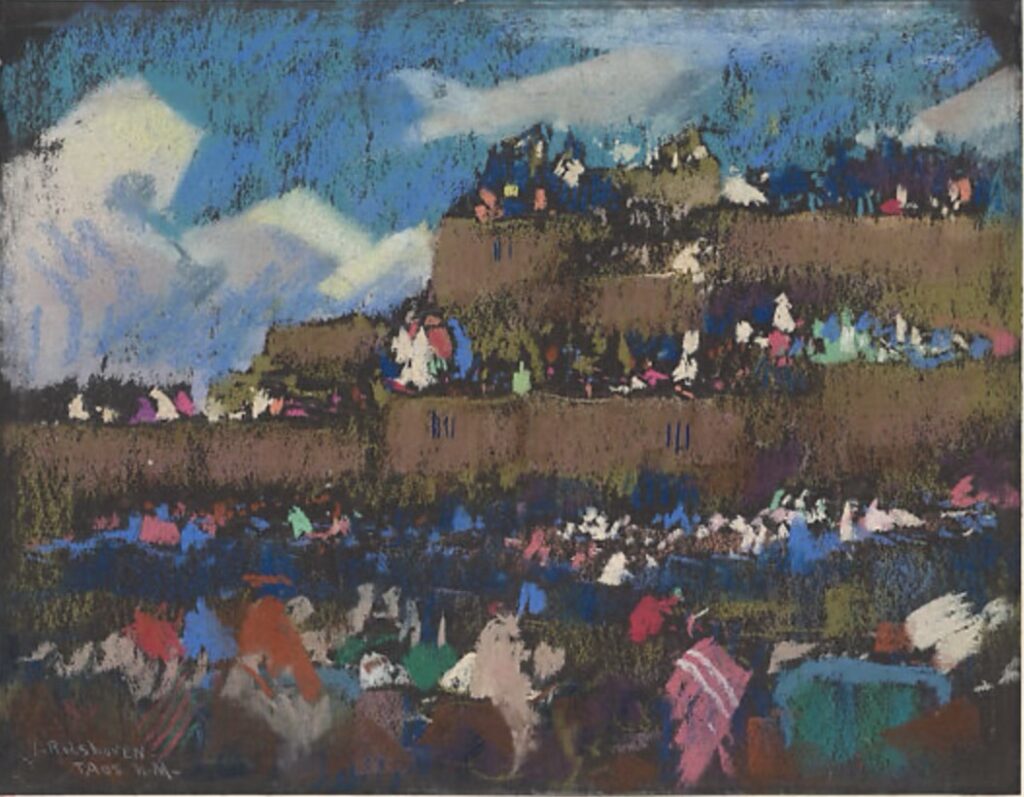
Rolshoven differed from many Taos painters because of his extensive European background. His paintings are characterized by strong academic draftsmanship, rich, luminous colour, careful figure modelling classical composition, sensitive portrayals of Pueblo life and ceremony. A balance between realism and poetic atmosphere. Rather than emphasizing dramatic Western action scenes, he often focused on dignified portraits and ceremonial subjects. His works from this period, such as Fiesta in Taos, 1917, pastel on paper, combine academic realism with vibrant colour and careful observation of Southwestern life. He infused his works with emotion and harmony, inviting viewers to appreciate the beauty of both natural and human environments.
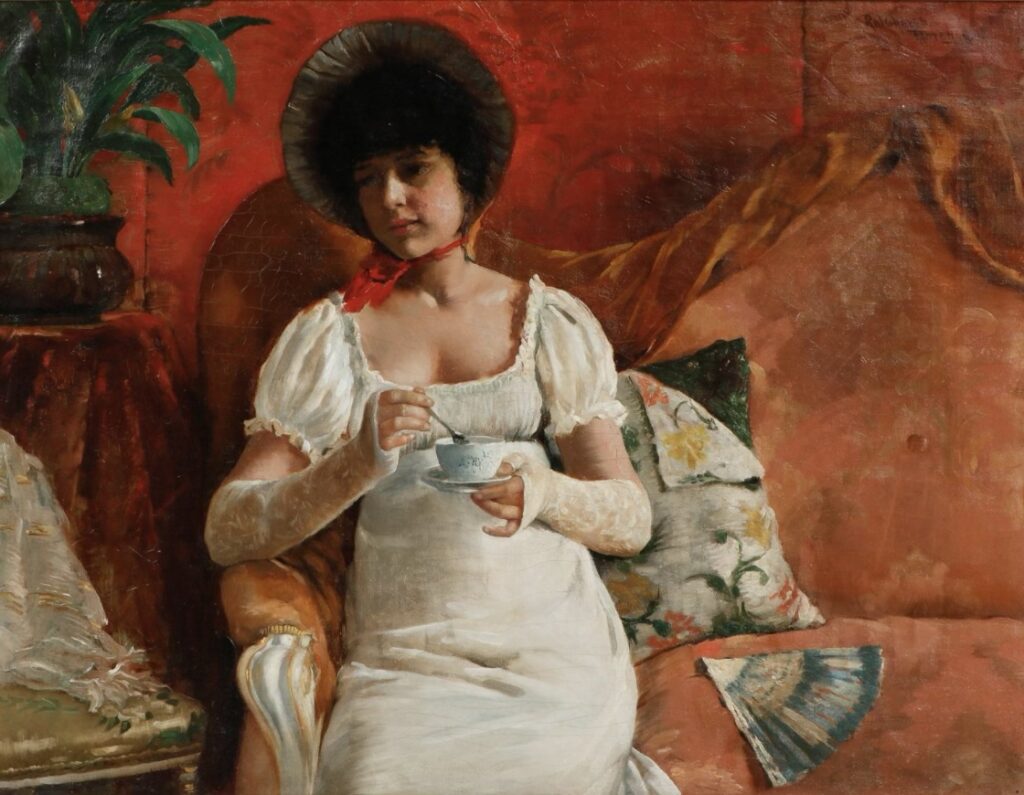
Julius Rolshoven an international academic painter occupies an important place in art history as a master of academic realism whose work reflects both European tradition and American ambition. His portraits, figure works, and genre paintings reveal exceptional technical skill, thoughtful composition, and enduring artistic sensitivity. Details evident in his composition Florence, Tea Time, 1887, oil on canvas, distinctly demonstrate his proficiency in depicting realistic imagery. Although his name may not be as familiar as those of some modern artists, his contributions continue to enrich our understanding of the artistic achievements of his era. As museums and historians increasingly revisit overlooked artists, Julius Rolshoven’s work stands as a lasting testament to the enduring value of classical craftsmanship, cultural exchange, and artistic excellence.
Finally, Rolshoven’s career demonstrates the international character of artistic production before globalization became a modern concept. His movement between Germany, Italy, and the United States reflects the circulation of ideas, techniques, and artistic identities that shaped Western art at the turn of the twentieth century. The year 2030 will commemorate Rolshoven’s centennial anniversary.
Rolshoven’s works are held by institutions including The Metropolitan Museum of Art, New York City, NY; The Detroit Institute of Arts, Detroit, Michigan; The Brooklyn Art Museum, Brooklyn, New York; The National Portrait Gallery – Smithsonian Institution, Washington, DC; The Santa Fe Art Museum, Santa Fe, New Mexico; The El Paso Museum of Art, El Paso, Texas; The Newark Museum, Newark, New Jersey.