by Steve Rockwell
I travelled with my family to Gothenburg, Sweden in 1951, leaving Espoo, Finland, which had been home to my father’s side of the family for at least four generations. My grandfather had been part of a movement to adopt Finnish names, legally shedding his Kristiansson identity for Salomaa. Steve Rockwell, on the other hand, is a creative persona. My mother had believed that Salomaa was entirely the outcome of the 1918 conflict between the Bolshevik Reds and White Finns, where Johan Nestor Kristiansson defected to the Whites. “He rammed his rifle barrel into ground at the base of a tree, and bolted,” my mother recounted.
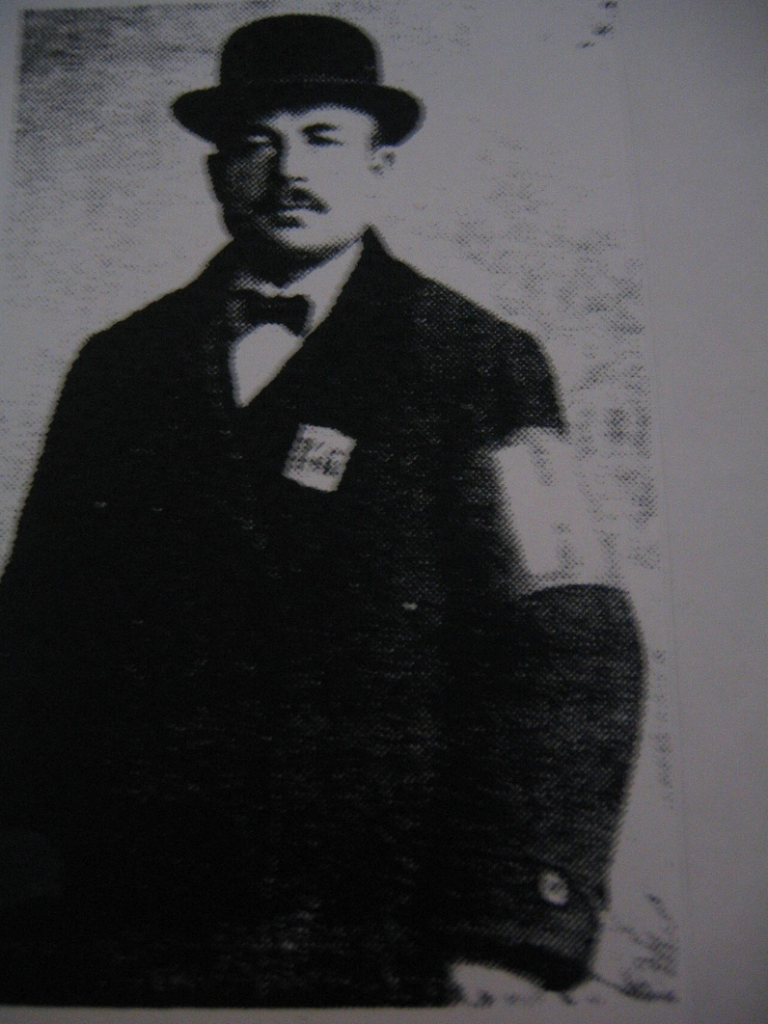
Kuusta Rovio, the Helsinki police chief, figures into the story here. Rovio not only sheltered Vladimir Lenin in his Helsinki apartment in August of 1917, but supplied him with Russian newspapers and passed on secrets to his party comrades.
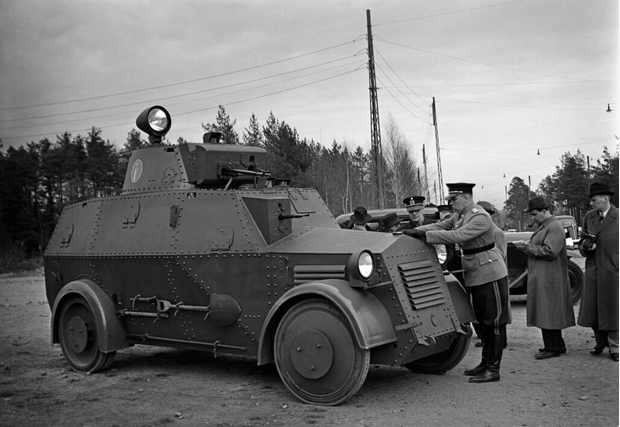
As it turned out, the anti-socialist White forces under Carl Gustaf Mannerheim won a decisive victory in May 1918. Rovio fled to Soviet Russia, becoming a Communist Party official. A victim of Joseph Stalin’s Great Purge, he was arrested in 1937 and executed the following year. Meanwhile in Helsinki, the police department bleached its Reds. The armored cruiser Sisu “Black Maria” rolled out in the year of his arrest. After the war in 1945, my father had a job painting “Black Marias” at the Helsinki Police Department. He would have been familiar with the armored Sisu since it served until 1951, the year we left for Sweden.
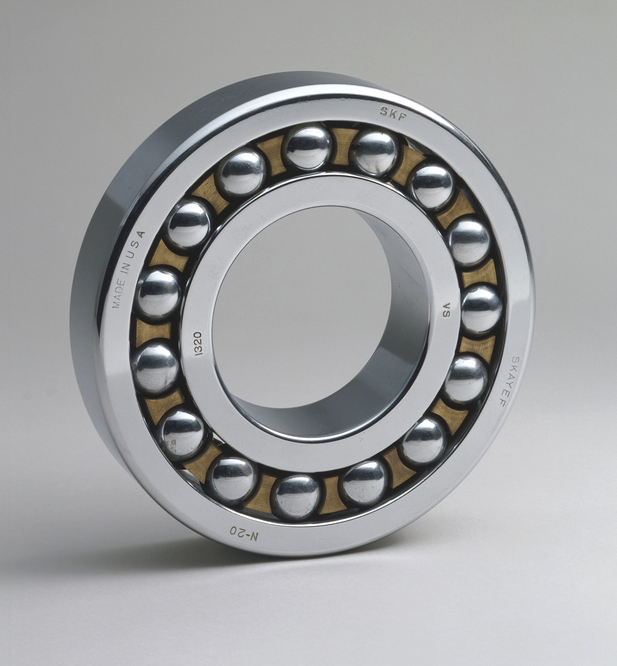
My father found employment at SKF ball bearing factory in Gothenburg, an obvious choice, as SKF parts would have regularly been shipped to the Helsinki Police Department, civilian cars being retrofitted as police cruisers. To a five-year-old, the sound of a ball bearing smacking and rolling across the floor had been memorable. Swedish engineer Sven Wingquist’s 1907 invention of the modern self-aligning ball bearing had solved shaft misalignment and machine overheating. It resulted in the foundation of Svenska Kullagerfabriken (SKF), paving the way for a new car company, Volvo (Latin for “I roll”).
In 1913 it had been the churning and friction of the chocolate grinder that erotically overheated Marcel Duchamp’s imagination. In Paris that year he produced the first “readymade,” Bicycle Wheel. The term described works that were selected rather than crafted, although the word did not come into use for another two years. Sven Wingquist’s self-aligning ball bearing was featured at the Museum of Modern Art (MoMA)’s 1934 Machine Art exhibition in New York City, not as readymade, but a “crafted” object. Duchamp’s Bicycle Wheel didn’t appear at the MoMA until 1951, the original wheel not having survived. You can still find Wingquist’s ball bearing piece on display in the David Geffen Wing today.
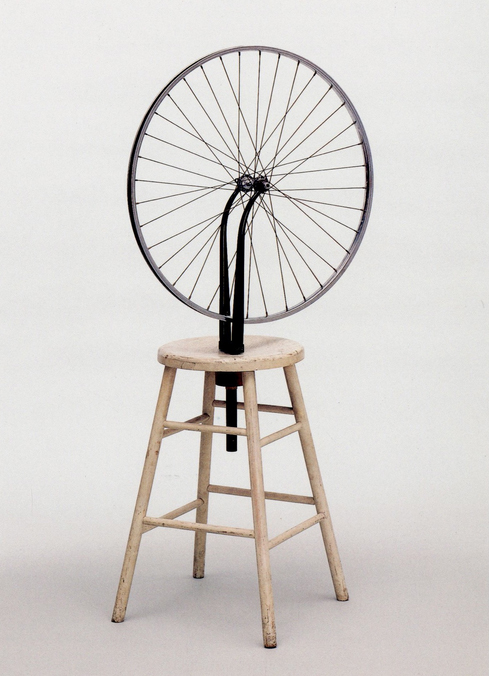
Between 1592 and 1610, during his tenure in Padua, Galileo Galilei used ramps to study falling objects, since the high speed of a free-falling entity proved impossible to accurately time. With his “decelerated” brass balls, for instance, observations and measurements were quite feasible. Galileo found that a body fell at the approximate rate of 32 feet per second.
In the case of Vladimir Lenin’s 32 “sealed car” passengers who left Zurich railway station on April 9, 1917 for St. Petersburg, the rate of a falling body is measured in historic terms. The Germans permitted the “sealed train” to cross its territory tactically to destabilize Russia. Within months of arrival at Finland Station, the 1917 October Revolution was successfully staged, giving birth to the Soviet state. Out of the 32 passengers who essentially shaped 20th century as we came to know it, most had by the late 1930s been made enemies of the people, tortured, executed, or been worked to death in the Gulag.
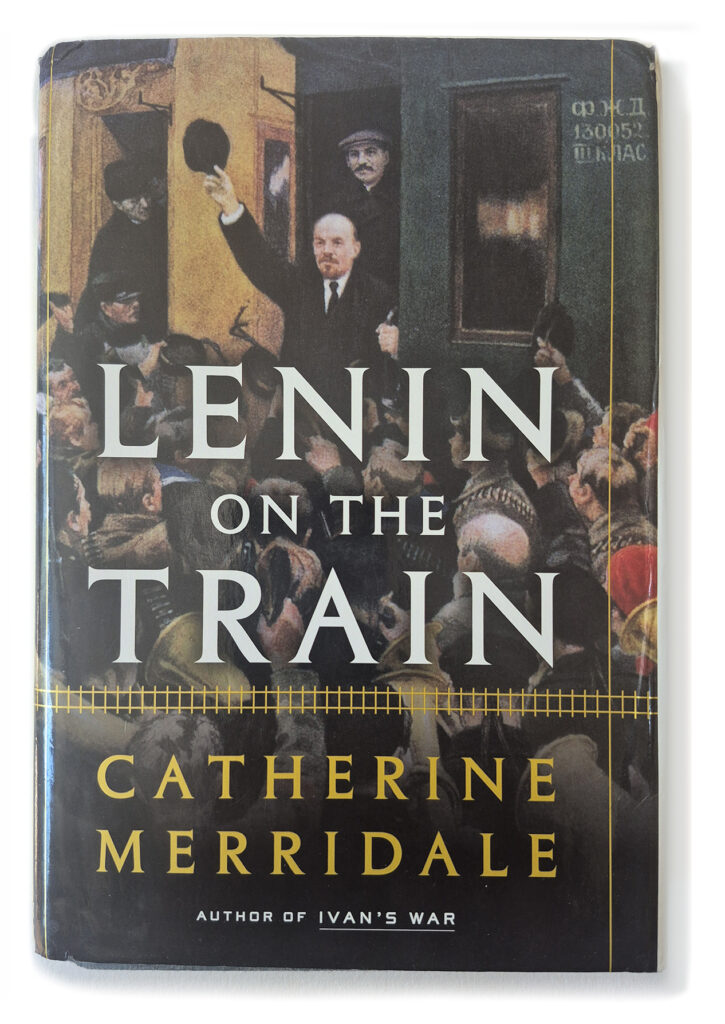
Lenin on the Train had been passed on to me by a couple at the Crane Beach Resort in Barbados some eight years ago. After a poolside chat about reading, I had expressed an interest in the subject. Julia then suggested I pick up the book from the lobby library where they had left it, as it had failed to hold husband David’s interest. It surprised me at the time. Learning that David had just previously been the publisher of Toronto Life Magazine, I had assumed a degree of curiosity in the topic. I now see that it had rather been my own tangled family history which had brought the pertinent immediacy to Lenin’s train ride.
Christmas 1954 we travelled back to Espoo to visit my grandmother on her death bed. Emilia Karolina Salomaa passed away shortly into the new year at the age of 91. The visit entailed a 25-mile train ride through Porkkala, a Soviet naval base. At the western Espoo checkpoint, armed Soviet soldiers boarded the train for document inspection. Heavy shutters were fastened over all carriage windows from the outside. The Finnish steam engine was uncoupled and replaced by a Soviet one, which guided the train through the military zone. Memorable to a nine-year-old was the complete darkness and strict instructions to not look outside or move about the train for the next hour. This had been my own “sealed car” passenger train experience, separated by the one by Vladimir Lenin by just 37 years.