by Steve Rockwell
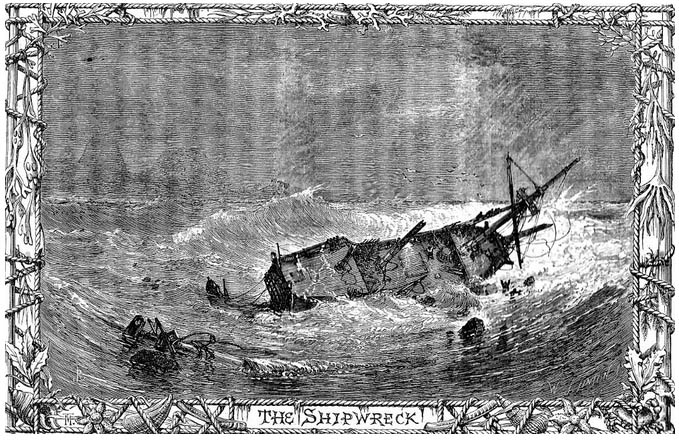
Published in 1719, Daniel Defoe’s The Life and Strange Surprising Adventures of Robinson Crusoe of York, Mariner, is generally regarded as the first English novel. Its immediate success might be attributed to its documentary, confessional style of narration. The receptivity by the general public to tales of shipwreck already had the Alexander Selkirk account as a classic example. Lack of lighthouses and the accurate mapping of shoals made naval disasters inevitable in this age.
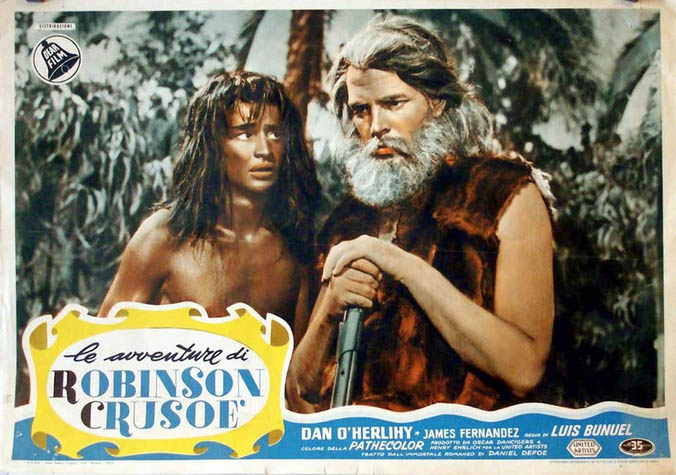
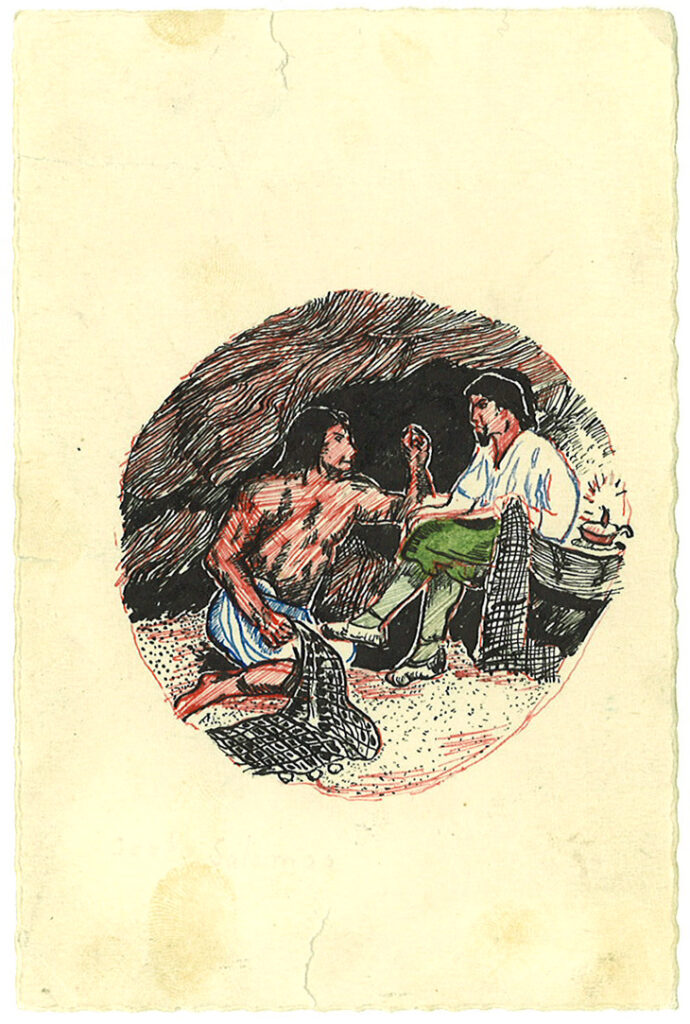
To a young Jouko Salomaa living in Grangesberg, Sweden, Defoe’s classic left a deep impression. To him, when screened at Cassels, the local theater, Luis Bunuel’s 1954 Robinson Crusoe was a disappointment. What the film was unable to convey adequately in his mind, and which the book described in intricate detail, was Crusoe’s gradual conversion of his island wilderness into something of a solitary paradise.
Jouko used one of the illustrations from the book as a basis for his 1957 colored ink drawing of Crusoe and Friday, which he gave as gift to classmate Lennart Hansson. On Jouko’s departure to Canada from Sweden on October 1, 1957, Lennart photographed him at the railway station, the images of which were later emailed to Canada along with one of the Crusoe drawing.
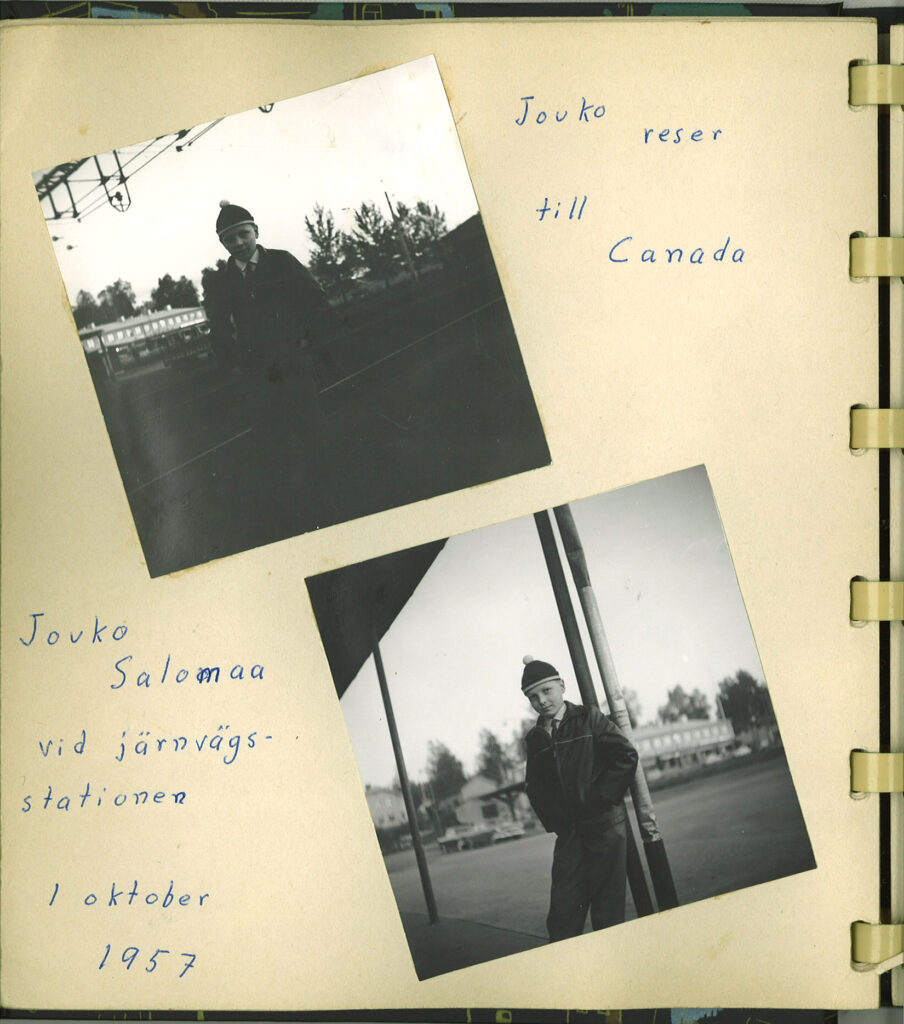
On his departure, twelve-year-old Jouko and ocean liner passengers endured a storm that produced waves the height of the ship. Seasickness had trapped the lad to his cabin for all but the last day of the voyage. The joy at the release from his confinement came with a boundless excitement to explore the ship. Finding himself at the prow of the liner, on an ill-advised impulse he clasped the jack staff tightly with both hands, hoisting himself up with a quick jerk, legs dangling over the tip of the prow. Looking down, the keel cleaved the relative calm Atlantic waters producing little rainbows. A nervous twist of the head at the fear of discovery, however, brought a quick end to the prank.
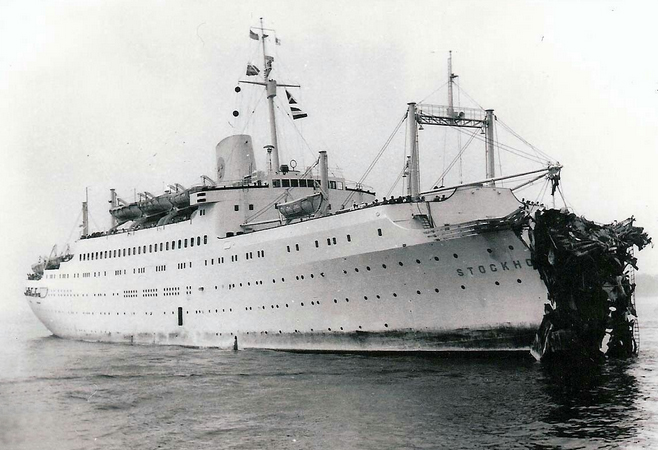
Unknown to the young passenger at the time but common knowledge to crew and many of its passengers, was the ocean liner tragic history. Just a year before on July 25, 1956, in a collision with the SS Andrea Doria, the prow of the MS Stockholm had sunk to the bottom of the sea off the coast of Nantucket in heavy fog. The 75-foot section was repaired within four months at Bethlehem Steel Shipyard in Sunset Park Shipyard, Brooklyn. While the Andrea Doria sunk after eleven hours most of its passengers were rescued.
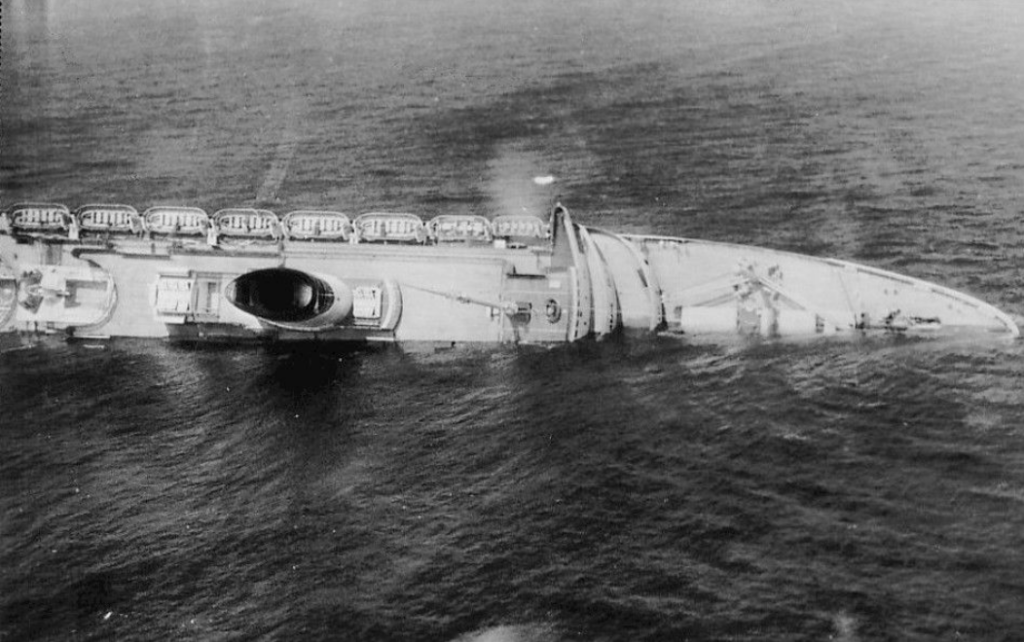
At the moment of impact, 14-year-old Linda Morgan on the Andrea Doria had been asleep. It seems that her cabin, stateroom 52 on the upper deck of the luxury liner had been pierced by the prow of the Stockholm, it somehow sliding under her mattress and catapulting her onto the deck of the Stockholm. Swedish crew heard a girl asking in Spanish, “Where am I?” Puzzled, they realized quickly that she was not part of the Stockholm passenger list.
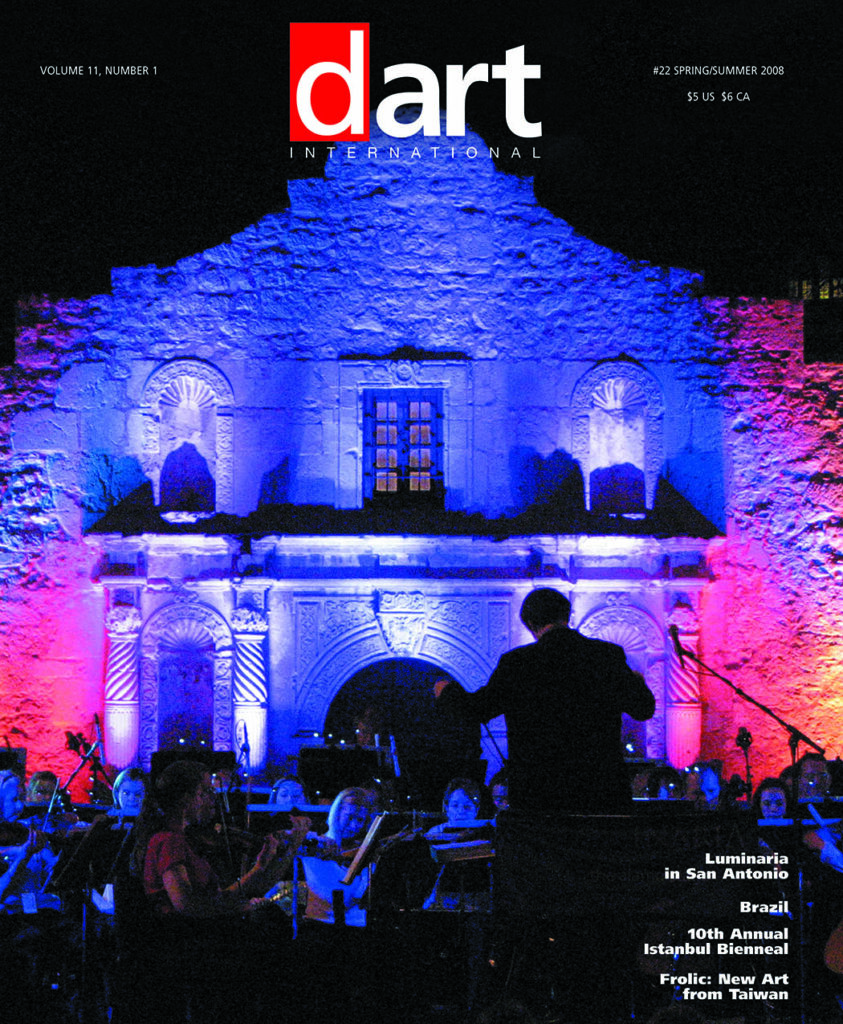
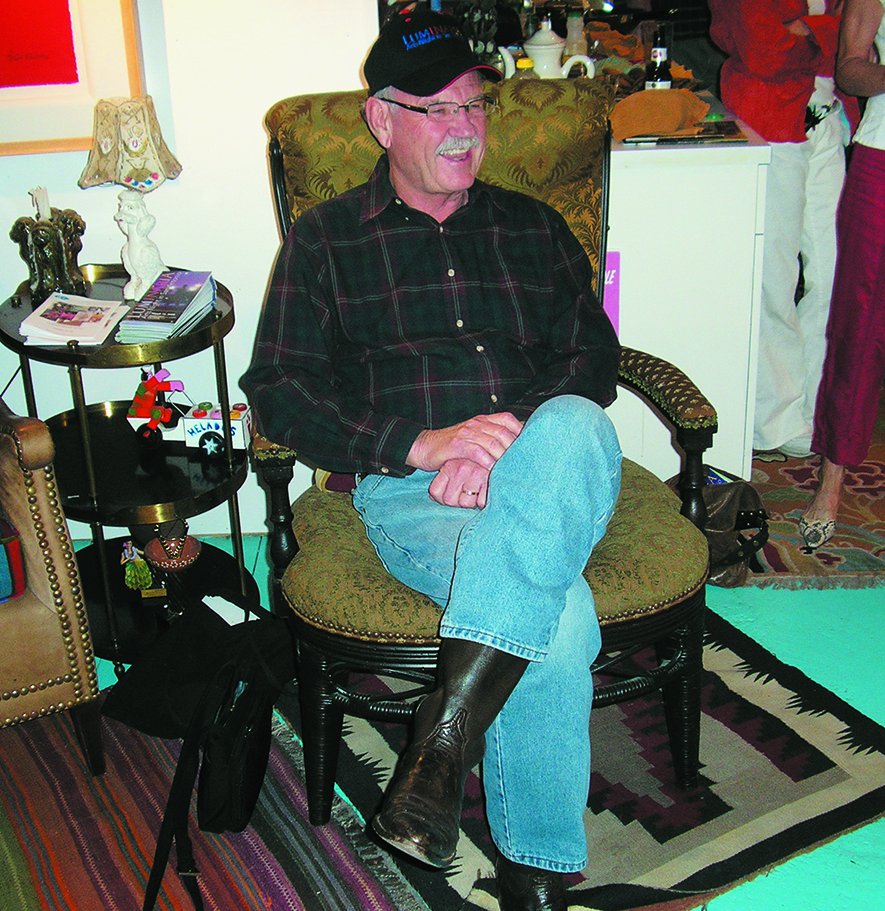
It is at this point that a dot needs to be connected. Both Linda and Jouko became part of the art world as adults. Linda served as curator at the McNay Museum in San Antonio, Texas. She had married Phil Hardberger in 1968, who served as mayor from 2005 to 2009. Jouko created the art persona Steve Rockwell in 1987 in Toronto, eventually published dArt International magazine, which the city of San Antonio invited to cover their 2008 Luminaria arts festival. I took the photo of Mayor Hardberger, not realizing at the time that his wife and I were curiously connected to the Andrea Doria collision and tragedy. The “miracle girl” after recovery from a broken leg, and fractures, was reluctant in later life to talk about an event where she and her mother survived, while her sister and step-father perished.
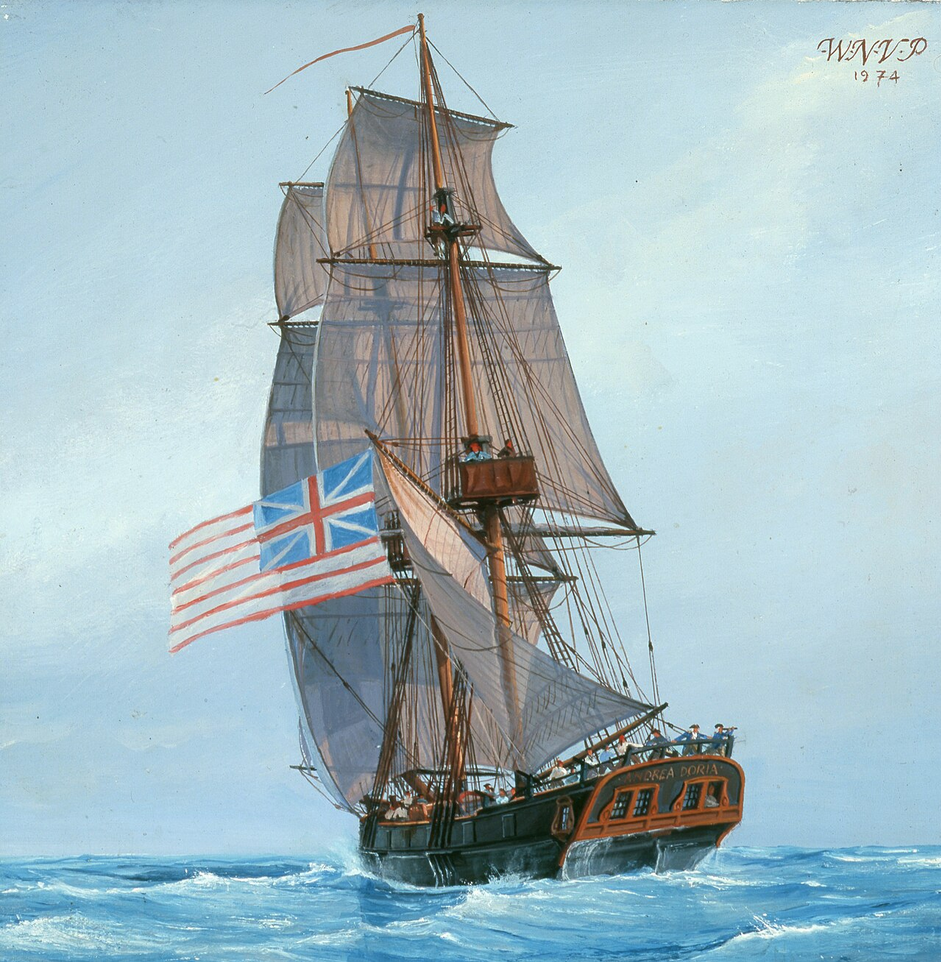
A necessary footnote to the sinking of the Italian luxury ocean liner SS Andrea Doria is the intentional burning and sinking of its American namesake, the USS Andrew Doria on November 21, 1777. The geographical distance between the two wrecks is approximately 277 miles, one about 50 miles south of Nantucket, Massachusetts, the other at the bottom of the Delaware River near Petty’s Island, near Philadelphia. During the American Revolutionary War, rather than surrendering the valuable asset to the advancing British fleet, Captain Isaiah Robinson had the ship packed with combustibles, and watched it burn to the waterline and sink beneath the waterbed. The USS Andrew Doria is historically famous as the first American warship to receive an official salute from a foreign power at Sint Eustatius in 1776. The painting by Phillips Melville depicts the Continental Navy Brig flying the Grand Union flag, the first national flag of the United States.