by Emese Krunak-Hajagos
The Graphic Arts Triennial in Hungary, takes place in a beautiful city in the mountains of the Bükk Nationale Park, Miskolc. The triennial started as a biennial 65 years ago, in 1961, then for several reasons, financial and organizational among them, turned into a triennial. For a North American reader 65 years sounds almost unbelievable. It is not an international show or art fair, but a Hungarian art event. In today’s rootless world glazed in international veneer, this is a major accomplishment, a triumph of Hungarian art and perseverance.
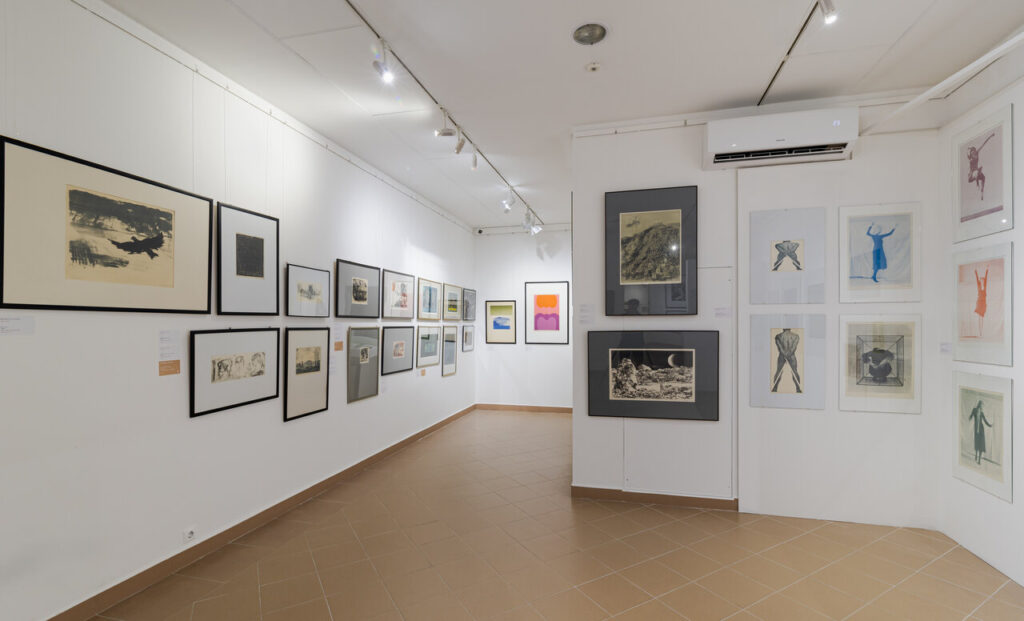
Reproduced graphic art was always a European genre—think of Dürer’s and Rembrandt’s work. It has been flourishing from the 19th century to the present day within Central Eastern Europe, in Hungary, Germany, Poland, Slovakia and the Czech Republic. The genre has endless potential as both the message and the technical implementation harmoniously capture the possibility of constant renewal.
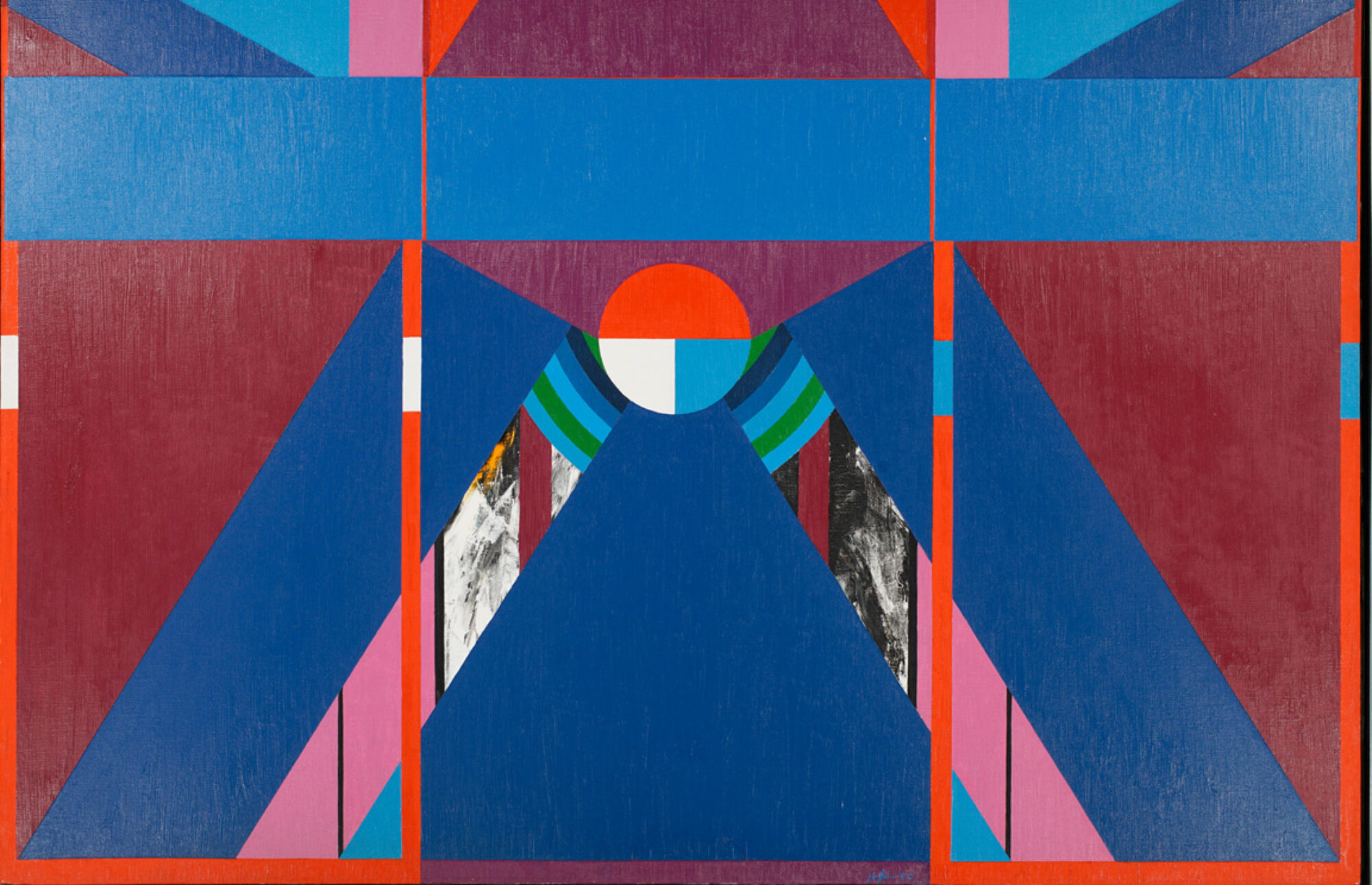
Because of the 65th anniversary there are two large exhibitions. One, titled Sixty-Five, is at the Herman Ottó Museum, showcasing all the Grand Prize winners from the very first year till today. The Museum’s rich collection shows an emblematic picture of 20th century Hungarian graphic art. It is a very interesting and entertaining exhibition where visitors can follow the historical, thematic and technical developments of reproduced graphic arts.
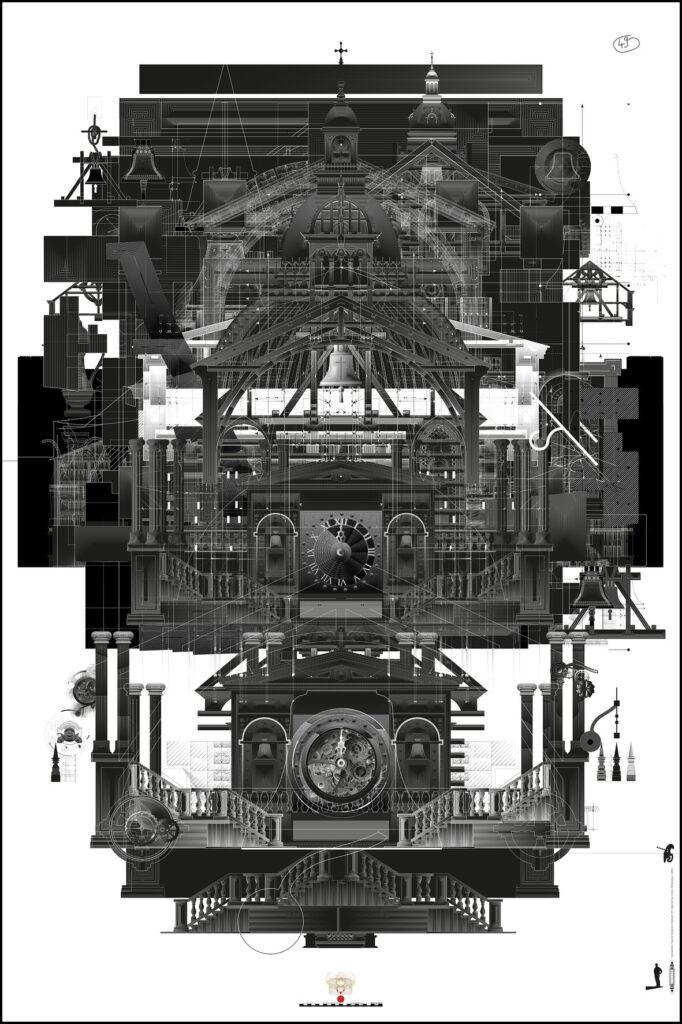
The Miskolc Graphic Arts Triennial 2026 fills all the rooms of the large Miskolc Gallery. Visitors first see the exhibition of the previous triennial’s Grand Prize winner, Tamás Felshmann’s, titled Architectural Heritage. At first sight I thought that I was looking at historical pieces of architectural plans or illustrations. The works are very impressive, large-sized and captivating. When you start looking at the details you want to know everything about the whereabouts of the buildings, their locations, originality, the architect’s name, how they were built and why and how they are depicted in this way. It is a unique show of majestic buildings. We can identify some basilicas, like St. Peter’s in Roma or St. Mark’s in Venice, while others depict public places, all representing our historical heritage through architecture. Buildings depicted by dark lines, grey surfaces or white, empty areas are perfect replicas of the original buildings. Still there is something more to them. Felschmann seems to add a magic touch that turns the buildings into something dreamlike, so even while they are real and proportionate, they turn into something beyond it, a heavenly place. The Basilica series, greyish drawings of symmetrical facades, sometimes with a drop of color, are spiritually intense. Even when the pieces are dark, they still radiate beauty and harmony. You can see that these works have been done by a perfectionist. Everything is painstakingly correct, but still spiritual and nostalgic, showing a bygone era creatively transferred to another age.
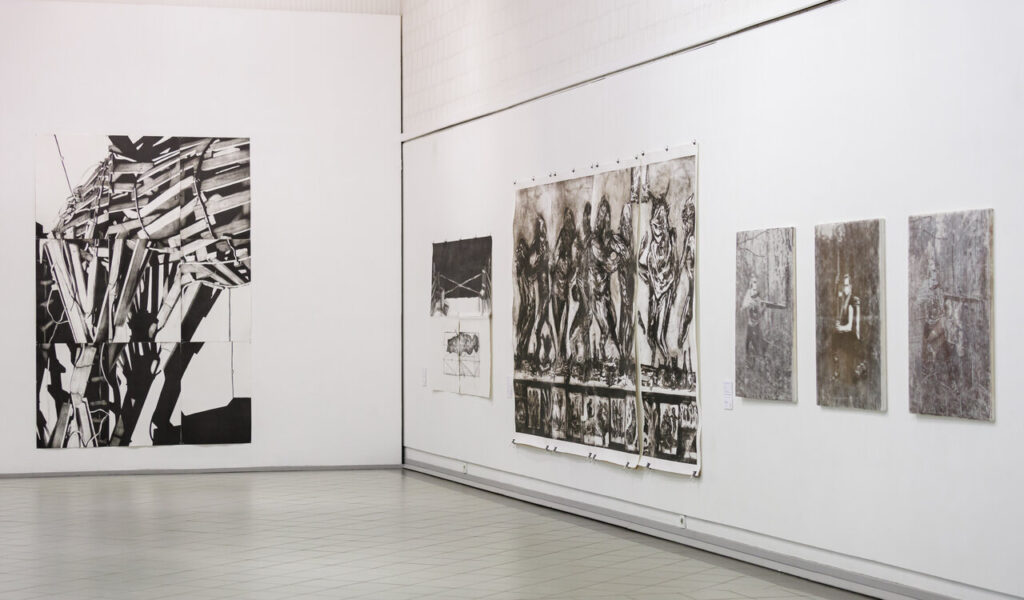
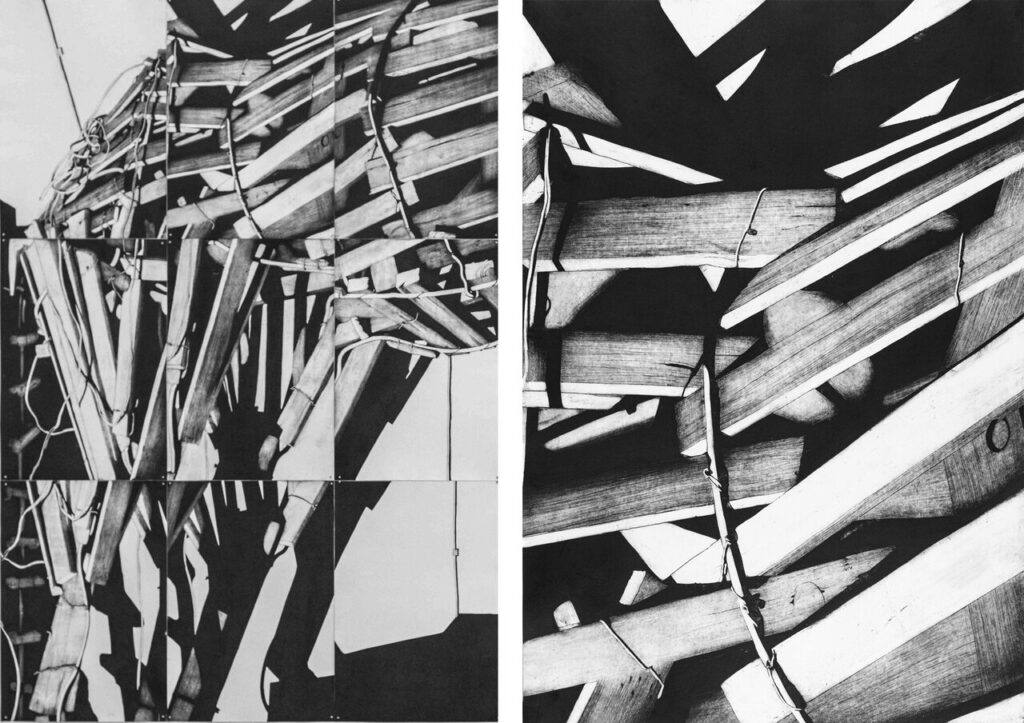
On the second floor, the largest room of the gallery showcases the award-winning artworks. Grand Prix winner Miklós Kelemen’s (Municipality of Miskolc Grand Prize award) Unfinished sculpture is both a commemoration and a tribute to the art of his sculptor grandfather. The large-sized work, composed of 9 prints, is very powerful. It depicts the creation of a large sculpture of a horse, maybe intended to be in a public square, following the old technique when the artist built a wood frame at first. We can see that wood structure is tied together with ropes. The surface of the wood panels and the texture of the ropes are beautifully drawn with sensitive lines and deep shades.
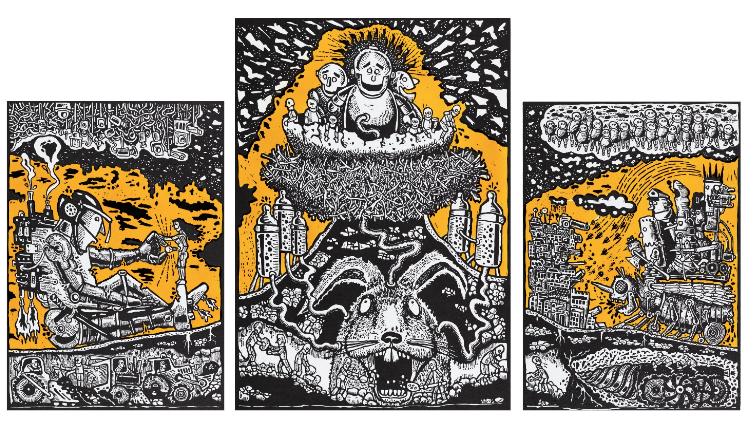
Tamas G. Kovács’ (Hungarian Academy of Arts Special Prize) biblical triptych is challenging both thematically and visually. While recognizing the narrative (The annunciation, The moment of birth, Massacre of the innocents) I hesitate about how to interpret it. Is it satirical or AI focused? There are robots with other AI elements in each composition, as well as mythical monsters mixed with machinery parts. There are many layers. The top (heaven?), the middle with the actual action, and something is also happening underground where they are digging a mine with strange machinery. Is it a religious composition or a set of tarot cards? Hard to say, but either way it is interesting. You can’t overlook it.
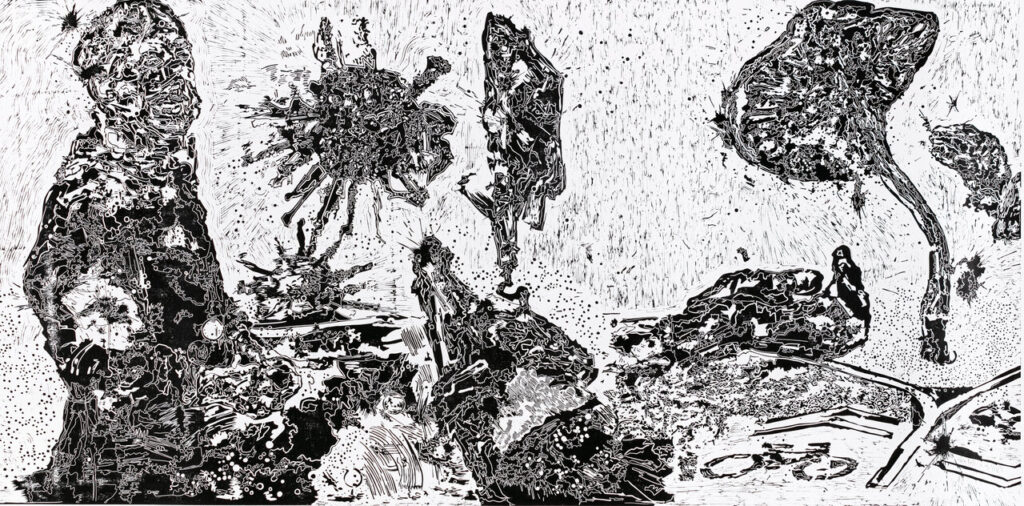
There are numerous young artists (more than 20% of the participants) in the triennial, Orsolya Cseh (Hajagos Imre award) among them. What is remarkable in her linocut, titled Wedged into my words is the way she depicts her motifs. On the left side of the composition is a large figure facing a ball-like thing with thorns, a bent tree, some vegetation on the ground and maybe animals. There is a crossroad in the foreground and a bicycle on the ground. What kind of world—imaginary or real—does the artist travel? The strength of this piece is the making of it, the linocut, that allows such a rich surface. The curving lines, the various patterns, the strong contrasts of black and white elements create a rich, expressive composition.
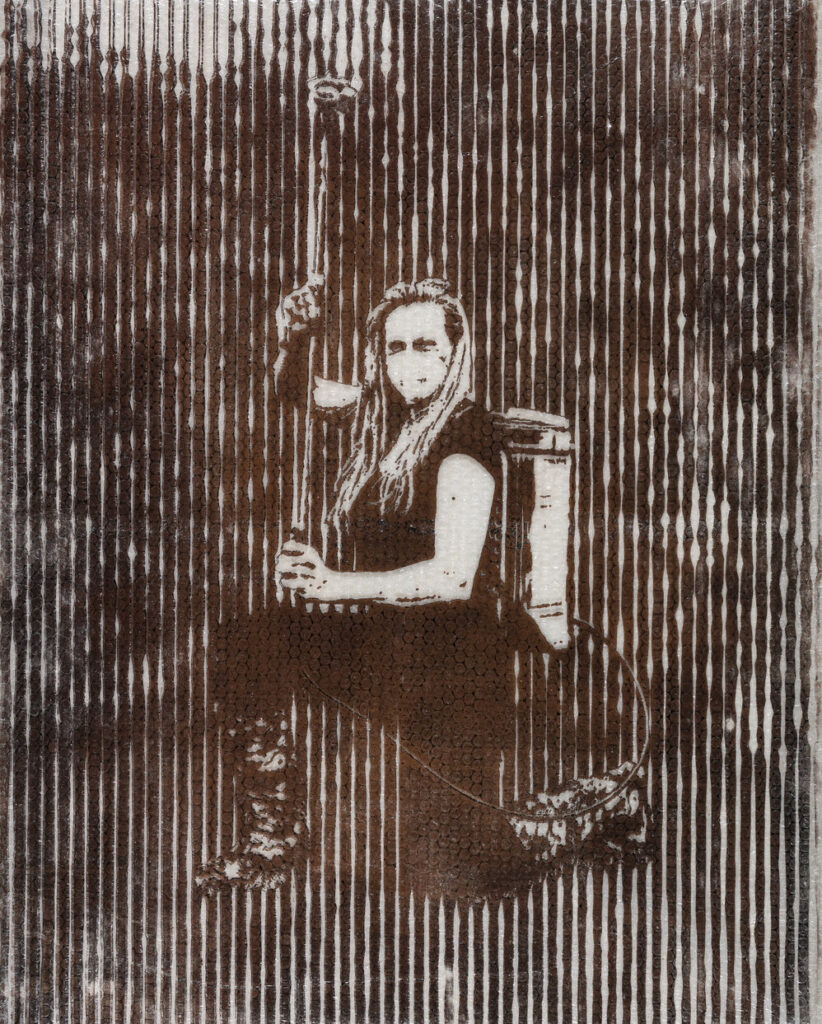
Anikó Csonga Kovács (Hermann Ottó Museum – Miskolc Gallery award) depicts a woman warrior in a Japanese fighting position. Titled Individual, she is alone and faceless. It seems that she is in a chemical war, with a container on her back connected to a tube that will shoot out the liquid. This is a linocut on layered plastic sheets that gives it a 3D feeling.
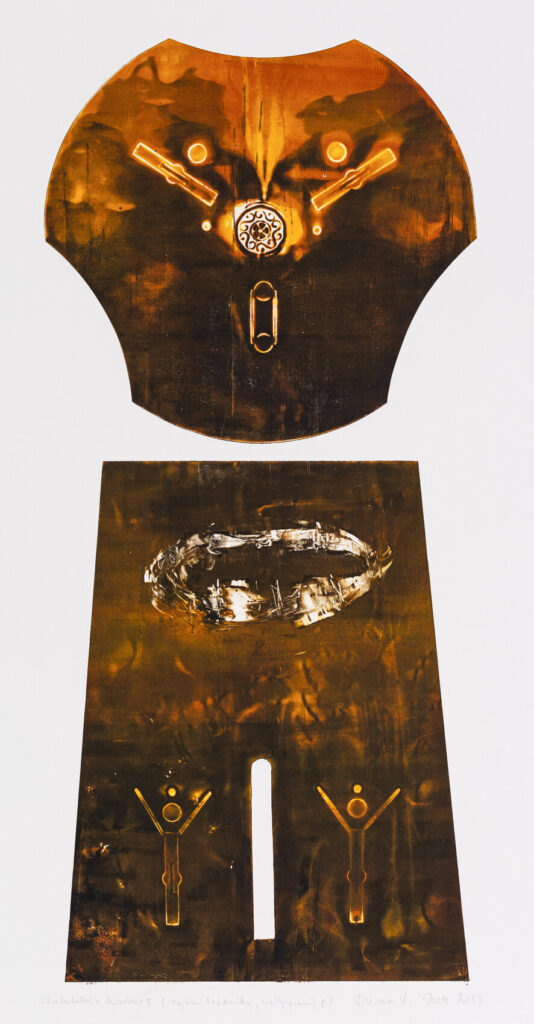
Mátyás Boros (Szabadkéz Gallery and Art Colony award) creates a composition in Totem 2, that mixes graphical and sculptural elements into a unique print installation.
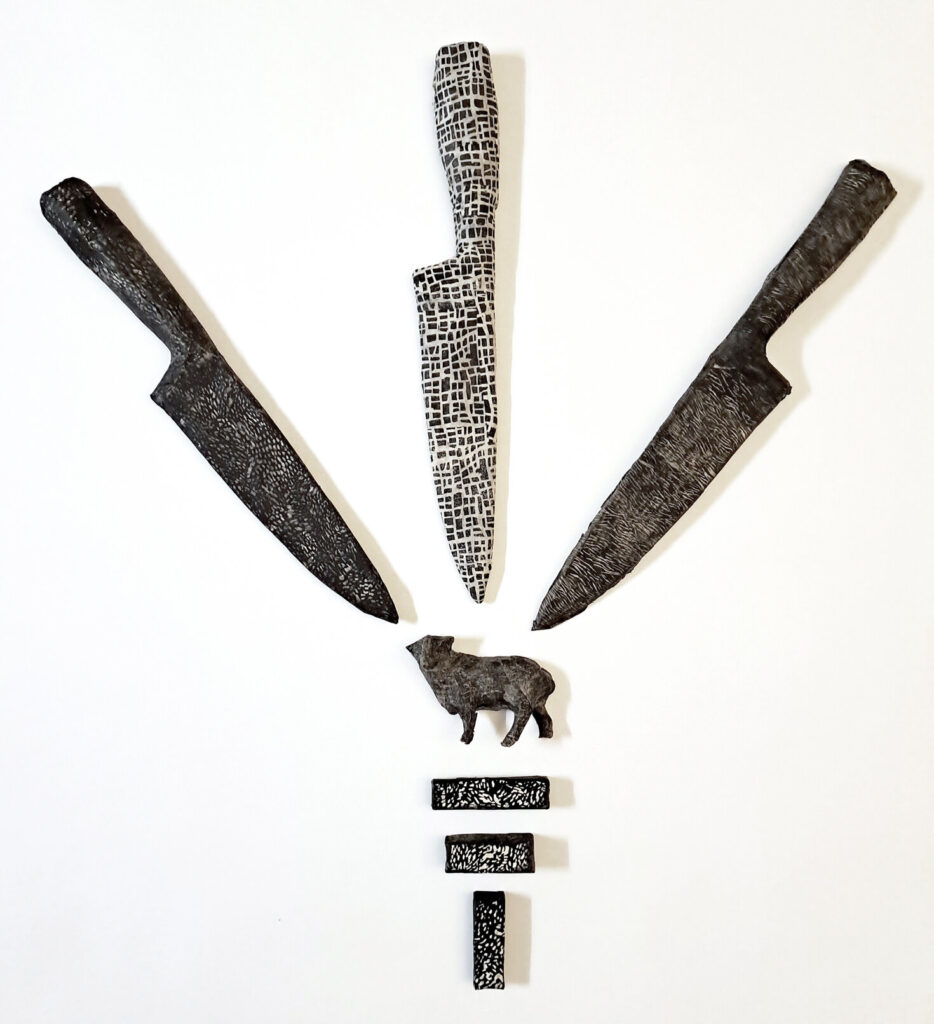
The triennial is a huge exhibition with 114 artworks by 69 artists. We live in an age of rapid technological advancements, and the field of reproduced graphic art is no exception. New design genres emerge at a record pace only to lose their dominant role just as swiftly. This is the case with electrography, which used to appear in significant quantities, but this year its presence is negligible. The call for the triennial allows for a wide range of techniques, whether it is traditional or new and experimental. During my conversation with curator Ábel Kónya, the potential involvement of artificial intelligence was discussed, which clearly showcases that the organizers are open to new methods of implementation.
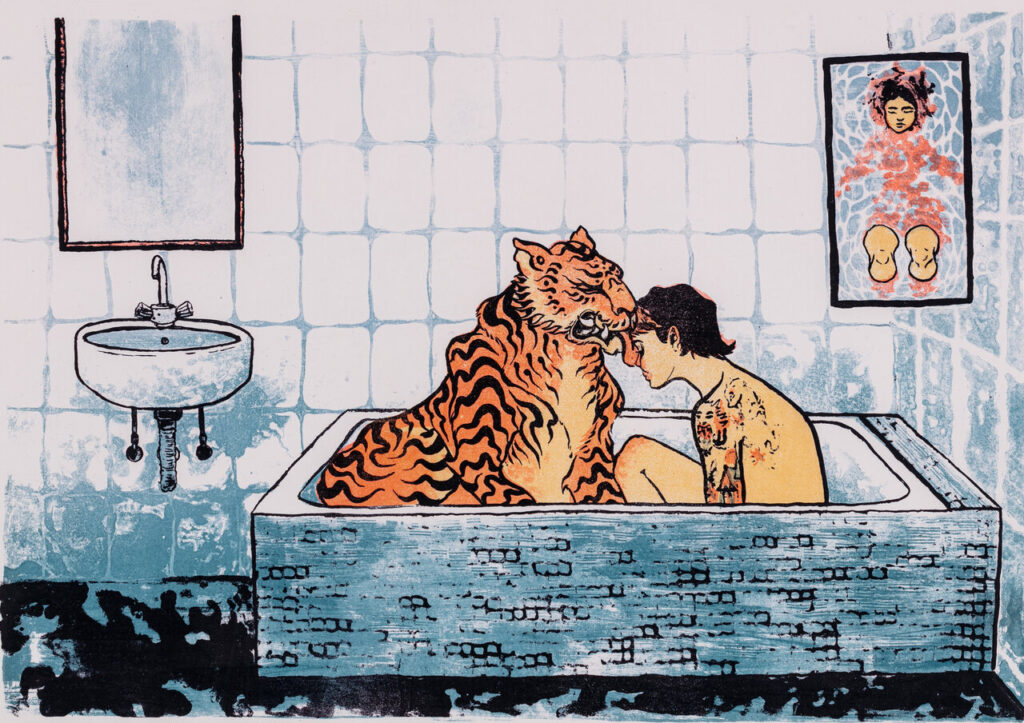
I was somewhat surprised by the large number of artworks that follow traditional techniques requiring academic training. The Hungarian University of Fine Arts has an excellent Graphic Art Department that most of the exhibiting artists attended or attend as the triennial allows students to enter their works. A good example of this a third-year student, Veronika Fürstand’s piece, Only I can truly understand. It is a beautifully lyrical composition, where a tiger comforts a girl by licking her face. Love and empathy don’t have borders.
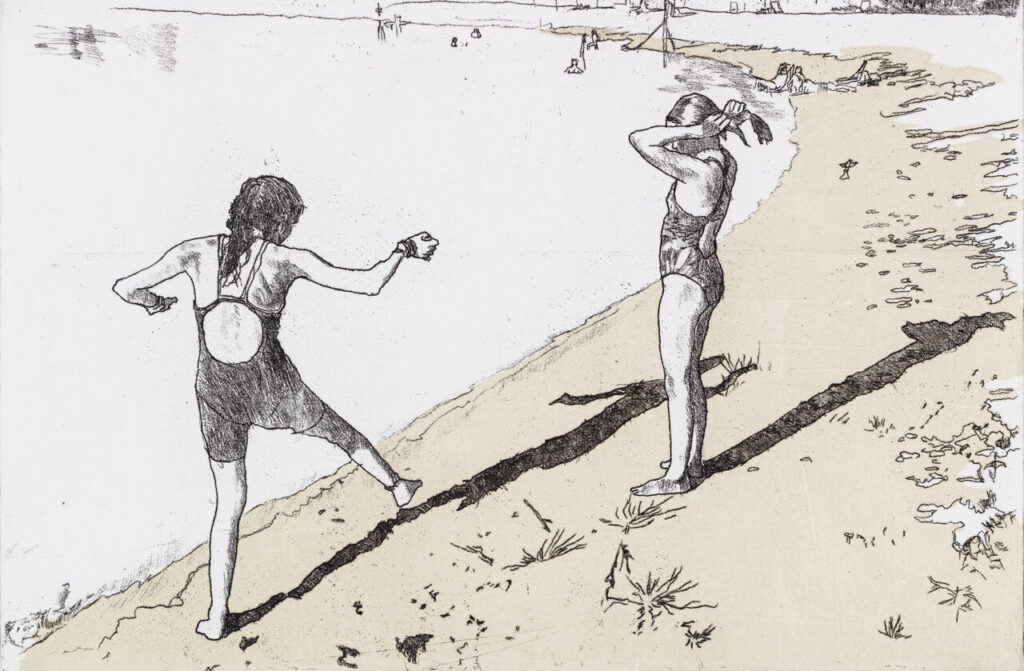
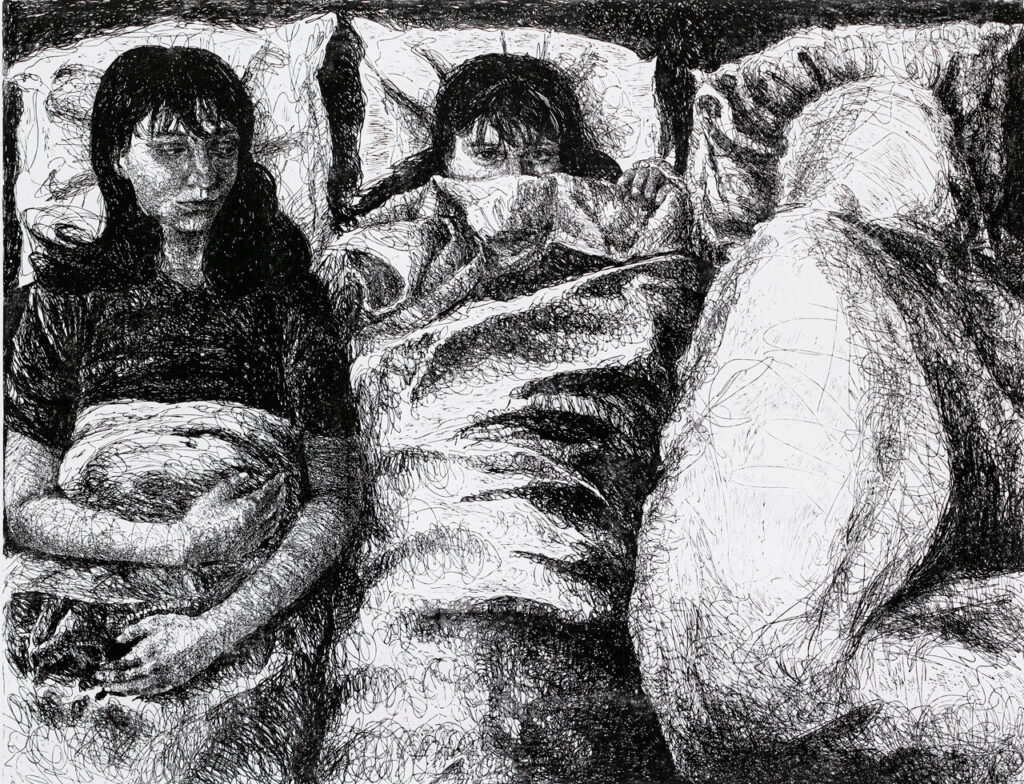
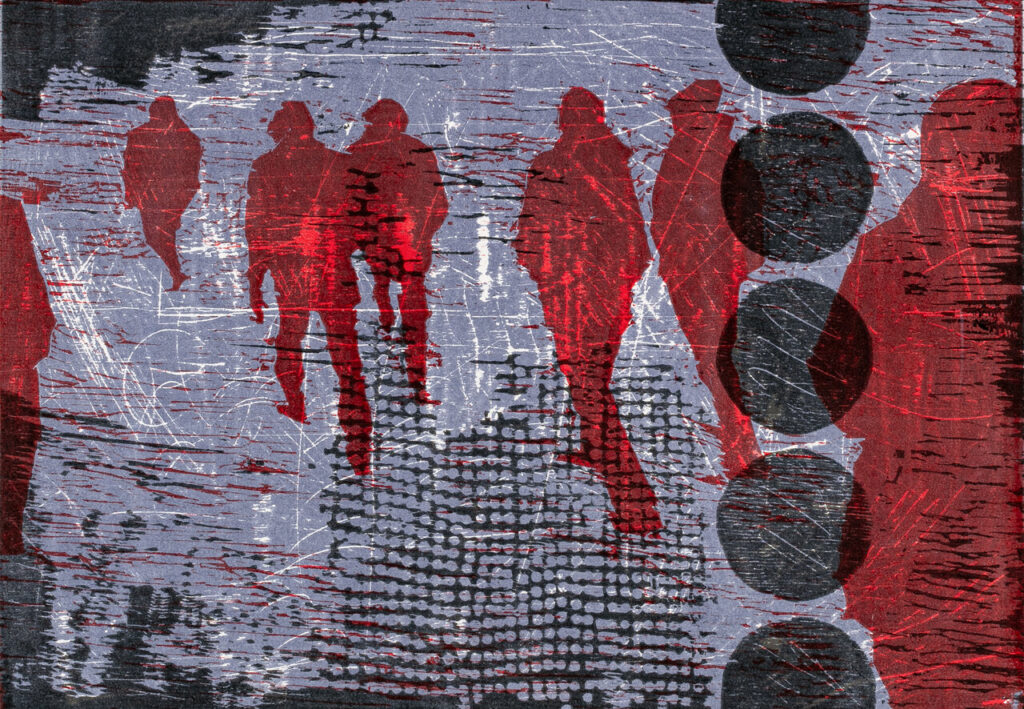
Prominent pieces within the traditional category include the sensitive, figurative, soft-ground etching compositions of János Barta (Hungarian Graphic Artists Association award). Réka Dobi’s series, From late Night to early morning are outstanding images with their sensitive depiction of the various stages of sleep, waiting for it come, dreams, even nightmares and total escape from reality. Mietta Kerper’s woodcut guides us into a rhythmic rainy night, where red figures covered with various patterns walk along the road. It has strong painterly qualities and creates a meditative atmosphere.
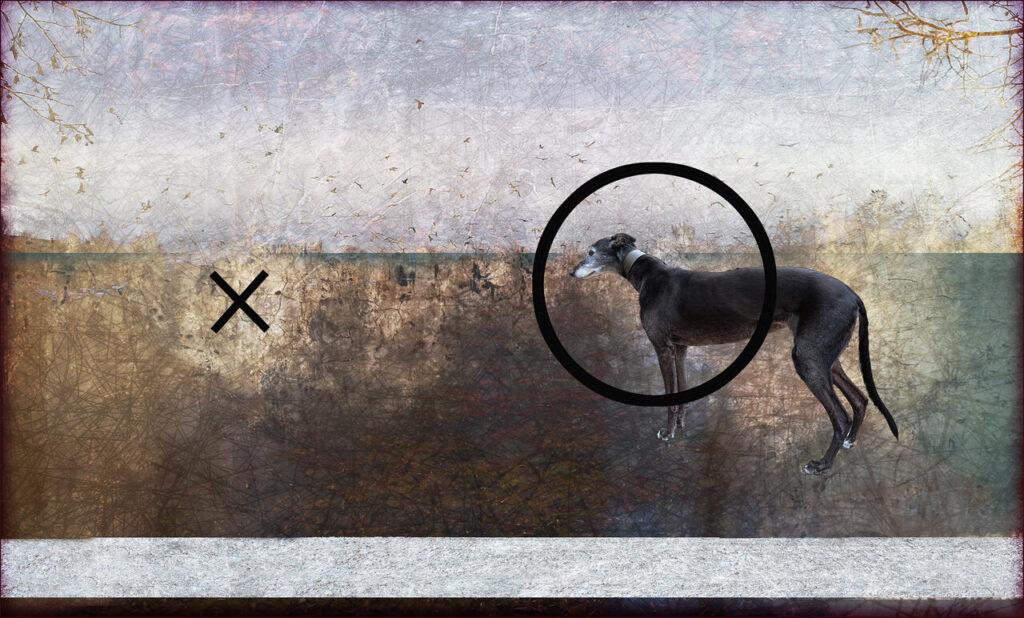
However, this does not mean that experimental works are neglected. Several works refer to their unique techniques and implementation methods, such as in the case of Zsolt Durucskó and Dániel Lebeda, which encourage the viewers to figure out the methods used. Electrography is still present; examples include the works of Péter Berentz and Zsuzsanna Enyedi.
The exhibited works of the 2026 Miskolc Graphic Arts Triennale give a remarkable picture of the contemporary Hungarian graphic arts. It shows the thematic deepness and technical variety of the artists of our era. It also paints a true picture of social situations, political movements and changes, outlines everyday life and the psychological responses of people. Rich narratives and strong expressions always were and still are the main characteristics of graphic art. This positive outlook, both in terms of themes and techniques, I believe is one of the main reasons behind the genre’s survival. In Hungary graphic arts still flourish and will have a long and wonderful future.
Images are courtesy of Miskolc Gallery. Photo: János Ádám
Miskolc Graphic Arts Triennial, 2026, Miskolc Gallery, 2 Rákóczi Street, Miskolc and Sixty-five, 28 Görgey Artúr Street, Miskolc, Hungary, both May 9 – August 9, 2026