by Federico Lynch Ferraris
Nadia Coen, Mahmoud Hamadani, Armita Raafat, Michael David, Andrew Huston, Alyse Rosner, Paul Michael Graves, Bodo Korsig, Steven Salzman, Margaret Weber, Mark Williams
at Bienvenu Steinberg & C in New York City
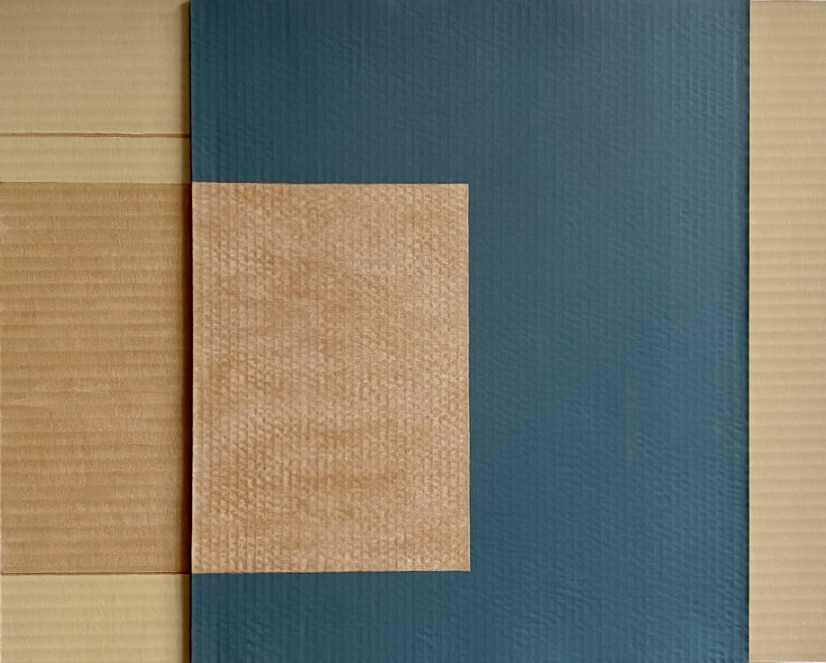
Across painting, sculpture, and installation, “Time and Materials” highlights the use of unconventional materials – glass, resin, plastic straws, fabrics, and carpets – to create works that are both temporal and tactile. Many of the works lean abstract, inviting the viewer to consider the significance embedded in the use of obscure materials and the progression of time encoded in the art.
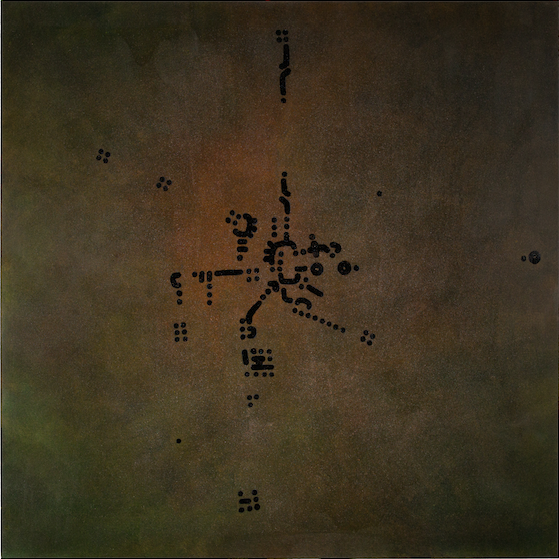
The exhibition repeatedly emphasizes material experimentation as an outlet for interdisciplinary expression. Paul Michael Graves’ pieces play with the intersection between art and his previous career as a helicopter pilot. Composed of black dots and lines set across a bronze background, the pieces evoke the visual components of aerial map making. Initially appearing abstract, the artwork deliberately uses the black marks to resemble plotted coordinates and flight paths as seen from above. Graves’ interpretation of time reflects the broader theme of the unique experience of time. The pieces display time and duration through flight paths rather than fixed units.
Mahmoud Hamadani’s geometric compositions similarly gesture towards his mathematical foundations. In his untitled work, Hamadani arranges nine black frames into a square. Within each frame, seven diamonds are uniquely oriented, with each diamond representing a day of the week. The subtle variations within each frame mirror the rhythms and changes of days and weeks. Continuing the larger theme of time interpreted through interdisciplinary practices, Hamadani’s geometric orientations suggest that time is measured, rhythmic, and symmetrical through a mathematical lens.
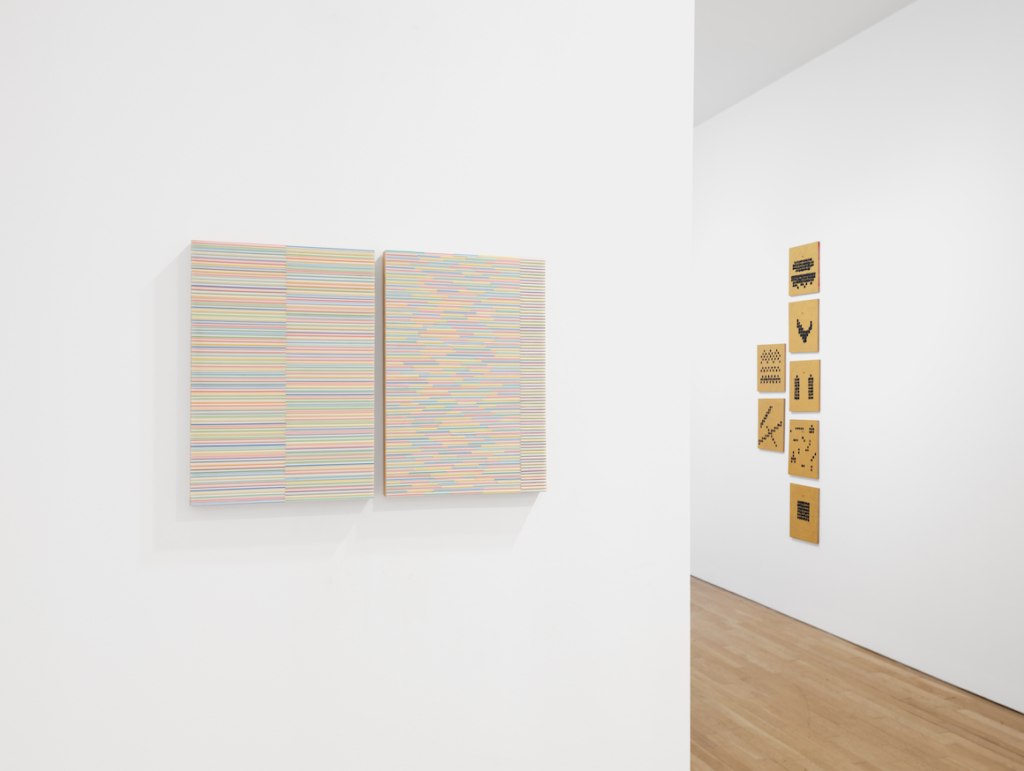
Andrew Huston continues the use of geometric shapes to portray time. With seven panels, each filled with gold pigment and black dots, the artwork represents the seven days of the week. Although the panels are fixedly aligned to emulate calendar pages, each panel is distinct. The variation among the series of panels emphasises the unpredictability of time despite the expected rhythm of the week.
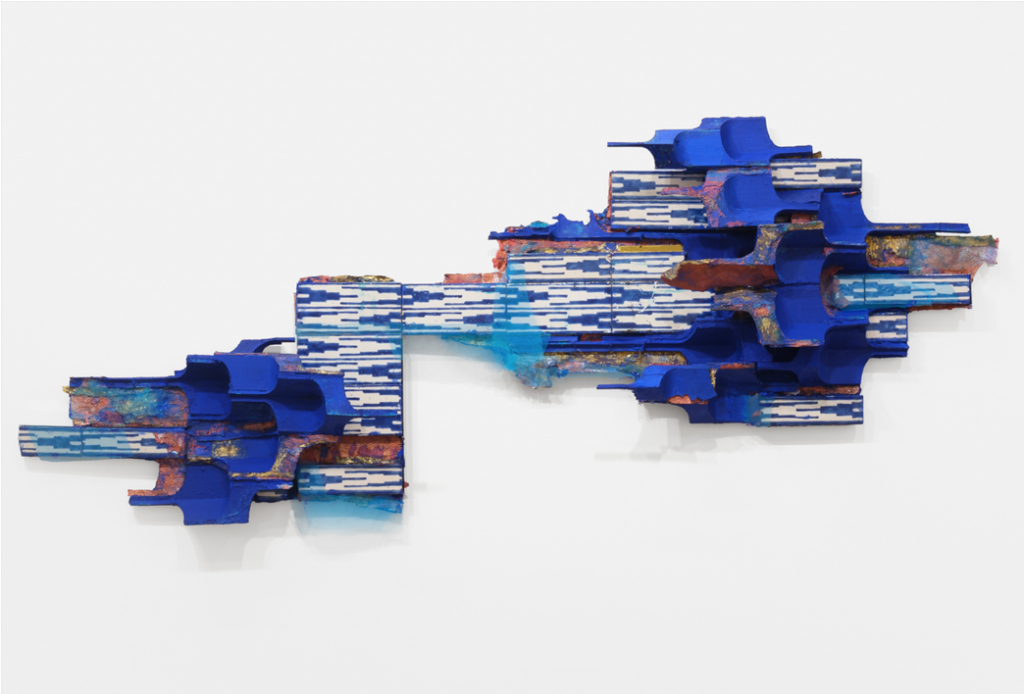
Armita Raafat’s portrayal of time draws on a more fluid interpretation, by contrast. Raafat draws on traditional Muqarnas while reimagining it with vivid, unconventional materials. Composed of resin, tiles, and fabrics, the work revisits traditional architecture with a modern perspective, suggesting that time, rather than being fixed, can be actively returned to and reconsidered. The piece, being an extension of Raafat’s inquiry into Muqarnas, maintains the ongoing theme of interests and passions altering perception of time found throughout the exhibition.
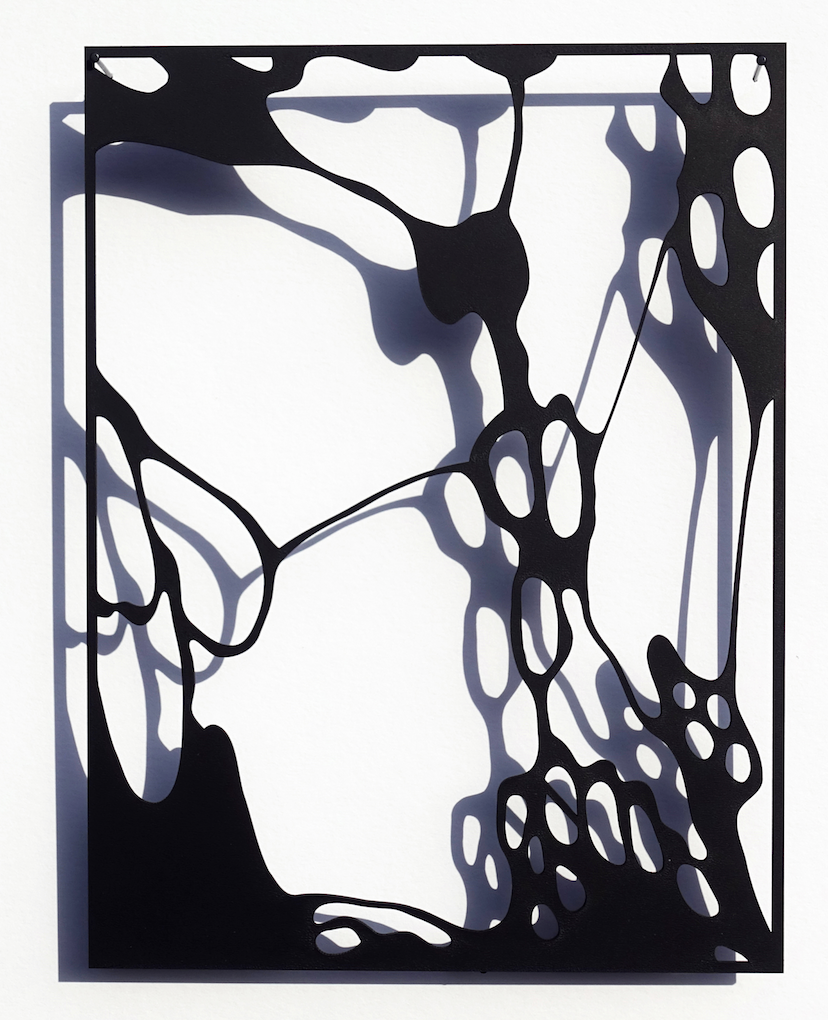
Bodo Korsig’s “Zerspringen des Zustandes”, which translates from German to “Shattering of the State”, approaches the theme of time through one moment of rupture. The work suggests that time does not only unfold – it snaps. The “shattering” becomes a moment when continuity is lost, and a new state abruptly emerges. This interpretation of time aligns with Korsig’s focus on human behavior under extreme conditions. In moments of fear or violence, mental states often do not erode over time; they shatter instantly. The piece introduces the irreversibility of time and its capacity to collapse into a single moment of change. In contrast to other works in the exhibition, which focus on the cycle and rhythm of time, Korsig centers its immediacy and instantaneity.
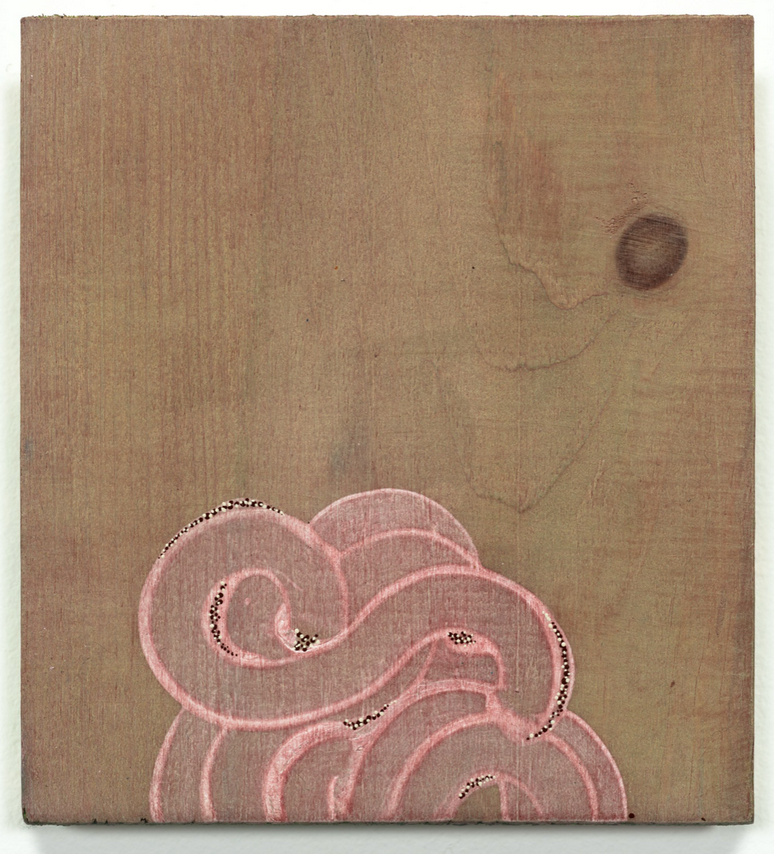
Alyse Rosner’s piece, “From Wind or Sky or Myth (shadow)” evokes the visual intensity of fireworks – brief yet expansive bursts that unfold simultaneously – suggesting that time is not a singular passing instant, but a convergence of multiple moments occurring at once.
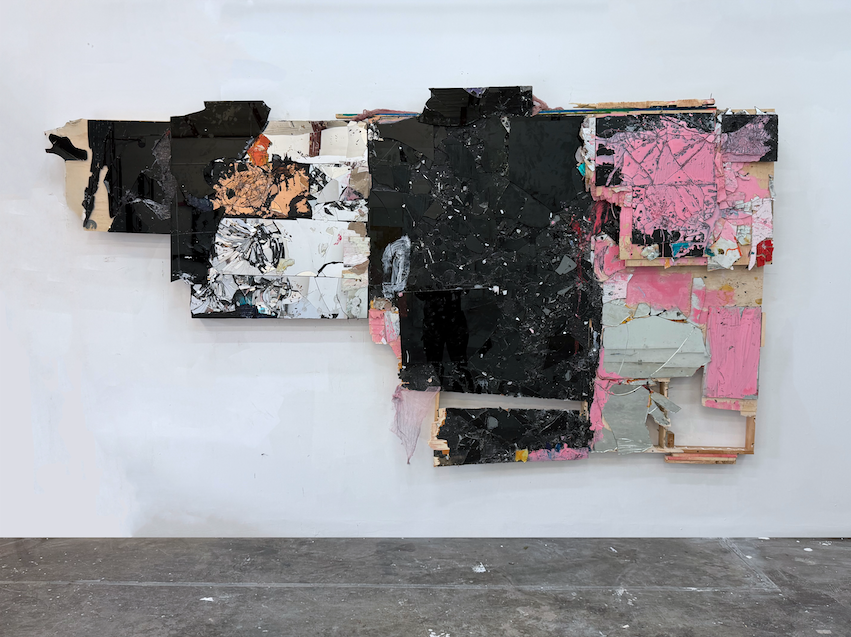
Some works do not specifically reference time, however. Instead, they fall under the exhibition’s material aspect. Michael David, for example, uses nontraditional materials such as glass, silicone, fabric, and glitter in his work, “The Batman”. Innovative uses of various materials are also present in the works of Nadia Coen, Steven Salzman, Margaret Weber, and Mark Williams.
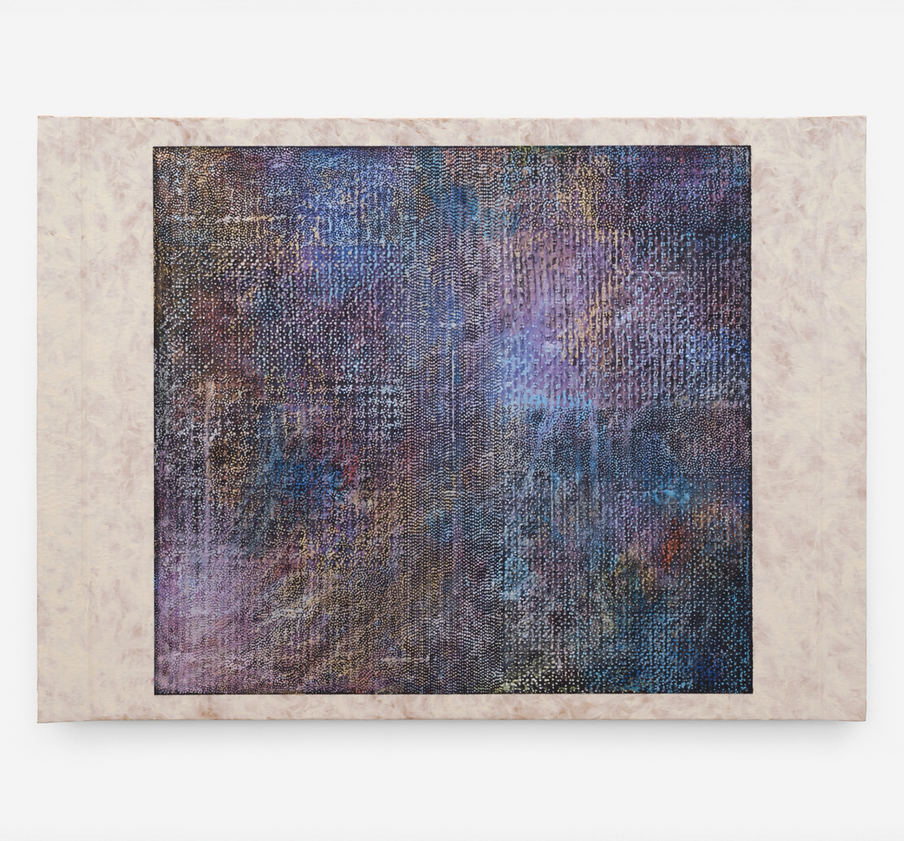
The title of the exhibition draws on the policy under which clients pay contractors a fixed amount for the time spent and materials used. In the context of the exhibition, time and material are established as intertwined and in constant conversation.