by D. Dominick Lombardi
Luís Almeida’s paintings have an uneasy joyfulness to them. His narratives occupy the space between pure, unfiltered emotion and wild interpretations run amok.
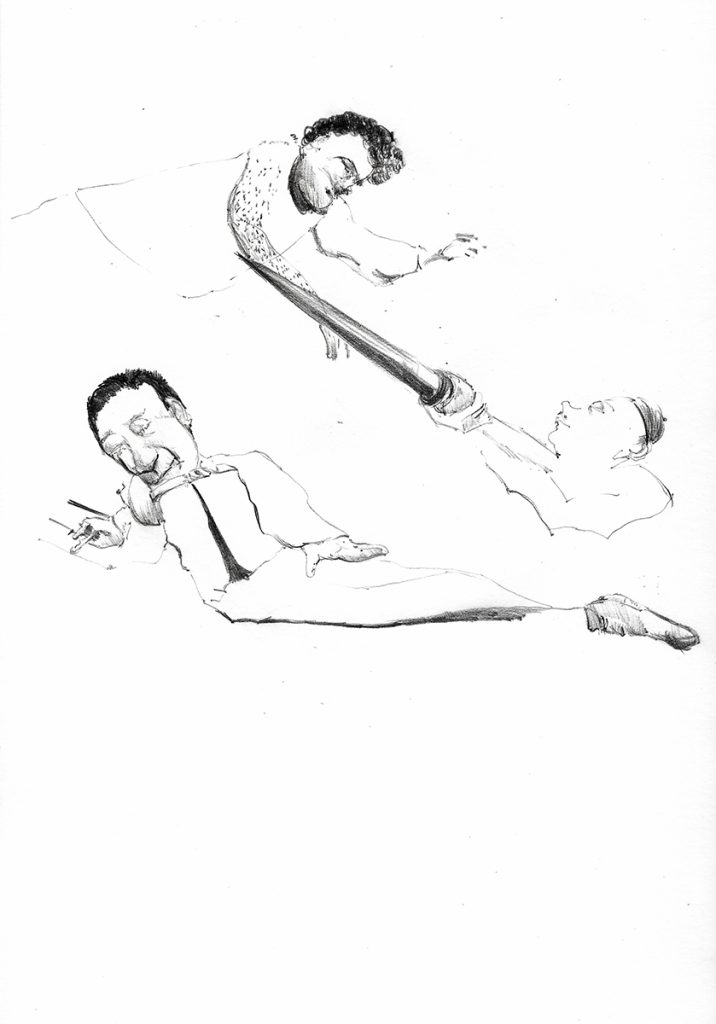
Almeida creates an alternate space where the act of painting churns, spews and whips around the canvas until reality is overtaken, leaving the outside world in its wake. His subjects push through the edge of representation, forming a new bio-logic based on instinct. Yet, with all his gnarly techniques and bizarre color theory, the resulting vignettes remain almost completely without judgement – a purity of thought on canvas without the fuss of overthinking one rarely sees in Contemporary Art.
Almeida is the quintessential observer/translator, reacting solely in the studio where the loaded brush meets the waiting canvas – that physical application of paint in an electrified moment beyond his initial observations to an alternative world. There is a lot of discussion by physicists today, of as many as 11 unifying forces that make up our universe. The way Almeida breaks down and reconstructs his constantly shifting and morphing subject matter surely passes through some of this extended space physics advance.
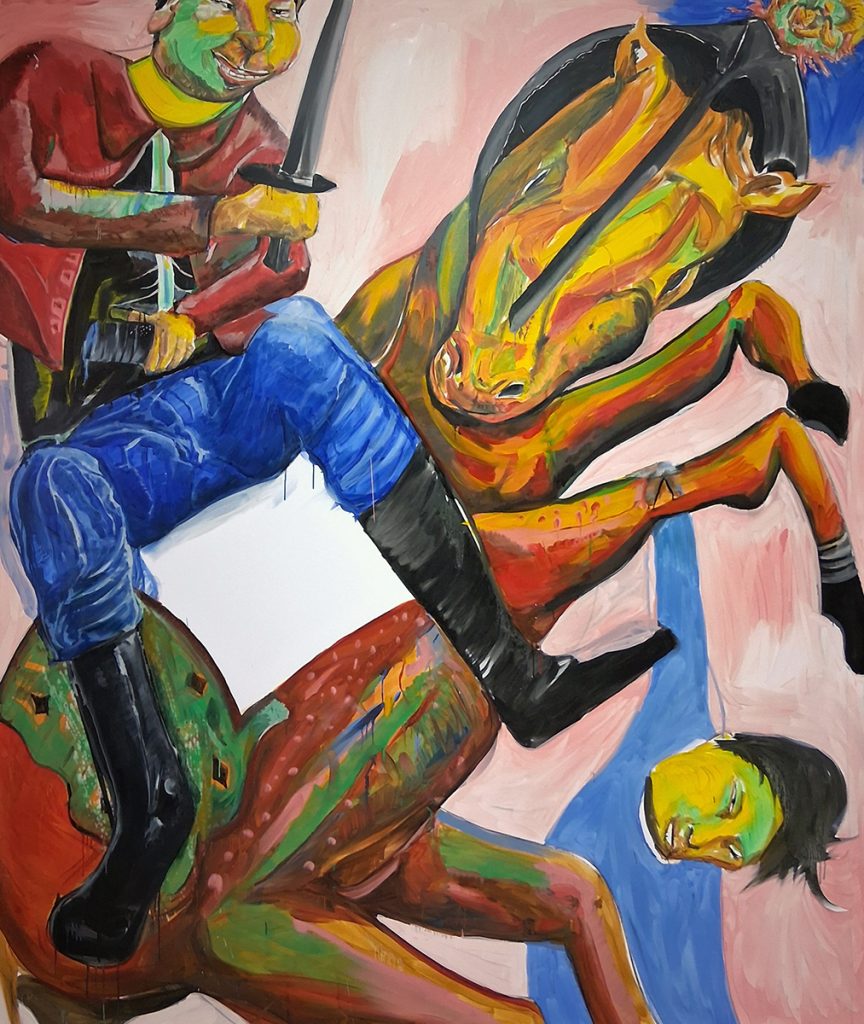
Take for instance the painting Horseman (2025). Here we see a bucking horse protesting the sword of its rider as it threatens to behead someone hanging onto the horse’s leg below. What initially draws the eye into this whirlwind of motion is the purity of the diamond-shaped white form that the rider and the horse share. This relatively ‘clean’ space promises to offer safety in an otherworldly place, but the protagonist in this drama has other ideas in mind. In the end, it’s the three areas of blue that create a classic pyramid of stability that keeps this topsy turvy composition from exploding outwardly.
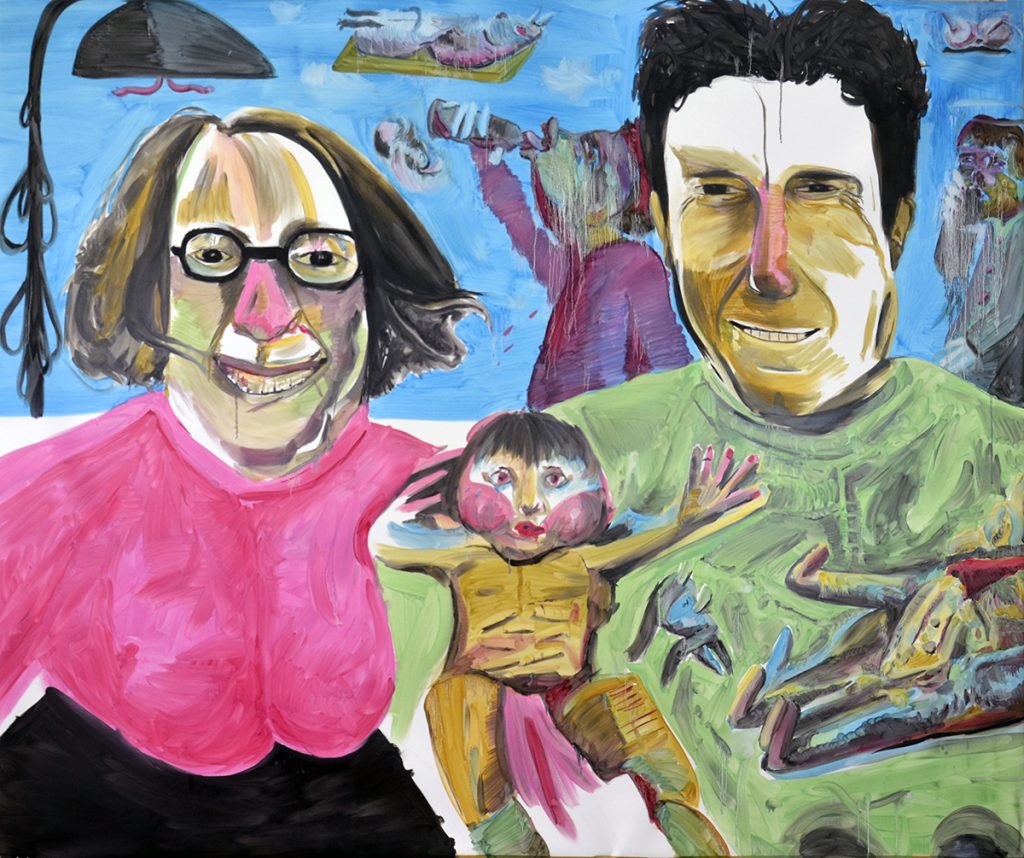
Happy Family (2025) has its share of tension as well, only in this instance it is overpowered by love. Challenging this state of bliss in the background, where we have a few indications of the seedier side of life rendered in drippy washes of color. Additionally, a sinister hand creeps in through the bottom right of the composition to create more tension. Despite all the unwanted intrusions to this otherwise buoyant scene, it is the love of family signified by a new born babe that keeps the positivity afloat.
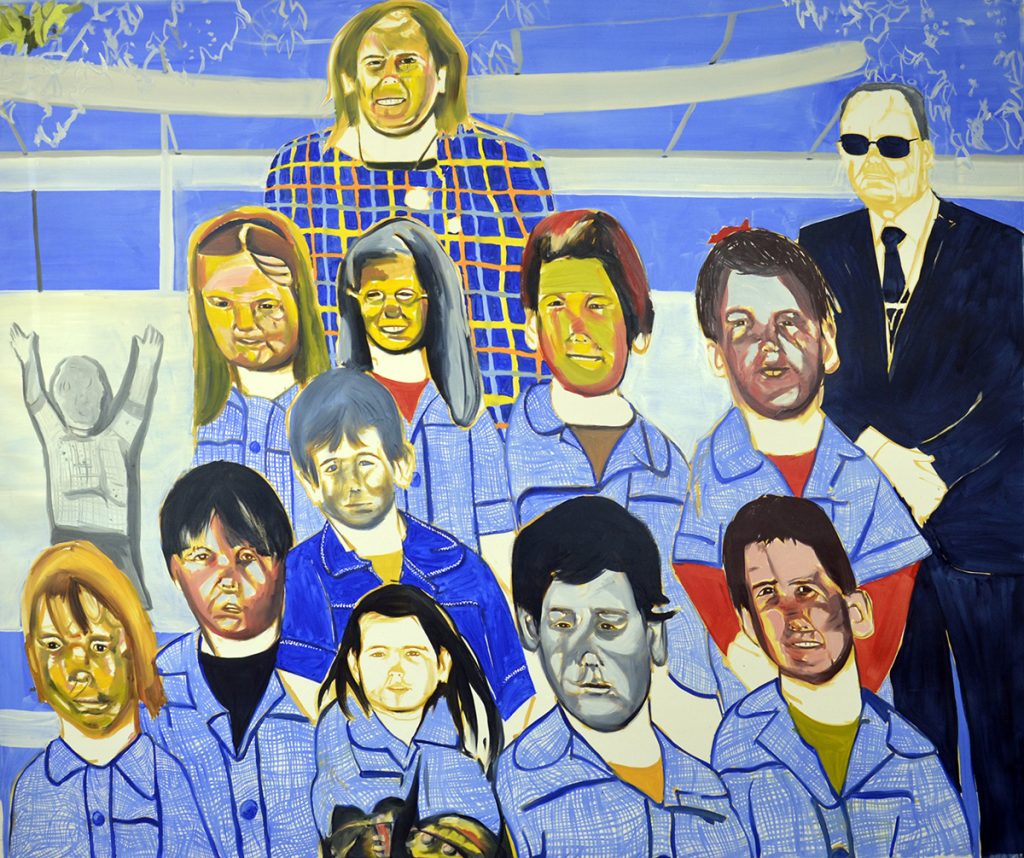
The Good, The Bad and The Ugly (2025) has its own, more subtle brand of bizarreness. Almeida reigns in his energy level just enough to focus the narrative to the more mundane aspects of life. We have all seen group photos of children related by some function or form. I am guessing this one is related to a sporting event where the teacher/coach and the school principal are overseeing the proceedings. Oddly, the principal, if that is who he is, with his dark sunglasses and a black suit, looks more like a security guard than an educator. What is most fascinating in School Children are the individual faces and how they all express such completely different personalities. Shy, confused, happy, lost in thought and miserable, each child commands their allotted space while their uniform dress and the similarly colored background creates a profound push/pull effect.
Luís Almeida, a painter ‘s painter who challenges himself as much as he does the viewer.