Paul Gurtler’s Collection of Toronto Based-Artists

by Robert Curcio

(Republication of a dArt magazine Winter 2017/18 article.)
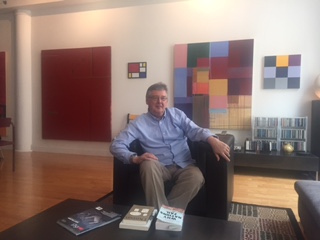
Collector Paul Gurtler seated before part of his collection. Paintings from left to right by: YM Whelan, New York artist Dulcie Dee, Blaise Delong, and Steve Rockwell

Paul Gurtler and I met about eight years ago or so, through Steve Rockwell, the intrepid leader of this publication and artist in his collection. At a little get together last May at Paul’s Manhattan place, the three of us conspired to put in motion this profile.

As a young man in the early 70’s, the company that Paul worked for sent him to Tokyo for a few years which is where the whole art collecting bug caught him; first as a maker and collector of ceramics, then as a collector of prints. He still has a piece or two from back then, but the majority of pieces he gave away to admirers of the works. By the mid-70’s Paul’s company moved him to NYC where he was at the center of the art world with all the art celebs, legendary gallery owners, flashy headline making auctions, glitzy openings, the attitudes, big money and the art itself – it just wasn’t for Paul. It wasn’t until some years later when Paul went to Toronto on business that he found the art, artists and community that he was looking for and began to collect in earnest.

When he began going to Toronto Paul regularly visited the Fran Hill Gallery and Moore Gallery, where at both these and other galleries, the owners and staff were welcoming and engaged with all the people coming into their gallery. This was much different from Paul’s experience with NYC galleries where a visitor first had to pass scrutiny before anyone would utter a word. (This has changed a bit in NYC now, just a bit.) Something that was unexpected was that artists and galleries were all referring him to each other; artists to go see another artist’s studio or exhibit, or a gallery suggesting he might like the work of an artist at another gallery. (Happens a bit in NYC, again, just a bit) He was so impressed with everyone’s generosity that at one gallery he purchased three large paintings by Robert Chandler and YM Whelan, regardless of the fact that he had a typical small NYC apartment with no place to hang them.
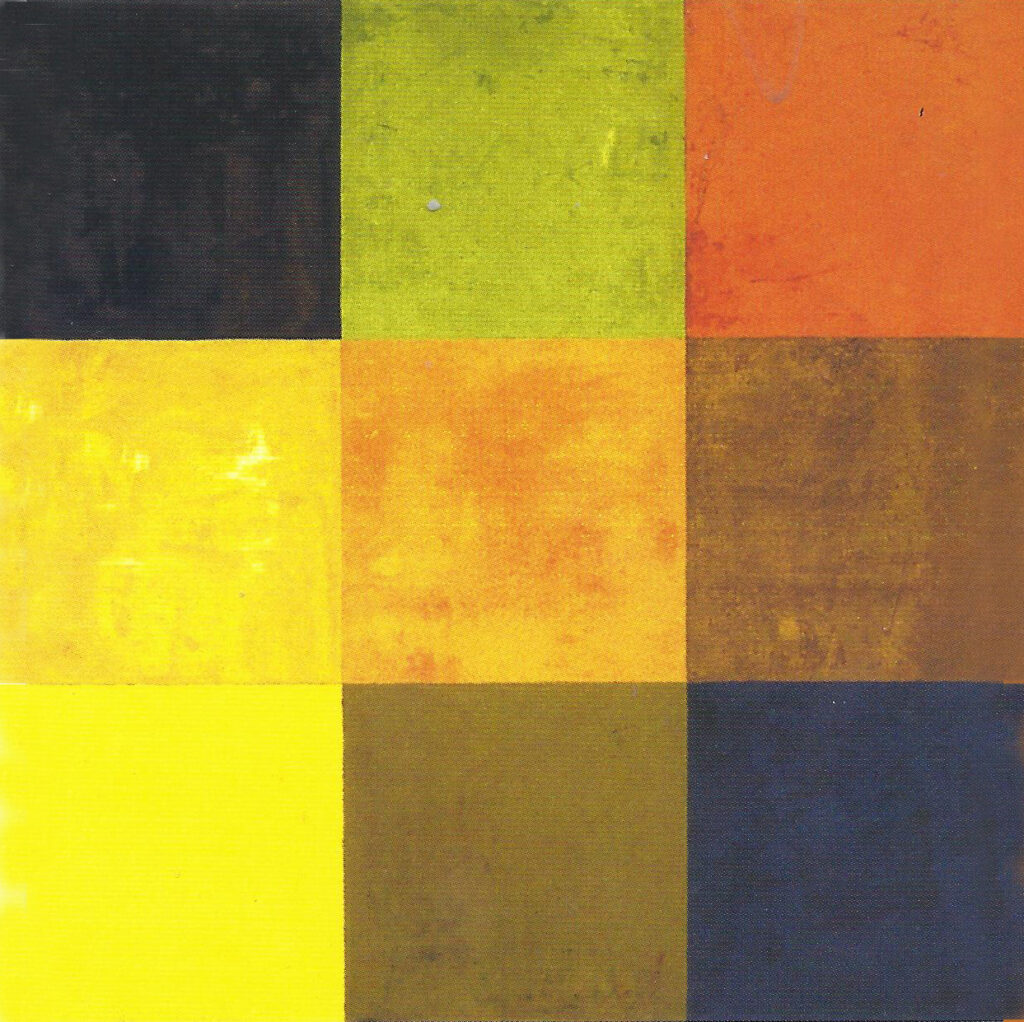
Steve Rockwell, Color Match Game: John Jackson vs Tim Deverell, 2004, 
printer’s ink on paper, 24” x 24”
Steve Rockwell, Color Match Game: John Jackson vs Tim Deverell, 2004,
printer’s ink on paper, 24” x 24”

As we were going back-n-forth talking about the paintings, which artists he doesn’t like and an out of nowhere switch about his very different collection in Bermuda, I felt there was more to investigate as to where his real interest in art and to collect came from. Now Paul is a rather private person, so I was very surprised during our interview when, without insistent prodding from me, he just opened up and started talking about his father. How his father would come home with various antiques, classical and traditional paintings and other objects d’art, that he bought to quickly turn around to sell them. In today’s parlance Paul’s father would have been called a “picker,” someone who scouts out the local auctions and house sales for hidden gems to sell to the bigger auction houses, antique stores, designers and other clients.

Those pieces changed almost weekly, since these were pieces meant to be sold for a profit and not to collect and hold onto just for the sake of admiring the art. However, during the pieces’ stay in the home Paul’s father would share with him thoughts on why he bought the pieces. Paul said he talked about craftsmanship, technique, quality, and beauty, ideals that an individual artist worked at to create something unique and special. Ideals that only in recent years’ people have started to discuss and consider within modern and contemporary art. The time spent with his father provided Paul with a true appreciation and understanding for art, and for the artist. For Paul, it is not only about the art and being able to appreciate it, it’s also about his connection to the life and memory of his father. As he was thinking back to his past from his current vantage point as a collector, he stopped just briefly then continued with a knowing look saying that his collection, how he thinks about art, and his relationships with artists, would make his father pleased.
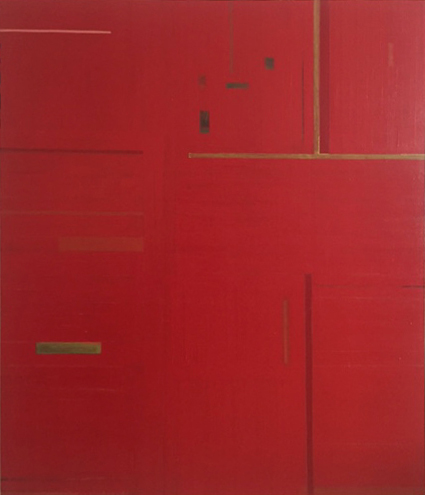
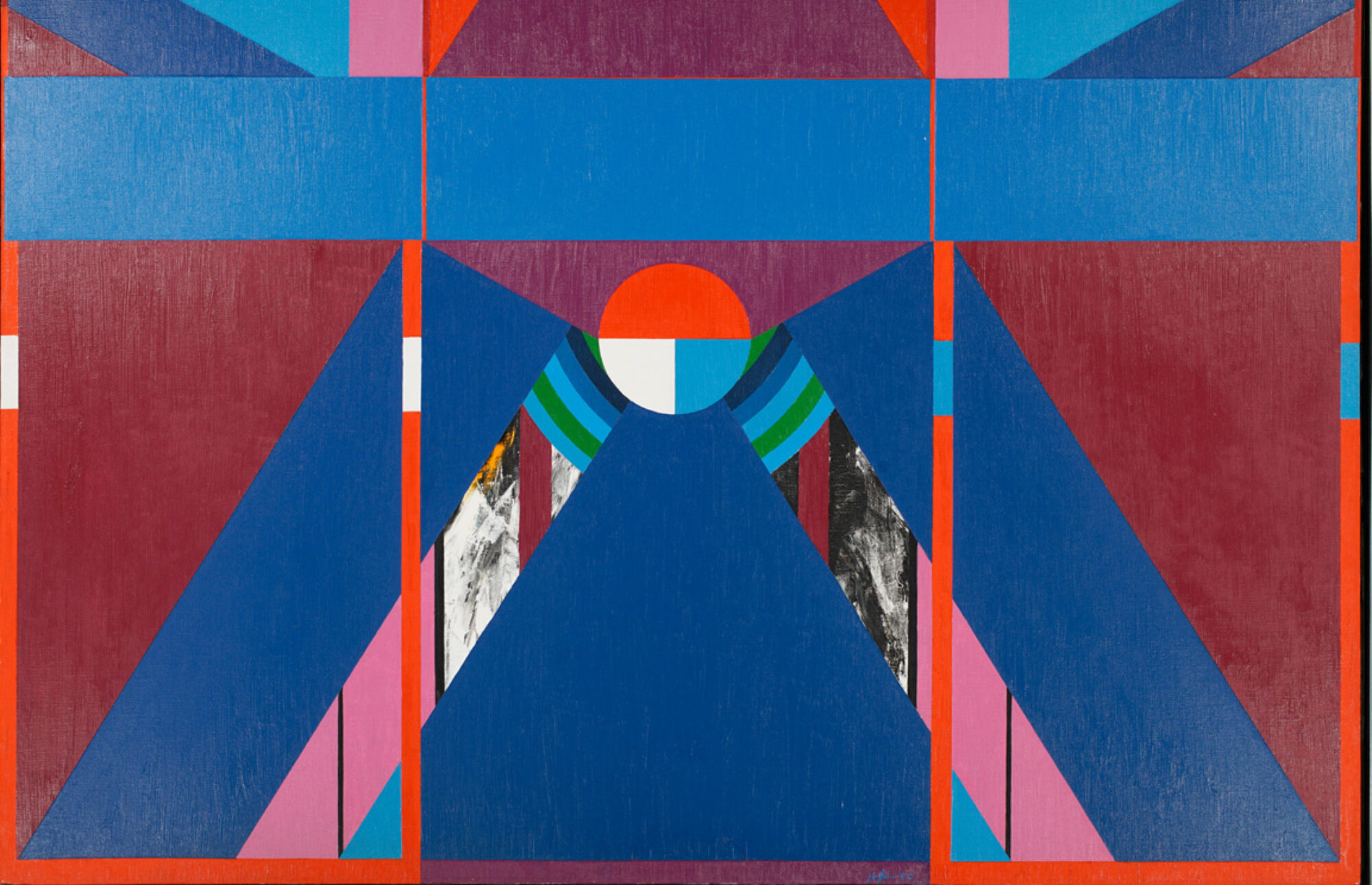
YM Whelan, Untitled, oil on canvas, 70” x 60”

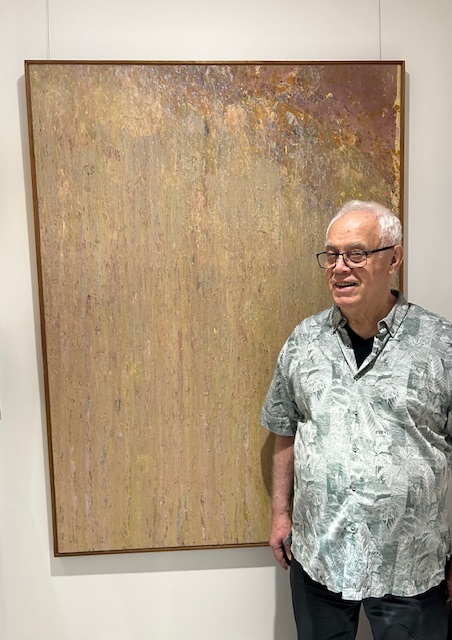
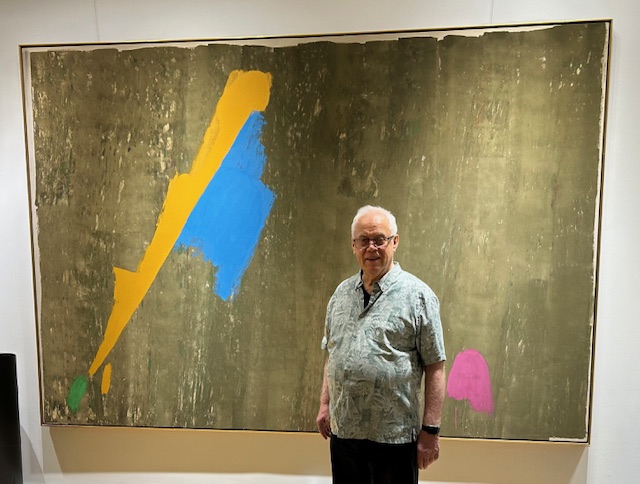
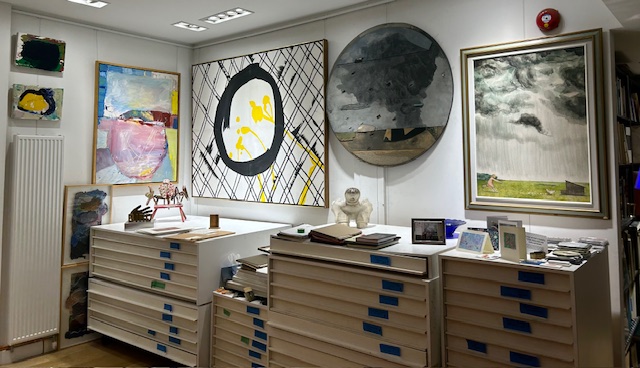
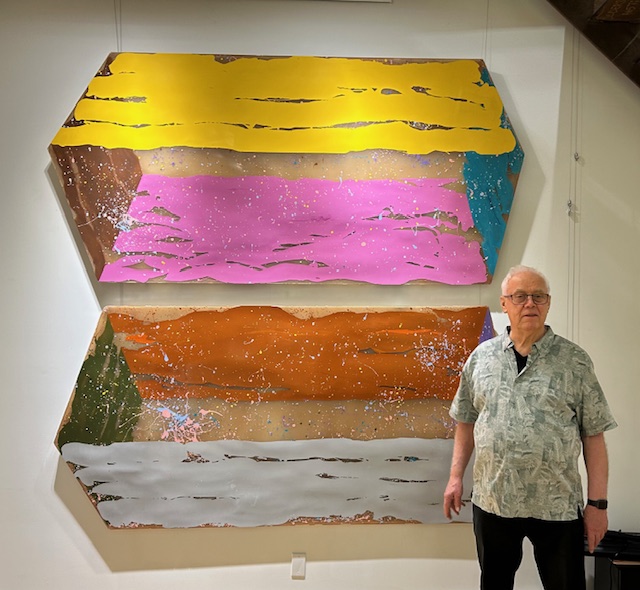
The majority of Paul’s collection is primarily Canadian art, more precisely 40 out of 50 paintings are by Toronto based artists and except for a few pieces it is almost exclusively painting. Artists include: Robert Bachalo, Robert Chandler, Tim Deverell, Ric Evans, Steve Driscoll, Ric Evans, Marianne Fowler, Steve Rockwell, and YM Whelan. In a basic overall description, the collection is comprised of abstract pieces with an inclination towards the geometric and minimal with a richness and vitality of color. While we were talking, I realized that after numerous visits, just about each piece has a certain quality of texture to it. Whether it is Nathan Slate Joseph’s (one of the few non-Canadians) incredibly textured metal painting/sculpture pieces or Whelan’s abstract geometric paintings where the slightly raised brush strokes are visible, there is always texture.

Paul does not buy for investment and has no interest in buying at auction because that is just a business transaction. He has no buyer’s remorse, as he called it when someone buys a piece on a whim only to resell it because they just don’t like the piece. The big art names of Basquiat, Hirst, Koons, Warhol, and the like, he lumps all together as not exactly artists, one he specifically called a fraud, since there are squads of assistants that make their art and there is more concern with market value than with real art ideals. He understands “flipping” as another business transaction, but not something a real collector or appreciator of art would ever do.
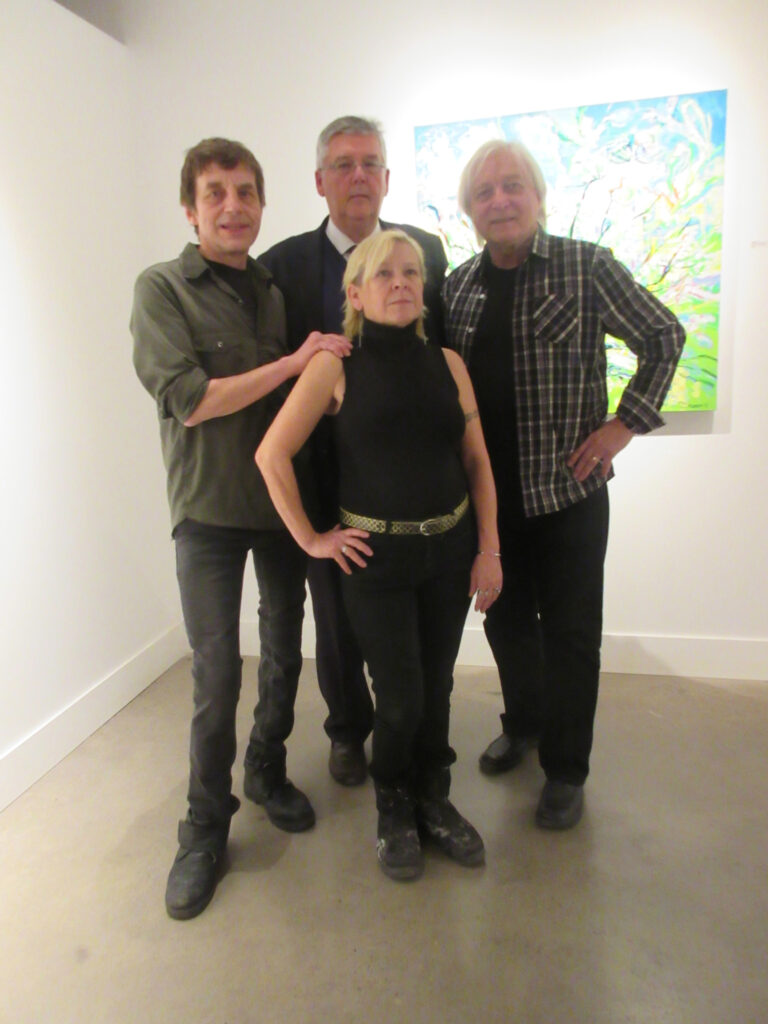
From left to right Robert Chandler, Paul Gurtler, Steve Rockwell with YM Whelan in front, photographed at Whelan’s Yumart Gallery in Toronto

There’s an old saying that there are two types of collectors: one who buys with their eyes meaning it’s about the art and the other buys with their ears meaning they hear the buzz, who else is buying, the sound of money. Paul definitely collects with his eyes, and I would say his heart. Collecting gives him great pleasure and satisfaction, but even more it’s the experiences and interactions with the people involved that matter as much as the art. Having that interaction with the art, artist, gallery and others, seeing the development over the years and of their friendships, that is what truly matters. The piece of art itself becomes a snapshot that holds Paul’s memories over the years; visiting the gallery or studio, talking with everyone over dinner, learning why the artist made that piece that way, new pieces being made, all building new art memories upon his earliest memories.

It’s also about living with the art, many of the pieces in his collection have been with him for 15 years or more. Pieces do not go to storage or circulate on and off the wall, but in full view for all to see and a chance for him to share the art and his memories. After traveling on business for weeks or lifting his head out of spreadsheets, Paul looks at the pieces and thinks about those good times. As Paul says of his collection, giving them a human presence, they are all “good room-mates.”
Steve Shane: Living to Have Art

Christopher Chambers Interviews Collector Steve Shane

(Republication of a dArt magazine Summer 2003 article.)

Collector Steve Shane

Every Saturday art lover Steve Shane visits 30 galleries in New York City, where he resides. Sundays he goes to museums, or galleries outside Manhattan, All of his vacations are scheduled around art events. He has rarely missed a major international art fair in twenty years, He regularly sends out his art emails of his picks to over 500 fellow enthusiasts. Shane prefers to term himself an “art lover,” rather than a collector, stating that his “collection is only a little side effect of my passion,” although he has amassed a collection of over 500 works of contemporary art to date. Shane has never sold any of his collection, which will one day be bequeathed to different museums.

Christopher Chambers: Would you say that collecting is your hobby? 

Steve Shane: Hobby is too little of a word. It’s why I live. It’s why I go to work. Its why I go to work. It’s why I get up; it’s my life. The art galleries, the art dealers, my art collection; talking about it, reading about I, reading art magazines…

CC: What inspires you to collect art? 

SS: I’m looking for a buzz. I don’t drink alcohol. I don’t do any drugs. I don’t smoke. It’s my buzz in life. And I’m also looking for myself. My collection helps me understand who and what I am. I don’t just let anyone into my collection – it really exposes who I am, it’s like lying on a psychiatrist’s couch. My collection is really personal. I think you come here and you might be able to figure out some aspects of my personality, and my identity, history. 

CC: What is art for? 

SS: I think it has different purposes for different people. For me it’s for pleasure. I think it’s to learn. I think one of the things it’s for is: a talented artist was born in this world to help the viewers see what they didn’t see before viewing the art. For example, the Beckers. They taught me how to look. I don’t think I would have ever noticed urban landscapes if it wasn’t for them, I would have never seen a water tower. Or, Marcel Duchamp has taught me to look at things I see in life as a sculpture. 

CC: Why do you think people make art? 

SS: I don’t think they have a choice. They were born to do it. Hopefully a good artist does it because he has something to say about art history, our society, about politics…

CC: What is art? 

SS: Art is anything that an artist makes, that an artist has dedicated his life life to do. Anything that is shown in an art museum or an art gallery. I think it’s creativity. 

CC: Have you ever seen magic? 

SS: Yes. It’s all magical for me. My first experience of an artist. There’s an artist I’ve been crazy about for a while, I think it’s a magical experience for me to see it: Neo Rauch. It’s always a magical experience for me. It takes me to a different place. I think Kim Keever’s magical. One of the things in my collection is a sense of place. I have this thing; I work in New Jersey, I’m a doctor, and then I go through the Lincoln Tunnel and I’m in the art world, New York. I’m from Detroit. Kim Keever takes me to another place. I think that’s magical. It’s like a high. Art can be an escape in that sense. 

CC: Do you think a work of art should transcend the picture plane? 

SS: I think it’s more religious than spiritual. I don’t go to synagogue or church. It’s like a religious calling or religious experience for me. It’s more exciting for me when I first see an artwork as opposed to possessing it. I end up looking like a squirrel, maybe, because I have a big collection, but the biggest thing for me is to see it, to discover it, than to possess it. I like to be a part of the whole situation. After I acquire a piece I like to meet the artist. I also like to consider myself an artist as curator. The work takes on a different meaning in the context of my collection. Because it’s a curated show in my home. 

CC: Is there any particular overriding theme or direction to your collecting? 

SS: Within my collection there is a strong sense of place – a longing or an imagining to be in another place – a different, better place. Other themes recurring throughout my collection include, art about art – art that alludes to or builds on the history of art. I am also attracted to art that exhibits a sense of humor; art that uses wit or irony to comment on historical art movements, artists and the creative process. Another key theme is the marriage of seduction and repulsion. In its physical presence and its emotional content, the work in my collection both attracts and repels the viewer. Contemporary art, as art throughout history, expresses the horror and the joy of the human condition. The artwork in my collection reflects this condition with assuredness, strength, and sincerity. Other themes that have subconsciously entered are: “painting without paint,” “photography of invention,” the element of the “fake,” “the dysfunctional family,” “celebrity,” and a sense of the theatrical. 

CC: Did you collect other things as a child?

SS: It was elephants. Elephants from all over the world made from all different materials. 

CC: Do you collect artists in depth, or do you try to go across the board? 

SS: I used to only want to have one of each, but then, I was enamored by Cindy Sherman early on – in the early eighties – and I think I have twenty Shermans. Elliot Green, I have four or five and then Nina Bovasso… it’s mostly one ofs, but there are certain artists I have multiple pieces by.  Condo (2), Dunham (2), Dzama (4), Glantzman (2), Deb Cass (2), Jonathan Tucker (9), Lasker (2), Simmons (6), Elizabeth Olbert (2), John Waters (2) John Waters is hilarious, Angela Wyman (4), Wojnarowicz (2). 

CC: What is your favourite work in your collection? 

SS: The last piece I acquired always. 

CC: Do you see any particular direction that you think art is heading in? 

SS: Yes, I think it’s heading way toward video. I went to the last Documenta. I don’t have the patience to watch a video for forty-five minutes. In my opinion a good video is if you can jump in at any point and watch it for three minutes. That’s Pipolitti Rist. I end up being mesmerized, maybe that’s the magic you were talking about. Actually, I stay for a long time with her’s. But, I don’t think it’s going to be the end of painting, that’s for sure. I am an individual. I go all over the place and and figure it out for myself. I search for what I think is a good painting, not what’s going on now. That’s looking at art with your ears. I think it’s amazing what some dealers don’t know about art history.

Art Talk With Collector Ben Woolfitt

by Roy Bernardi and Jennifer Leskiw

“I don’t look at my collection as much as I should but, I know it’s around me all of the time.”  Timeless words spoken by Canadian artist and art collector Ben Woolfitt. He started collecting early in life, slowly, and most of the time without having a lot of money. There were times when Ben didn’t have enough money to pay rent. Yet, he couldn’t imagine having a life without art.  

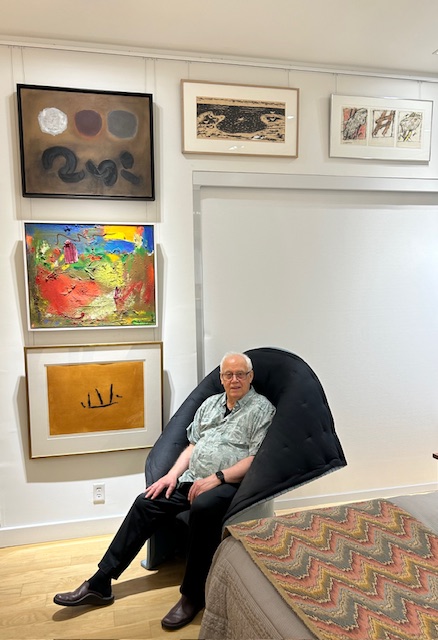
Ben Woolfitt sitting next to his bed with (from top down) Adolf Gottlieb, Hans Hofmann, Robert Motherwell, (to the right) Milton Avery and Ray Mead

No truer words have been spoken. His fabulous loft proudly displays his own works of art, paintings and drawings, amidst a carefully curated collection of internationally well-known artists. The Toronto loft showcases numerous paintings, drawings, and watercolours by such notable artists as Jack Bush, Jules Olitski, Milton Avery, Larry Poons, Hans Hoffman, Adolph Gottlieb, William Ronald, John Meredith, Ken Noland, Ron Davis, Ellsworth Kelly and William Kurelek, to name a few.  

Ben Woolfitt in front of Larry Poons Untitled #2, 1972 acrylic on canvas

File drawers contain gems of drawings including 3 Helen Frankenthaler’s and collectible artists’ books such as rare signed editions by Antoni Tapies. His New York Manhattan apartment showcases the same sensibility boasting a beautiful Milton Avery oil. 

Ben points to a massive Jack Bush on his wall behind his sofa which he considers to be a major piece of Canadian art.  “He’s unbelievable and he’s respected internationally”  Ben says. I remember going to New York in 2010 to see the Jack Bush at Christies.  In the photographic reproduction of the painting, Christies had trimmed off all the rough parts along the edges, so it looked very tight, and the image itself was very dark. I purchased the Bush, which is probably now worth significantly more than the original purchase price.

Ben Woolfitt standing in front of Jack Bush Bluegold, 1973 acrylic on canvas

Which do you prefer, the search or the acquisition?  

They go hand in hand. The search is fine. I saw a Hoffman that I really wanted to buy, and I went down to the auction. I sat with my friend Ken Carpenter and the auction house brought the piece out for inspection. I just about passed out because Ken was totally convinced that the piece wasn’t good.  He said you don’t want to go for this one. It was a mash up of colours and the colour was off. So, I sat through the auction. The Hoffman went way over the estimates. I didn’t have the money to purchase it as it exceeded my limit at the time. When you buy a piece of art by any artist, you generally buy more than one or several works by the same artist if possible.  

If you had to pick one piece out of your collection, what piece would be the one piece that totally steals your heart?  

That’s difficult. I have a Hans Hoffman that is just amazing. I love Jules Olitski. I bought two of them. I have a beautiful little Milton Avery in New York. I have a Tim Whitten. It’s a real beauty. Collecting is an interesting thing. Some people say that collecting art is a sickness. I’ll tell you what I think collecting is. You buy what you can afford but you know, it’s like anything else in life. You go along and you buy a drawing by an artist and if it holds your interest, then you buy more by the same artist, and it all kind of comes together to form a collection. 

What was one of the first pieces that you bought?  

Ellsworth Kelly. It’s a print. I paid a $100 for it. I took it home on the streetcar. It was spring of 1968 I believe. I sketched it and that’s when I realized the drawing was very complex. After I sketched it, I called David Mirvish and in that conversation I told him that I had made a  decision to become a painter.

File drawers containing drawings, works on paper and collectible artists’ books. Art work (From left to right) two small William Ronalds and one large William Ronald, John Meredith, Otto Rogers and William Kurelek
File drawers containing drawings, works on paper and collectible artists’ books. Art work (From left to right) two small William Ronalds and one large William Ronald, John Meredith, Otto Rogers and William Kureleks

Is there an artist’s work that you don’t own but would wish to buy to add to your collection?  

Well of course I would be going back to the masters, Rogier Van Der Weyden and Alberto Giacometti. I’ve always had a thing for Giacometti. My early drawings were all “Giacomettiish. I remember being at the National Gallery in London, England. I remember the room I wanted to enter in order to see the Van Der Weydens and all of that kind of work. It reminds me of a similar story where Grant Goodbrand, a longtime close friend of 50 years goes into a museum, and enters the room where he wants to see something in particular.  He stays there till lunch, leaves and then comes back after lunch. The next morning, he comes back and does the same thing. On the third morning when Grant arrives, the guard in that room says: “You know, we do have other  paintings”. Grant knew he might never have an opportunity to go back to that museum but, he wanted to know the work. When I focus on a particular work, that work has to be imprinted in my mind. For me, regardless of the many museums I have visited, I can actually walk back into a particular room in my head, and I can see that one piece. 

How did you enter the world of abstraction?

I started to find out about abstraction through artists like Cy Twombly and Barnett Newman. I met Barnett at an opening in New York when I would have been around 21 years of age. We kept circling around one another and I finally approached him and said: “I love your work”. I couldn’t have said any more than that. At the time I didn’t realize how important and how rare that moment was. 

Ben Woolfitt in his loft with Ron Davis, Cuffs, 1969 Diptych polyester resin and fibreglass.
Ben Woolfitt in his loft with Ron Davis, Cuffs, 1969 diptych polyester resin and fibreglass

I also love Jasper Johns. I wish I had bought Johns at a reasonable price, but that time is over. I’ve known many Canadian artists. I knew most of the Painters Eleven. They were always coming through my arts supply store (Ben owned Woolfitt’s Art Supplies on Queen Street West in downtown Toronto) and we were doing business. I’ve also met Alex Colville and Christopher Pratt.

I used to sell paper and I knew more about fine art paper than anyone else. I knew all the machines and I’ve been to every factory. I imported 120,000 pounds of fine art paper and rag board a year. When visiting buyers and in particular, if they needed a particular width of paper, I could tell them the factory that supplied this. I could tell you what kind of water they use, how pure it is. The National Gallery of Canada, the AGO, and every museum in Canada bought from us. We were designated for this and we shipped everywhere.

One of the things I notice looking around your space is that you don’t really have any figurative works.  

“I do actually – just not hung”.  I do have the William Kurelek up but, that’s almost an abstraction too because the bulk of the piece is sky. When I look at a painting and it has a figure in it, I don’t care about the figure. It’s irrelevant to me. I just want to know how it works so, to me, looking at an Edgar Degas or a Jackson Pollock, it’s all the same. Really. It’s just a matter of whether it works or not and how people use the space within the canvas. If someone has any base knowledge of art they would know who the artist is just by looking at the image. 

Ben Woolfitt in his bedroom with two works by William Ronald (top) Dolly, 1980 oil on canvas and (bottom) The Moon and You, 1980 oil on canvas

Do you have any interesting art stories about some of the artists you have met?

William (Bill) Ronald owed money for rent and supplies. I did a deal for him as a courtesy. There was a collector who was always going on about “I’m going to buy this and I’m going to buy that”. He was very wealthy. So, I said you should buy some of Bill’s work in an effort to help Bill out and also receive money Bill owed me. I remember helping Bill put something like 25 paintings around the room, all canvases. The collector walked in with a babe on his arm. Bill probably  bumped up the prices on the works but, Bill was on his best behaviour.  The collector walks around the room looking from one painting to another. “So honey what do you think?  They’re nice huh?  Should I buy them all?”  OMG this is sick. Anyway, the collector buys everything and says: “You know Bill, if I change my mind on some of the pieces I don’t like, I’ll be able to return them.“ Bill replied: “Yeah yeah of course. I‘ll write it out.”  Bill was always in need of money.  Anyway, the collector came back about six weeks later, and he says he wants to see Bill because he wants to return a couple of paintings. Bill is sitting in his studio as the collector walks towards him telling him he wants to return a few paintings. The atmosphere wasn’t great.  At this moment, Bill lurches out of his chair and says: “You know I used to be a boxer. I’m going to knock your f***ing head off your shoulders”. End of deal. End of story.

Rae Johnson: Forgotten Soul

by Roy Bernardi and Jennifer Leskiw

Recently, we went to see the exhibition of Rae Johnson’s work at the Christopher Cutts Gallery on Morrow Avenue in downtown Toronto. Several large-scale landscape paintings were shown among smaller more intimate landscapes. Johnson, born in Winnipeg, Manitoba, studied at the New School of Art in Toronto from 1975 to 1976 and continued her education at the Ontario College of Art from 1977 to 1980. As a distinguished female Canadian artist, she lived and created art in Toronto during the 1980s before relocating to Flesherton, Ontario, in 1987. She stated that Robert Markle, one of her educators, was her most significant influence. She passed away in 2020. The opening event was attended by Rae Johnson’s children, Adrian, Joslyn and June.

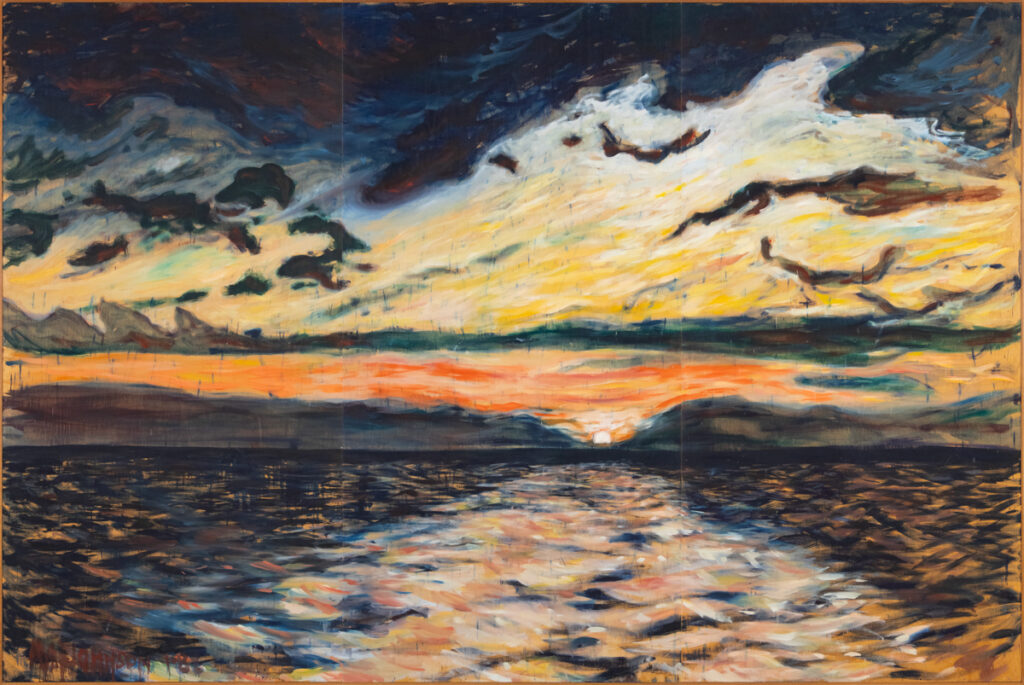
Rae Johnson, Sunset, Lake Winnipeg, 1988, oil on wood, 244 x 366 cm

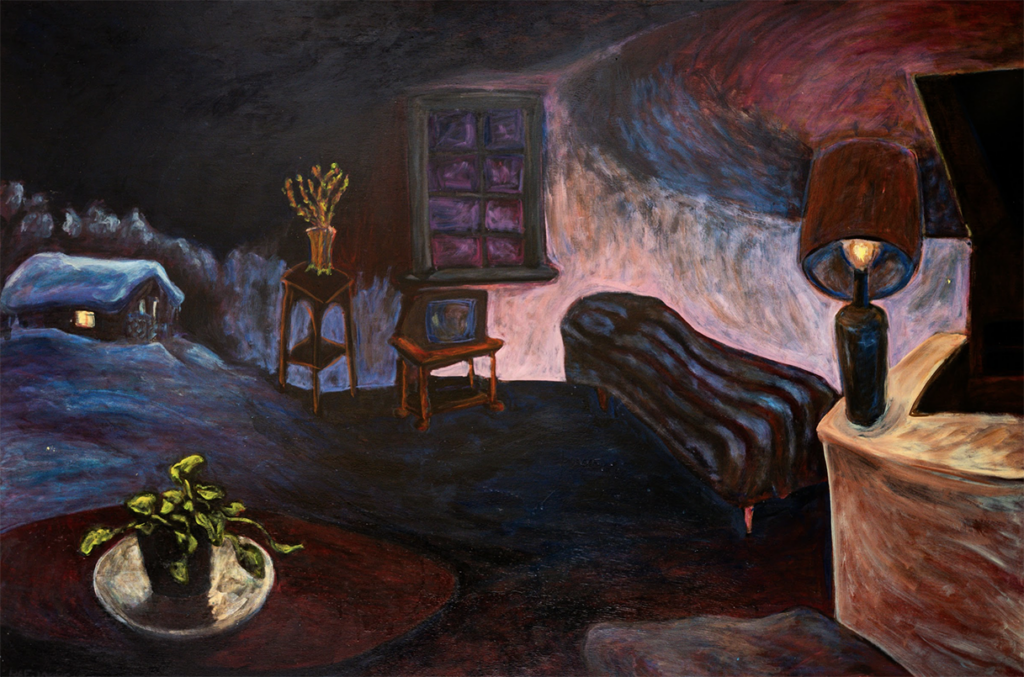
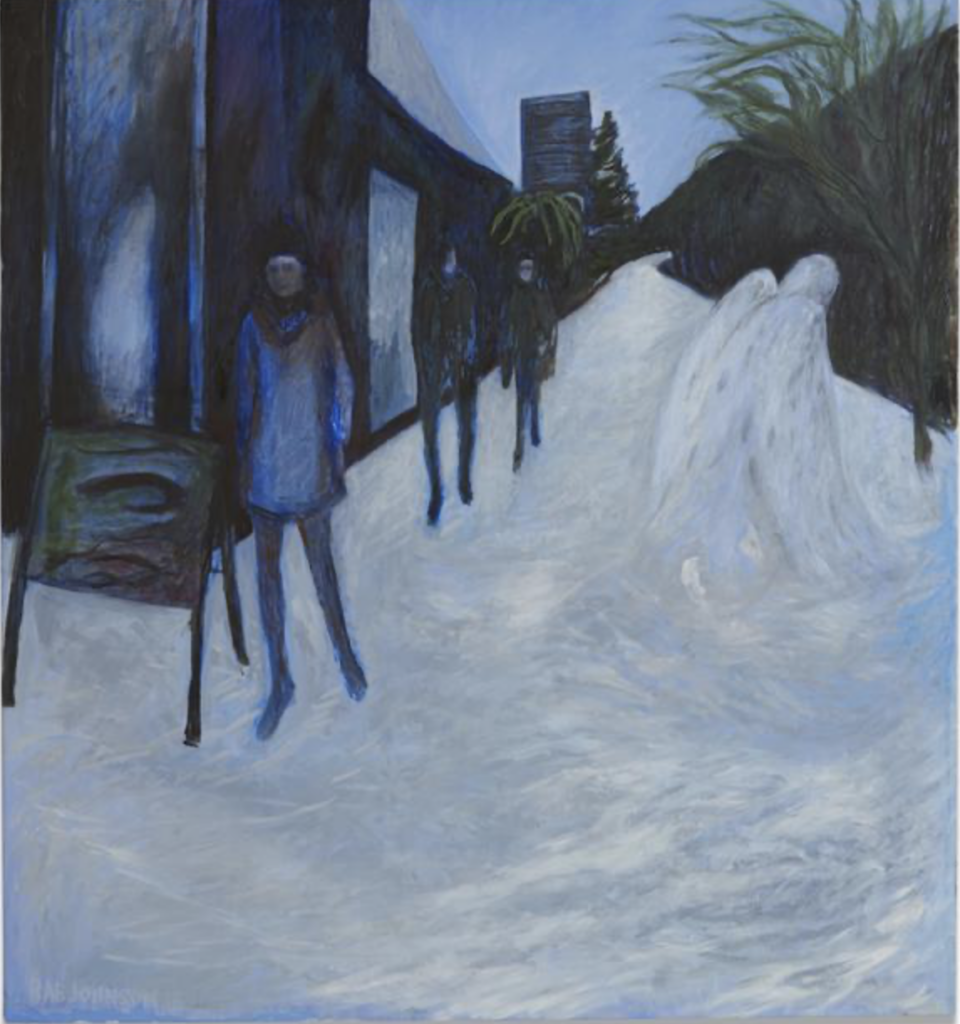
Her artistic expression captures the diverse experiences of life in her immediate surroundings. Her artwork ranges from representations of demons and ethereal beings in the snow, to angelic figures, scenes of indulgence, intimate moments in bathtubs, depictions of societal outcasts, inebriated individuals, saintly figures, and verdant landscapes reminiscent of the Garden of Eden. Her creations explore the intersection of the sacred and the profane. She often portrayed her studio or living space, utilizing friends and her children as subjects.

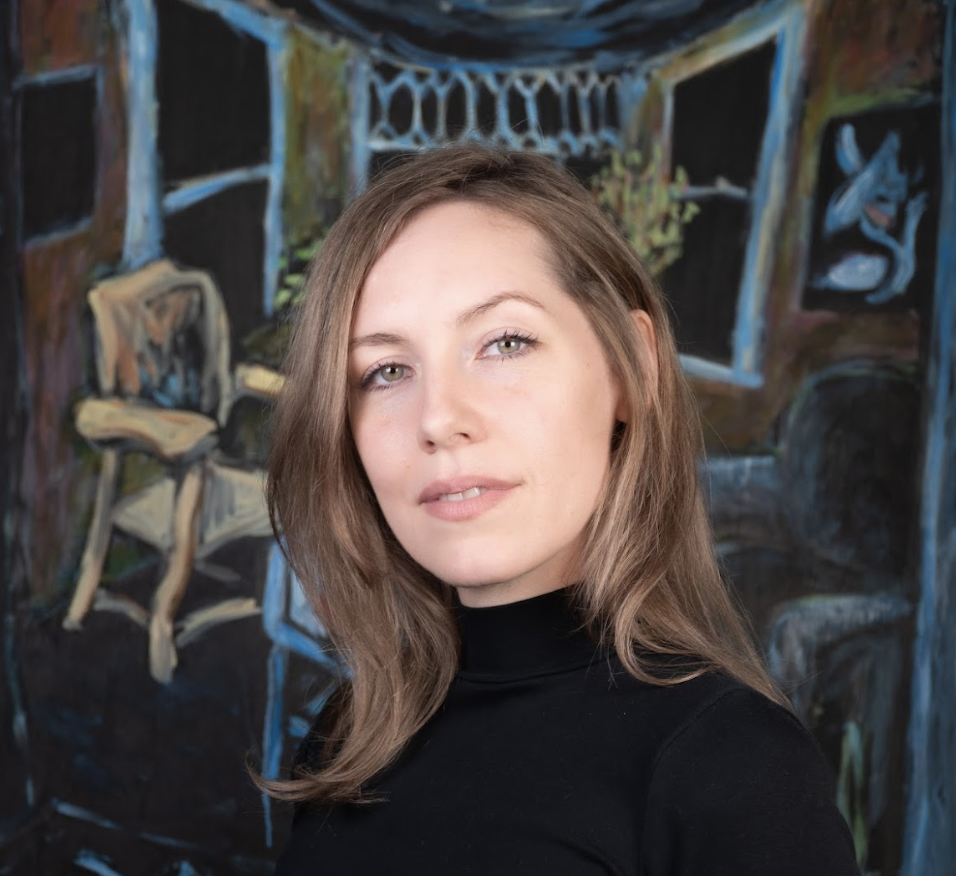
Joslyn Rogers in front of Rae Johnson's oil painting Janet's Living Room 1998, Acrylic on canvas.
Joslyn Rogers in front of Rae Johnson’s oil painting Janet’s Living Room, 1998, oil on wood.

We sat down with her daughter Joslyn Rogers who works in the entertainment industry as an Actor/Writer/Director for a candid interview.

What was life like as the child of an artist?

I was raised in a creative environment.  I had the privilege of being the child of two talented individuals.  My mother Rae Johnson was a gifted visual artist. My father, Clarke Rogers, was the artistic director from 1982-1987 of Theatre Passe Muraille, a Canadian alternative theatre company that champions independent and experimental performances.  

I remember playing in my mother’s various studios. She would be painting into the night, listening to Nirvana or Jimi Hendrix, and I would be finger painting beside her. I remember falling asleep to the clickety-clack of my father’s typewriter, and playing backstage at his rehearsals. When I was a baby we were in-between apartments so we slept on the set of ‘Jessica’, a play by Linda Griffiths and Maria Campbell. My father was directing the play and my mother painted the poster for it. 

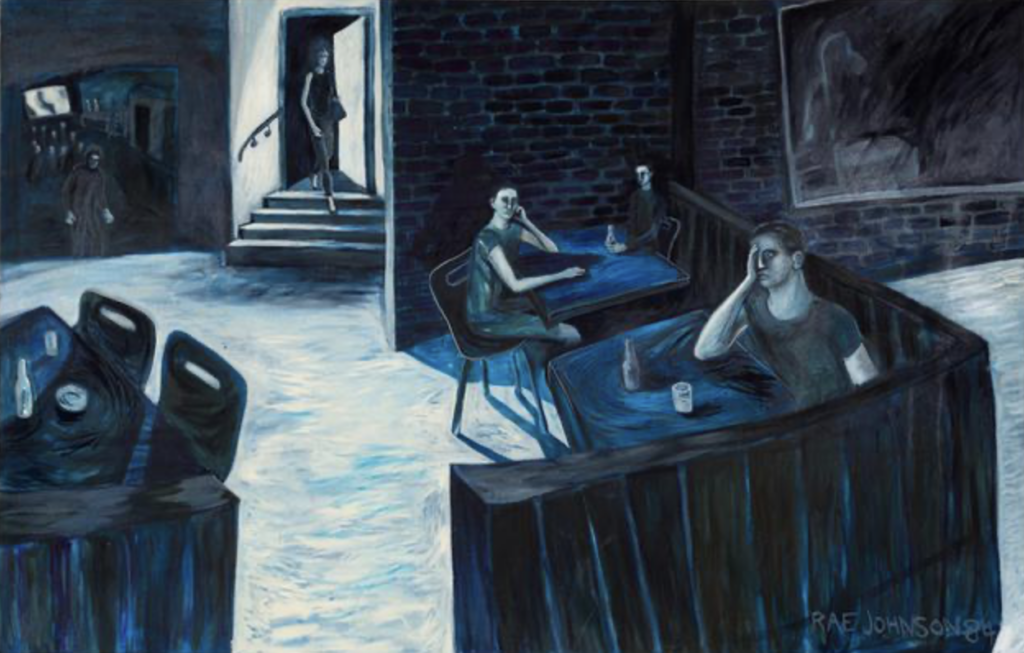
Rae Johnson, Night Games at Paradise, 1984, Oil on canvas, 213.4 x 335.3 cm
Rae Johnson, Night Games at Paradise, 1984, oil on canvas, 213.4 x 335.3 cm

We moved out of Toronto in the late 1980s and bought a country property in Flesherton, Ontario. We had acres of forest around us and a pond which became the muse for mother’s paintings over the next decade. Flesherton was an artist community so most of my friends were children of artists, like the daughters of painter Harold Klunder and sculptor performance artist Catherine Carmichael. Regardless of where we lived, our living rooms always transformed into my mother’s creative workspace. We frequently attended art shows alongside her eclectic circle of friends, including her close companions and fellow artists Tom Dean, Sybil Goldstein and Lorne Wagman. 

My sister, brother, and I were often left to our own devices, and would play from morning until night out in the sprawling woods surrounding our house. We became very attuned to nature, to the spirits of the forest, and were given the freedom to explore the imaginary worlds we would create in play.

Rae Johnson, Unknown Title (Rae's bedroom and studio in Flesherton), 1995, Oil on wood panel, 121.9 x 182.9 cm
Rae Johnson, Unknown Title (Rae’s bedroom and studio in Flesherton), 1995, oil on wood panel, 121.9 x 182.9 cm

After the death of my father, my family moved back to Toronto. It’s only now as an adult that I can truly appreciate the clan I grew up with and belong to, and that when I declared to my mother as a little girl that I wanted to be an actress, I was met with encouragement and not “get a real job”.

My mother, Rae, was an integral part of the Toronto arts community during the late 1970s and early 1980s. During this time, a collective emerged, ChromaZone, a vibrant creative group dedicated to reintroducing figurative painting to Toronto, featuring notable figures such as Brian Burnett, Oliver Girling, Andy Fabo, Sybil Goldstein and Tony Wilson. My mother was also an associate professor at OCADU. It’s stunning how influential she was.  

Tell us what you know about your mother’s relationship with Brian Burnett? 

Brian and my mother met at The New School of Art in Toronto as students. They quickly fell in love and had my brother Adrian. My mother told me about being poor students with a babe in arms, living in artist warehouses, and the “art wars” between them – spending nights trying to out-paint one another. Tom Dean remembers visiting Rae and Brian at their illegal apartment on Niagara street, which they had converted mostly into their studio with floor to ceiling paintings and a giant mound of dirty baby diapers in the centre of it all. Brian and Rae were budding artists together. They played in experimental art bands, one called Niagara, and another called DogSound, with other local Queen West visual artists like Micheal Merrill, Alan Glicksman, Lorne Wagman, and Derek Caines. They were ambitious, hot young art stars, and found their artistic voices together. They had the best art dealers in town: Brian was with Av Issacs, and Rae with Carmen Lamanna. I can see how they influenced each other in their respective paintings which share surrealist, dream-like qualities. Sometimes I can even see representations of each other in their work.

Rae Johnson, Winter Angel, 2018, Oil and graphite on canvas, 139.7 x 129.5 cm
Rae Johnson, Winter Angel, 2018, oil and graphite on canvas, 139.7 x 129.5 cm

They broke up in the mid 80s after nearly a decade together. It was devastating to my mother, who nearly had a mental breakdown but, that led to some of her most powerful paintings which now belong to permanent collections throughout Canada.

What do you recall about Rae’s art work?

When I think of my mother’s work, I recall my own life. When we were living in Florence, she was working on a series titled “Bambino Miracolo”, which was exhibited at the Canadian Cultural Centre in Rome, Italy. They were large scale oil paintings inspired by the horrific images coming out of the Bosnian war at the time. Embedded in the painted scenes were dying babies attached to intrusive medical devices and renaissance angels guarding over top. 

My life has been chronicled through my mother’s paintings. She painted our property in Flesherton, every season, every time of day. She painted portraits of her friends, every studio she inhabited, the storms and sunsets over Lake Winnipeg where our family cottage was, and she painted us, her children. I appear in her paintings at every stage of my life: as a baby, a young girl, and even as an adult. One of the most inspiring qualities about my mother was that she always painted. My father committed suicide by hanging in our Flesherton forest in 1996. From that came a body of work she called “The Black and White Series” and “The Premonition Drawings”. Like the titles suggest, they are black and white, often interiors of her bedroom with ghostly figures lurking in the shadows.

Did Rae favour figurative work over landscape painting?

My mother didn’t start painting landscapes until the late 1980’s after moving to Flesherton. She said she began in secret, afraid the new subject matter would be perceived as an affront to her well established style of “urban nightmares.” To her, this transition to painting nature was her most daring work. She also proclaimed that painting the sunsets over our Flesherton Pond was where she learned how to paint light. My mother’s paintings have a narrative spirit, and she would alternate between figurative and landscape for the rest of her life, each reflecting her inner soul. 

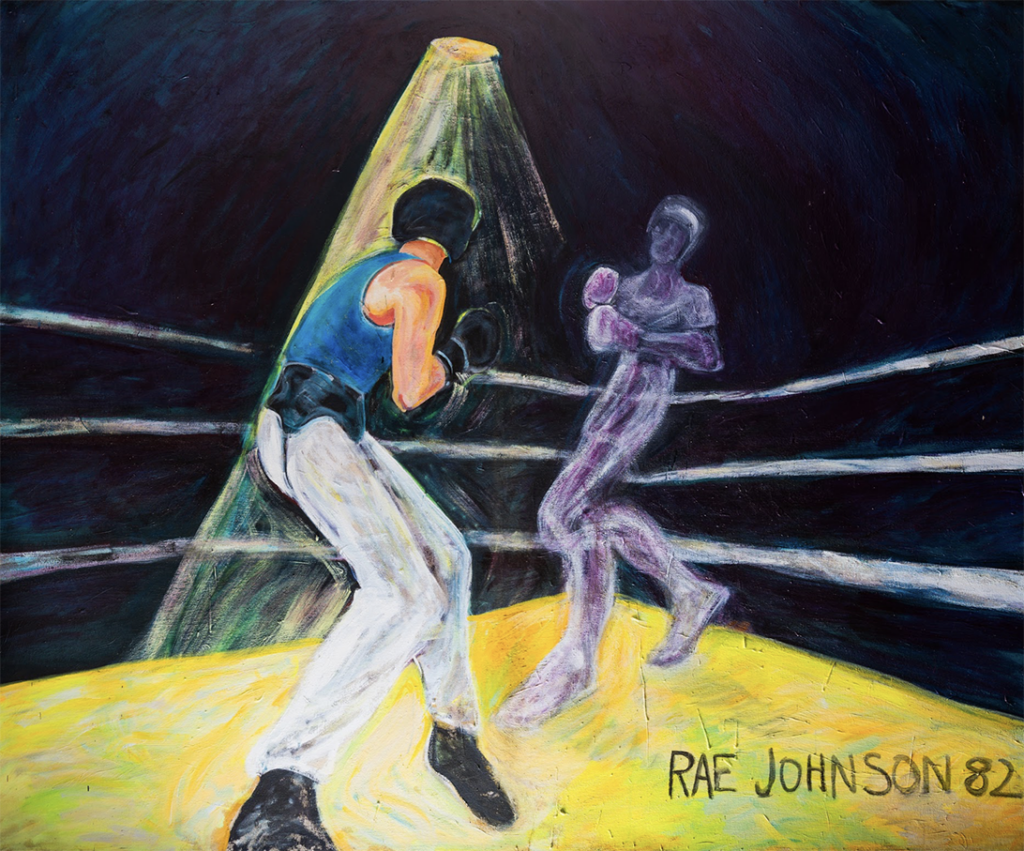
Rae Johnson, The Opponent 1982, Acrylic on Canvas, 167.6 x 203.2 cm
Rae Johnson, The Opponent, 1982, acrylic on canvas, 167.6 x 203.2 cm

I believe that good artists are visionaries, often unacknowledged or misunderstood in their own time. After taking on her artistic estate, I have been working alongside the new generation of curators and artists. They seem to understand and appreciate my mother’s work and that of her contemporaries. My mother was ahead of her time, waiting to be rediscovered. 

Three Short Takes on Exhibitions in New York

by John Mendelsohn

Jen Mazza: Vicissitudes of Nature
January 10-February 22, 2025
Ulterior Gallery, New York
www.ulteriorgallery.com

Christopher Hart Chambers: Passages
January 23-March 11, 2025
Crossing Art, New York
www.crossingart.com

Louisa Waber: The World Inside This One
January 21- March 7, 2025
TenBerke Architects
events@tenberke.com

In her exhibition, Jen Mazza has assembled a kind of rebus made of quotations, both visual and literary. “Rebus” implies that from the images and words – variously painted, written, and sculpted – something will be spelled out. Maybe the desire to make sense is the red herring in this mystery, but nonetheless clues abound.

The original sources for the works are all from the past, starting in the Renaissance, on up to the early 20th century. This range of time periods lends an archival, antiquarian air to the exhibition. But rather than creating a cabinet of curiosities, Mazza’s poetic conceptualism works like poetry itself, placing one image adjacent to the next, and allowing their energetic conjunction to conjure something new in our consciousness.

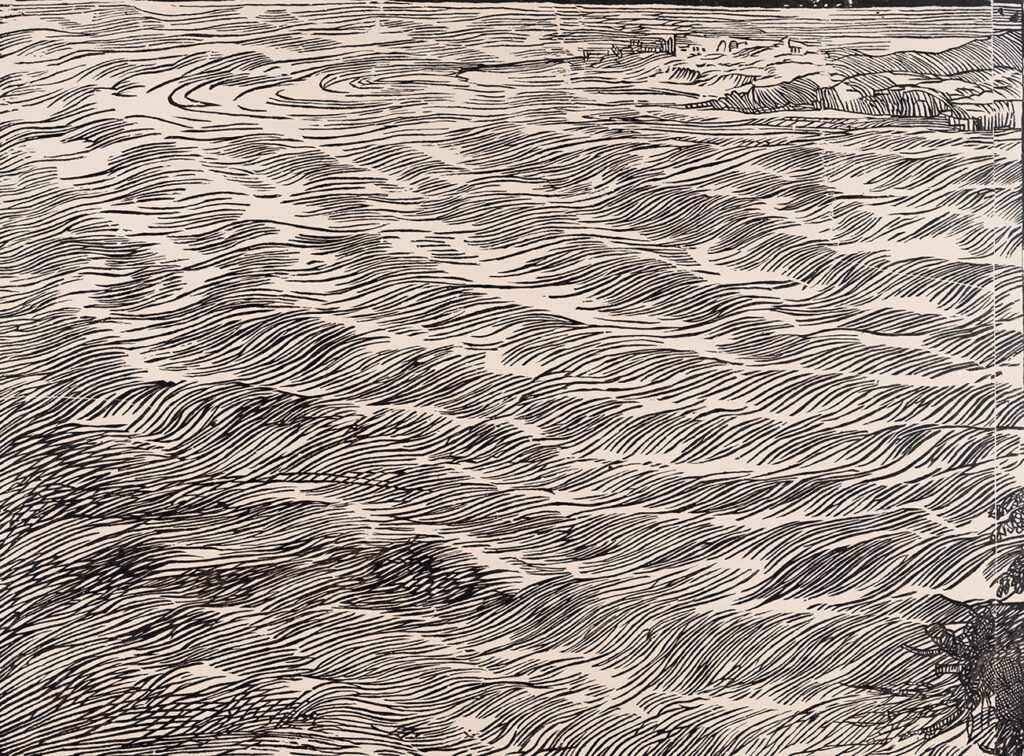
Jen Mazza, Portent 1, 2024, oil on canvas, 67 x 87 x 2 in. (170.2 x 221 x 5.1 cm) 
Photo by Jason Mandella, Courtesy of Ulterior Gallery and Jen Mazza (c)Jen Mazza 
Jen MazzaPortent 1, 2024, oil on canvas, 67 x 87 x 2 in. (170.2 x 221 x 5.1 cm) 
Photo by Jason Mandella, Courtesy of Ulterior Gallery and Jen Mazza (c)Jen Mazza 

In a 2021 interview, Mazza said that, “After all, anytime that we engage an historical work, we are engaging with the past as if it pertains to us.” So, we as viewers must be alert to how these couriers from an earlier time might actually be speaking to us about our relationship to the natural world, history, and most importantly to change as an existential constant.

The exhibition’s title, Vicissitudes of Nature, points to life’s unpredictable contingencies. This sense is embodied in the artist’s rendering of Ruskin’s diary script, his words describing the weather, including “Terrific Thunder”, “brighter”, “beauty”, and “Worse and worse”.

Water and its evocative possibilities are a recurring presence throughout the exhibition – in an expanse of sea, in diagrams of nautical navigation, in the name of a ship, and in passages from Virginia Woolf’s novel The Waves.

This feeling of watery, shifting fortunes is embodied in the exhibition’s largest work, Portent 1, a painted excerpt of Titian’s The Submersion of Pharaoh’s Army in the Red Sea, a 12-block woodcut. In Mazza’s version the Israelites and the Egyptians have both been effaced, with only the rippling waves remaining visible.

Jen Mazza, Terpsichore (1760), 2022, oil on canvas, 40 x 60 in. (101.6 x 152.4 cm) 
Photo by Jason Mandella, Courtesy of Ulterior Gallery and Jen Mazza (c)Jen Mazza
Jen MazzaTerpsichore (1760), 2022, oil on canvas, 40 x 60 in. (101.6 x 152.4 cm) 
Photo by Jason Mandella, Courtesy of Ulterior Gallery and Jen Mazza (c)Jen Mazza

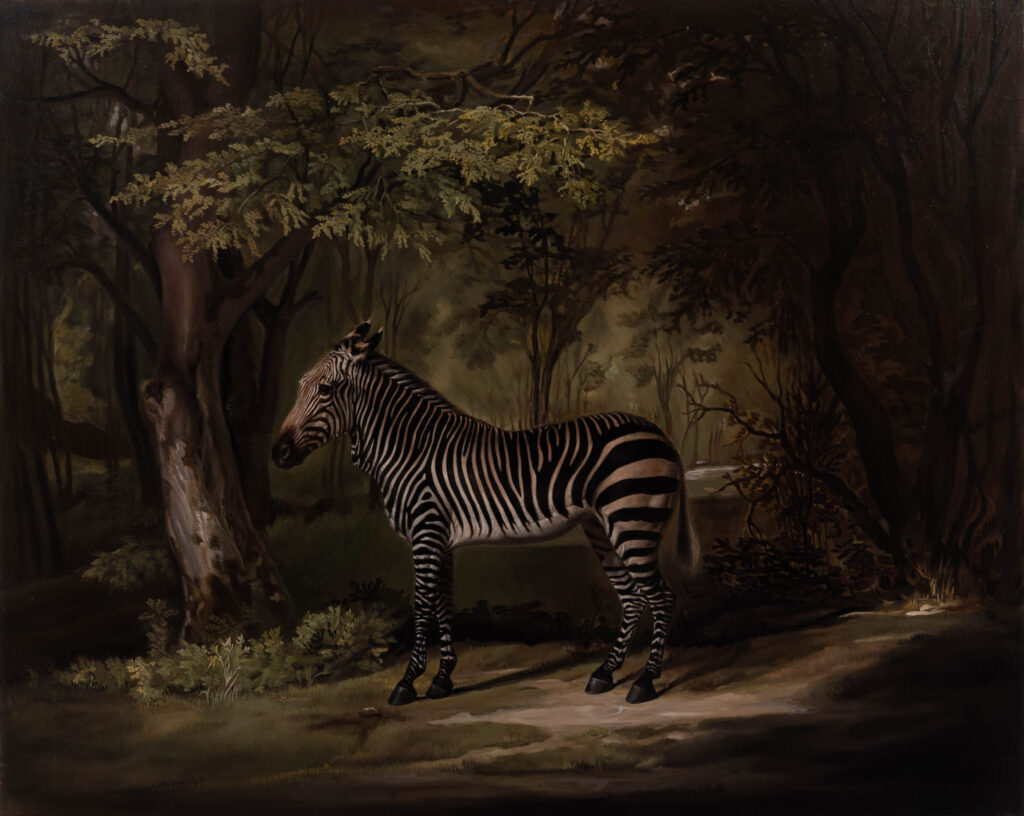
The sailing ship HMS Terpsichore delivered from Southern Africa the first zebra publicly displayed in Great Britain, the sole survivor of a pair that had been transported. In Terpsichore (1760) Mazza faithfully reproduces George Stubbs’s painting of the animal, while in Terpsichore (1847), the painting’s subject is a white silhouette – both are reminders of the empire’s colonial exploitation.

Christopher Hart Chambers paints paradise in the form of flowers, leaves, and branches, densely layered in atmospheric space. He evokes a world in bold motifs, distillations of growing things blooming and intertwining.

This world of organic energy is both observed from real life, and echoes how in many cultures nature becomes art, bringing the life of plants into human discourse as a charged spiritual, aesthetic, or decorative presence. In Chambers’s work we sense as a model flowers and branches depicted in the art of China and Japan. Equally apparent is the lineage of modern painting, ranging from Matisse to Alex Katz, that seeks to create simplified abstractions of nature’s complexity. In Chambers’s hands, the patterns of nature take on logo-like silhouettes, perhaps a distant recollection of this painter’s early days in the Street Art movement in New York.

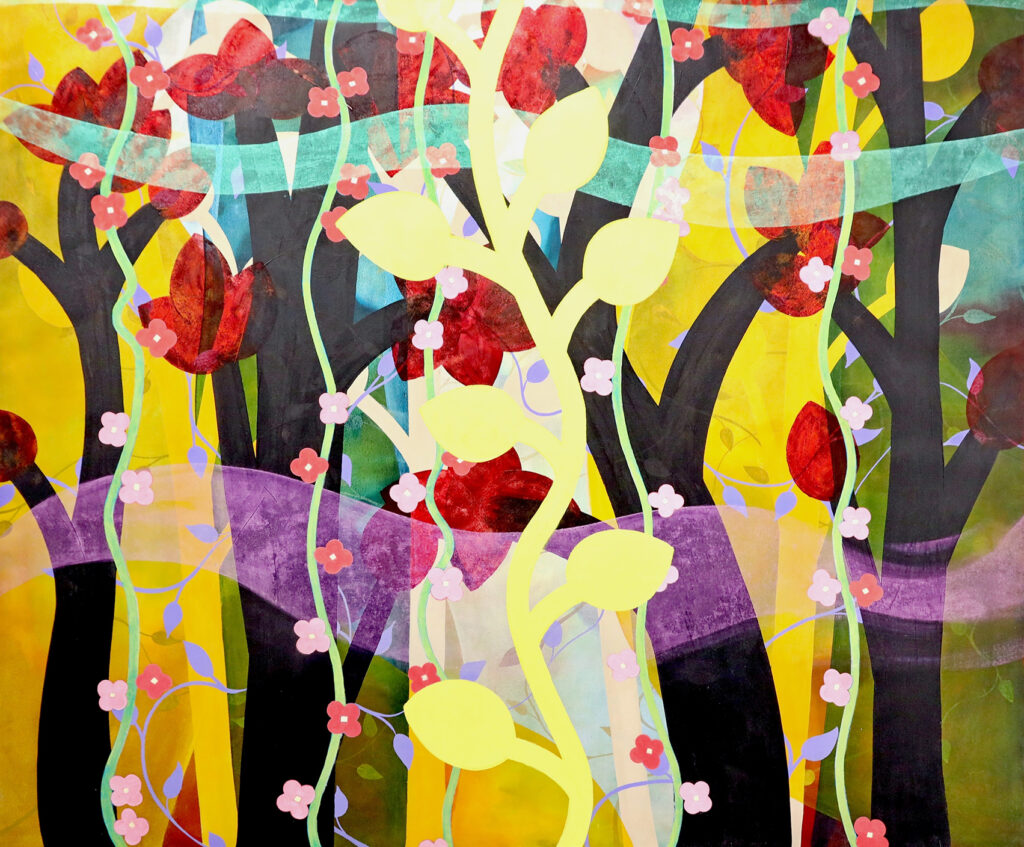
Christopher Hart Chambers, Fertile Circus, 2024, oil on canvas, 60 x 72 in., Photo credit: Shayomi Srivastava
Christopher Hart ChambersFertile Circus, 2024, oil on canvas, 60 x 72 in., Photo credit: Shayomi Srivastava

One striking work is Fertile Circus, a fugue of overlapping rhythms, formed by glowing depths of yellow light, that alternate with vertical passages of olive green and aqua. Overlaying this background are black tree trunks sprouting semi-transparent scarlet flowers. Wafting in front of the trees are wavering bands of turquoise and lavender. Closest to us are vertical sine curves in a soft green, and a large central stem with leaves that seems to create a negative space for us to enter.

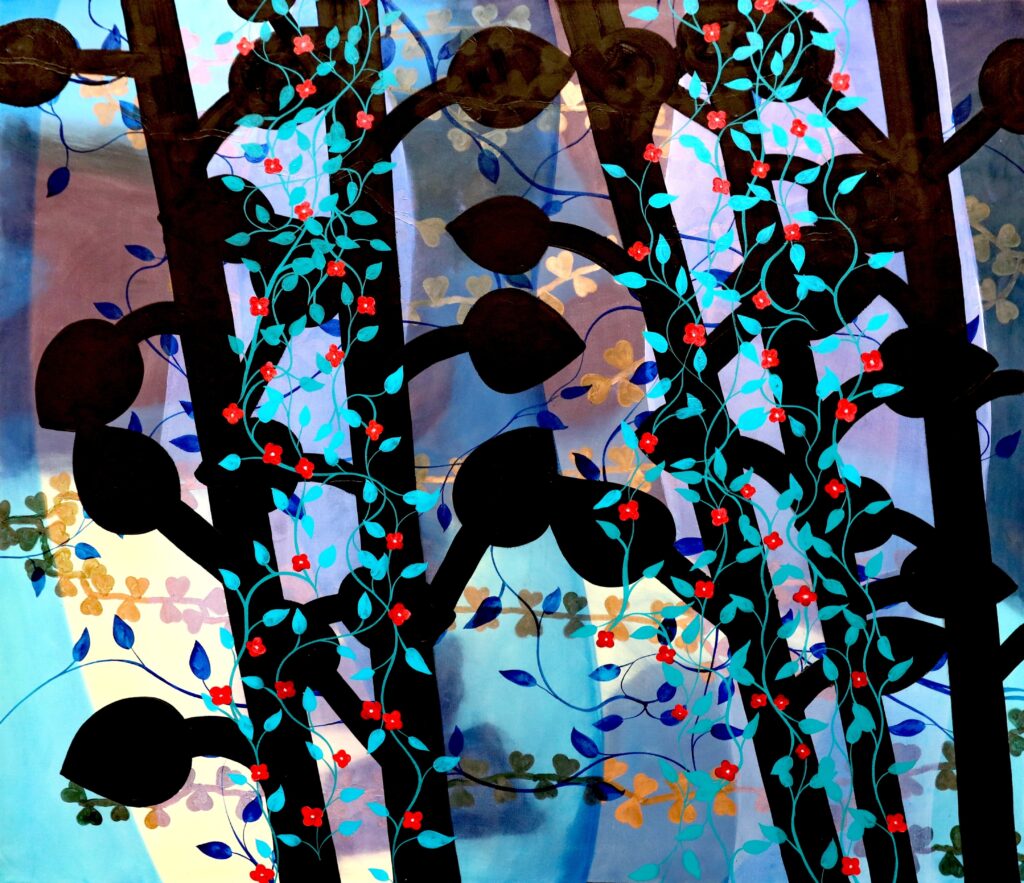
Christopher Hart Chambers, Chocolate Forest, 2024, oil on canvas, 60 x 72 in., Photo credit: Shayomi Srivastava
Christopher Hart ChambersChocolate Forest, 2024, oil on canvas, 60 x 72 in., Photo credit: Shayomi Srivastava

In the painting Chocolate Forest, black, spear-like leaves ominously dominate the soft-focus space beyond, over which play a sign of hope – twisting stems and small, red flowers.

The artist’s touch is ever-present in these works, in the delicate mists of colored space, and in the impasto, scumbling, and glazes of oil paint. These painterly techniques work in contrast to the flat, solidly colored trees and tendrils.

Color is the prime vehicle for feeling in these works. It exists on a spectrum from jewel-like tones, to color tamed with the admixture of white, to black that serves as a stark counterpoint.

Taken together, the elements of Chambers’s paintings coalesce into an enchanted vision, a psychedelic realm that encompasses dualities – the nuanced and the graphic, the buoyant and the haunted.

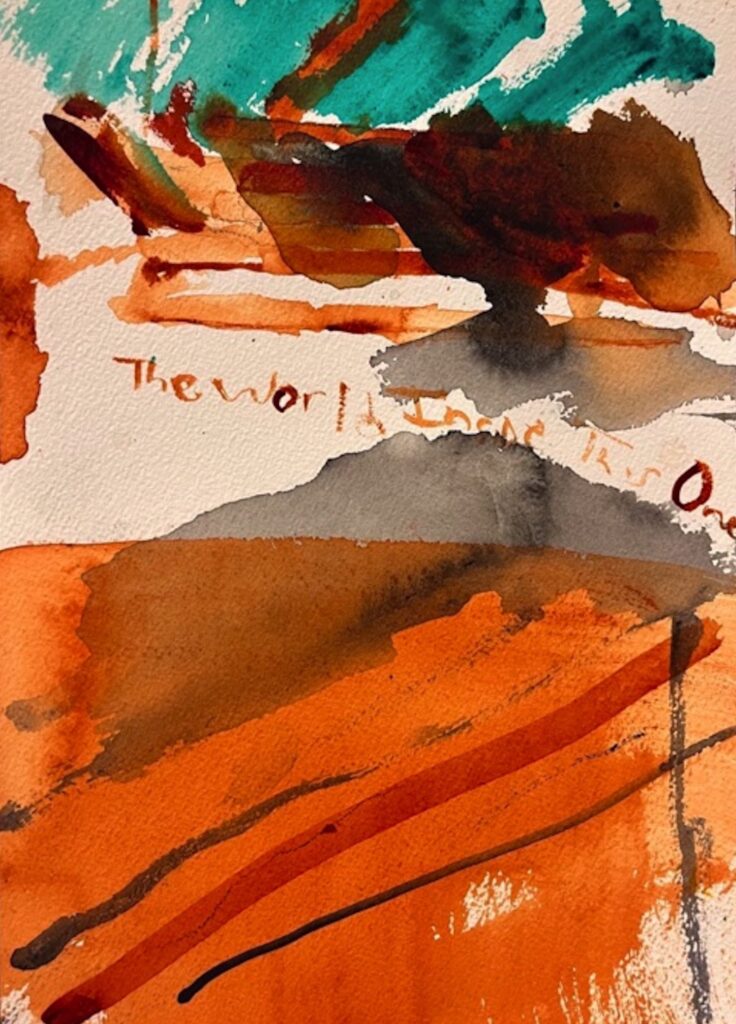
The World Inside This One, written across one of Louisa Waber’s pieces from 2023, serves as the title of this exhibition. These words might be guide to entering into the many small works on paper and the paintings shown here. Through drawing, watercolor, and acrylic, Waber evokes a psychic realm to which the visual is an opened portal.

Louisa Waber, Untitled, 2024, watercolor on Arches archival watercolor paper, 10 x 7" (plus frame) Photo by Louisa Waber
Louisa Waber, Untitled, 2024, watercolor on Arches archival watercolor paper, 10 x 7″ (plus frame) Photo by Louisa Waber

This portal takes many forms, but certain commonalities emerge. A small sheet of paper’s surface flooded with a wash of color, as a spidery structure floats across it. A bold form emerging from a dark atmosphere, along with a tracery of lines. A quilt-like grid holding a grid of color and emptiness. Vivid brushstrokes supporting a bramble of angled lines.

These are just a few of the recurring motifs, but together they constitute an ongoing, seemingly diaristic series of documents that record states of feeling. Like visual seismographs, they are sensitive to the fluctuations of mediums under the artist’s touch. They variously convey a sense anguish, searching, release, and fierce energy, along with a desire to construct a matrix to hold all the emotions that have been awakened. It seems that above all there is an insistence on the artist’s voice to speak, whether emphatically or quietly, without censorship.

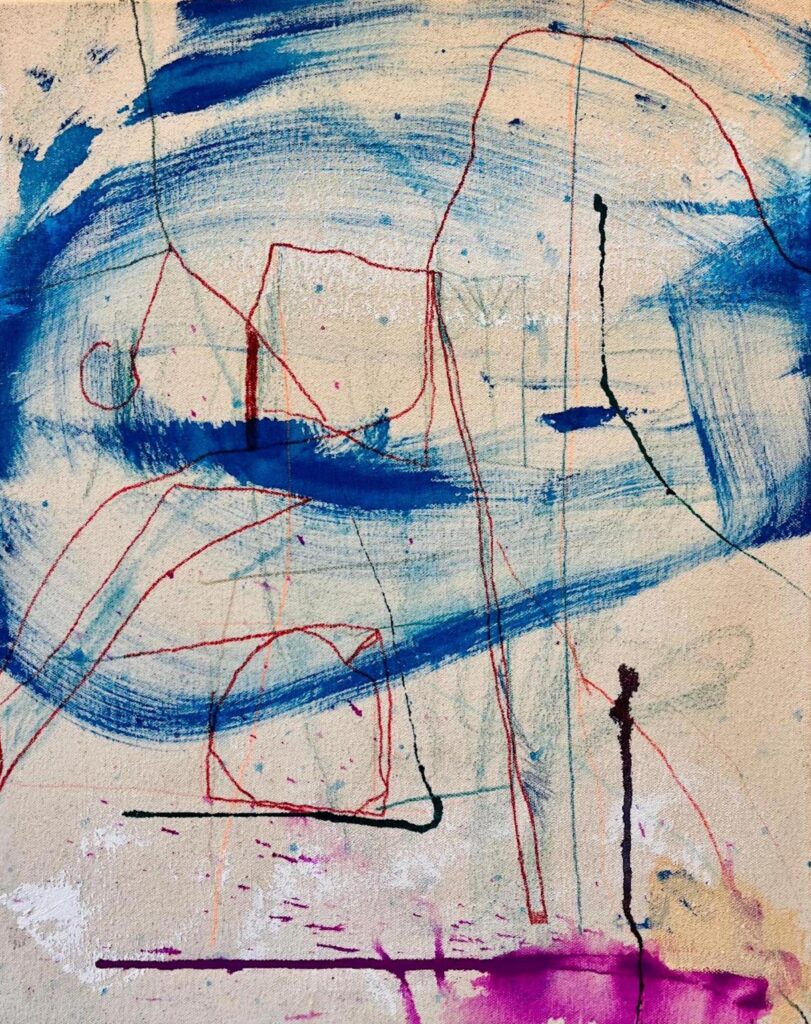
Louisa Waber, How Do You Know?, 2024, acrylic, marker, and ink on canvas, 20 x 16" Photo by Louisa Waber
Louisa Waber, How Do You Know?, 2024, acrylic, marker, and ink on canvas, 20 x 16″ Photo by Louisa Waber

A prime example is the painting How Do You Know? from 2024, with its spare, cobalt blue brushstroke that curves back on itself, like the vestige of a whirlwind. On top of it are drawn blood-red lines, a jury-rigged, high-wire act above the maelstrom.

This work is part of a heritage that has many strands. There is the history of Expressionism, in its many forms, with its faith in painterly physicality. The example of Paul Klee is a recurring one, with his intimate evocations of the dream-world that is just beyond the everyday. And there are other precedents, like Louise Fishman, who especially in her early work combined outspoken feminism and abstraction.

In the end, what makes these paintings and drawings original is how this particular artist grants us access, through a kind of direct transmission, to the drenched landscape of her inner world.