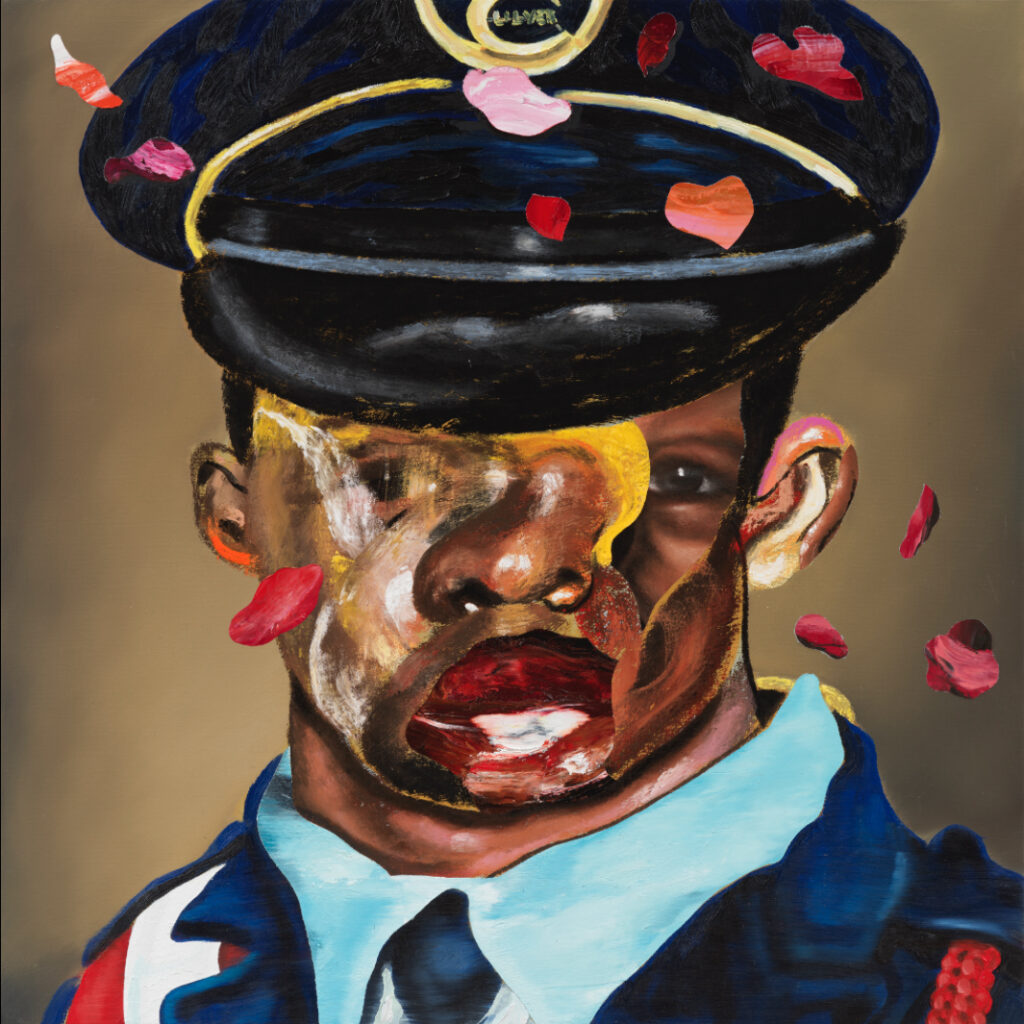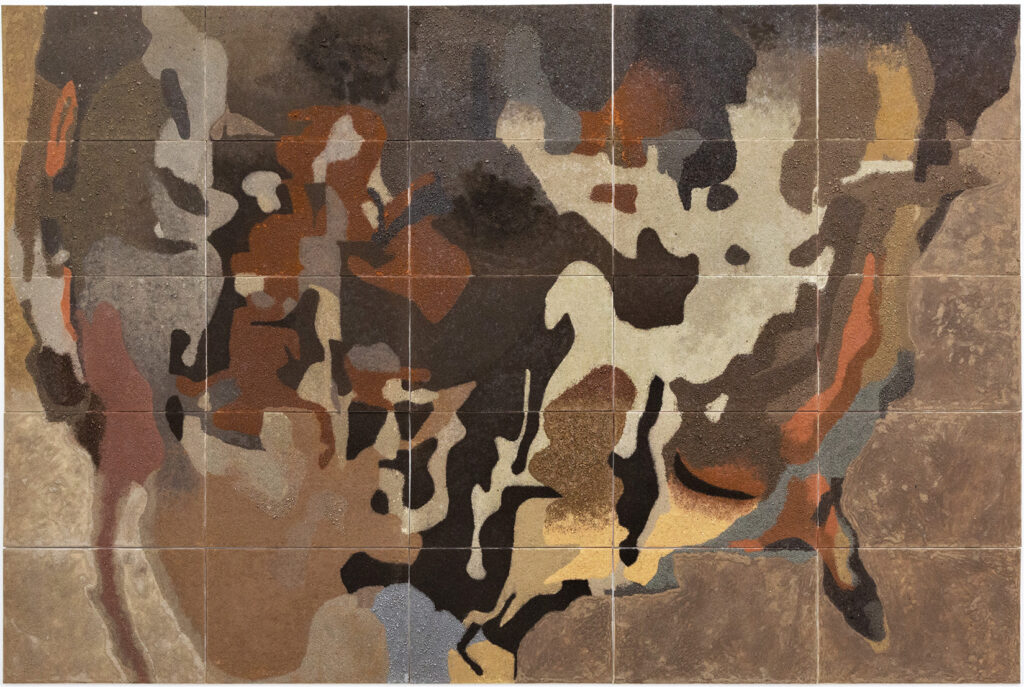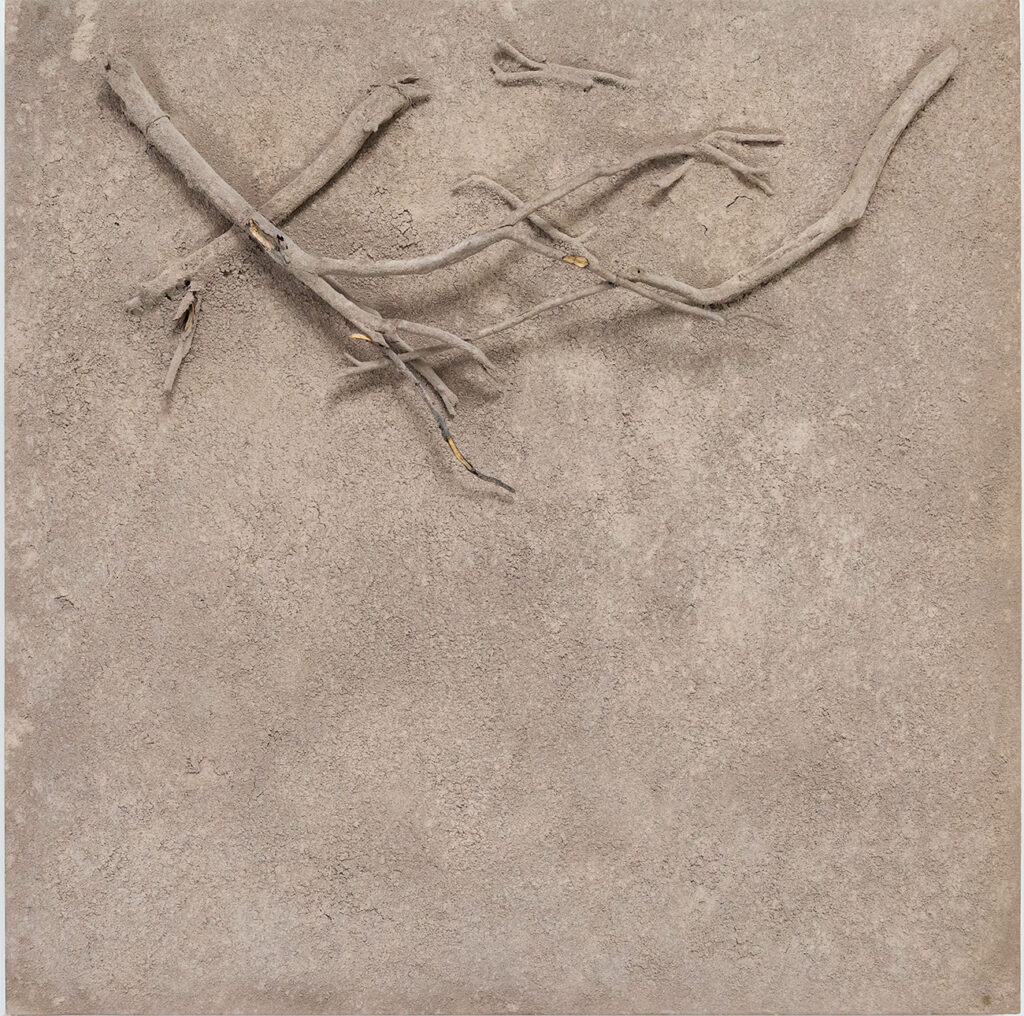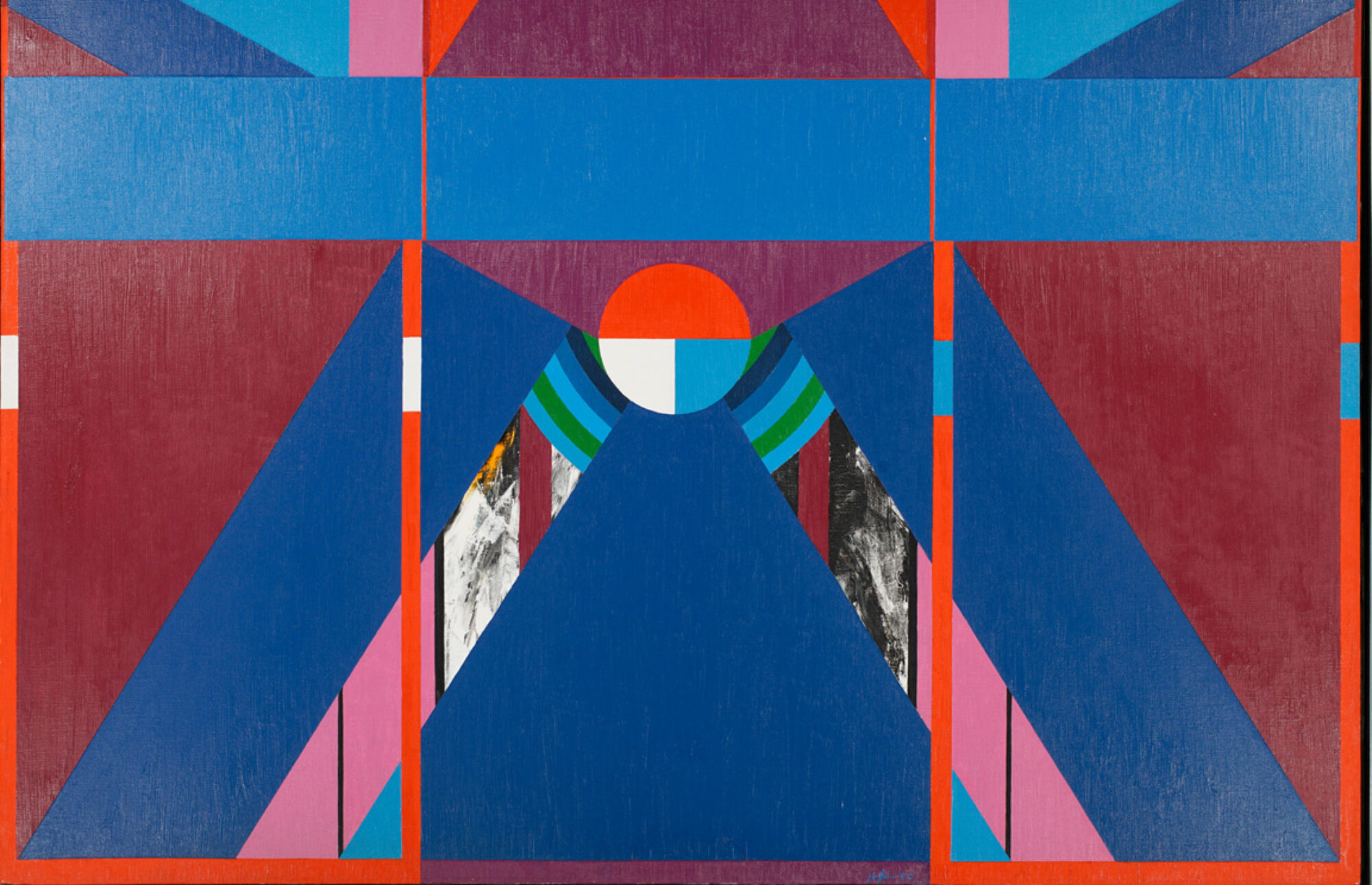
Alan Sonfist, American Earth Landscape, 2019-2021, Primal Earth sealed on canvas, 10 x 15 ft. (3 x 4.6 m.)Alan Sonfist, Mud Slide California, 1991, mixed media on canvas, 48 x 48 in. (121.9 x 121.9 cm.)
Legendary earthworks artist and forerunner of the movement Alan Sonfist rarely mounts gallery exhibitions. However, this fall his showing at Shin gallery on the Lower East Side of Manhattan is truly brilliant. It features a brief overview of his thought process since the early 1960s via tangible indoor pieces, most hanging on the walls in a variety of media.
Fort Gansevoort, New York City – October 8 – December 18, 2021
by Christopher Hart Chambers
We are animals. We do cruel things to one another. Indeed large galaxies engulf smaller ones. It’s physics. That doesn’t excuse horror: it exists. As an art critic, social justice is not my forte. I write about Winfred Rembert‘s artwork because of its unique graphic sensibility, tactile sensuality, and rhythmic musicality, regardless of its poignant social critique and the obscene hardships the artist endured.
Winfred Rembert, All Me, 2002, dye on carved and tooled leather, 25.25 x 25.25 inches
Inarguably this is folk art for the sincere, unschooled naif figuration. These paintings on tooled leather almost fall into the category of bas relief for their meticulous textural quality. Three dimensional modeling is sometimes achieved by pressings into the leather and outlines are burnished into it. The intricately repetitive patterning is reminiscent of surface and textile design. For the most part the colorful dyes are applied in flat, hard edged sections, although here and about a little brushwork remains evident. Formal perspective and color theory are completely ignored; horses, human figures, and other organic elements are the same size regardless of where in space our common sense tells us they must reside. These aspects amount to remarkably charming compositions, full of joy and light despite the awful story of repression and abuse they manifest. The work is original and genuine. In fact, Rembert learned his skills from a fellow inmate while doing time in jail down south during the shameful Jim Crow era of American History.
A Retrospective, 1966-2021 at theCatherine Fosnot Art Gallery and Center in New London, CT from September 23 to November 13, 2021
by John Mendelsohn
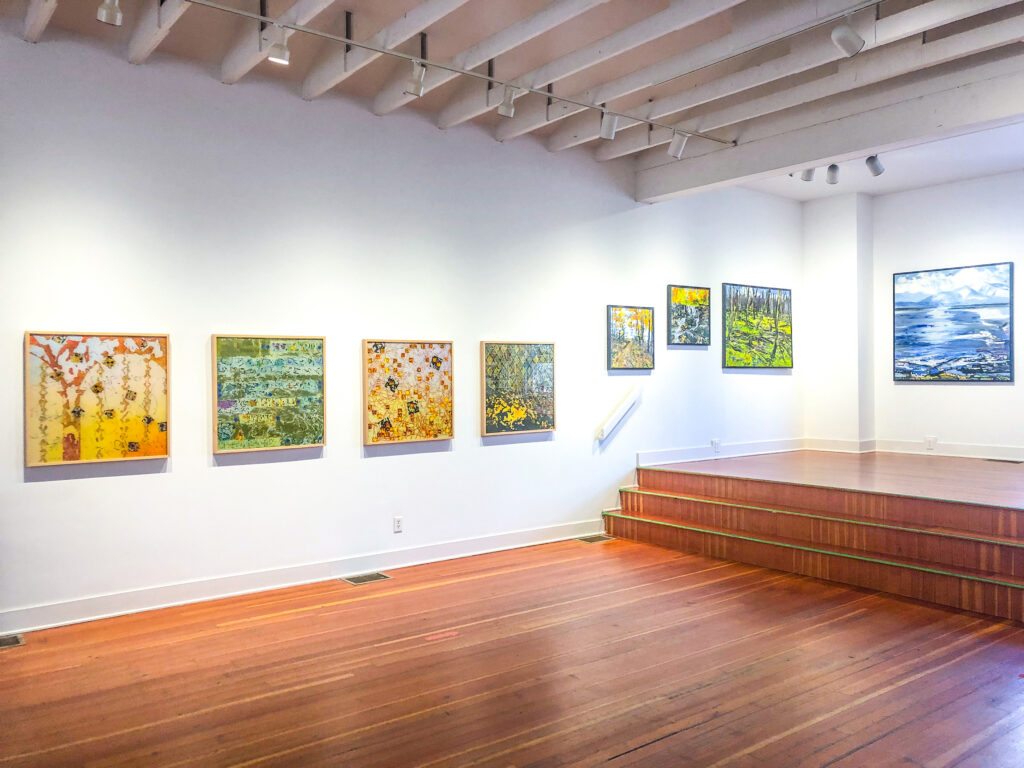
Fred Gutzeit exhibition installation view
To create a retrospective exhibition of an artist’s work is to tell a story. It embodies a desire to shape the raw material of work made over many years into an inevitable, convincing narrative. The challenge is to not tell a tale so intriguing that it becomes more compelling than spirit of the art itself.
Jean Rim, August (2021), mixed medium and dried flowers on wood, 36 inch diameter
I have been asked a number of times to write a review of a virtual exhibition, and have never felt quite right about it. In the past, and certainly prior to COVID, I would cover an exhibition that I witnessed in person if it inspired thoughtful contemplation. I never saw that as a possibility in the virtual world, but I never closed the door entirely, as the pandemic seems to be as stubborn as the folks that are choosing to forgo getting vaccinated. So here we are – my first attempt.
at the Arvada Center for the Arts and Humanities in Colorado
by D. Dominick Lombardi
Roland Bernier: In Other Words, Installation View (2021), all images courtesy of Arvada Center for the Arts and Humanities unless otherwise stated
Barbara Kruger, Jenny Holzer, Ed Ruscha, and Christopher Wool are just a few of the most renowned artists who have very successfully used words as key elements in their art. After all, visual art is a form of communication, and the addition or focus on text in the creative process can be a very powerful tool. Currently, the Arvada Center for the Arts and Humanities in Arvada, Colorado is presenting two excellent exhibitions curated by Emily Grace King and Collin Parson that focus on a number of contemporary artists who too address the import and range of text in art.