by Rui Jiang
Between arrival and departure, there exists a gaze upon delay itself, and an insistence on the voluntary nature of that gaze. On the past few days, presented by CHINCHINART, and curated by Luman Jiang, Xinying Wang, Yvonne Yitian Xu, and Shuhan Zhang have created a suspended temporal domain for the Detour Gallery in New York City. The group exhibition Losing Ghosts does not portray the state of suspension as an external product imposed by trauma, history, or structural violence. Instead, it brushes past one’s shoulder to toss a quieter yet more unsettling proposition: suspension can be an active choice; persistence can be a dwelling with the unresolved.
The exhibition’s expectation for the viewer’s movement seems to lie in “staying”—staying within a space that is less a narrative and more a body. Time only accumulates; it does not leak. It adheres to perception like water vapor condensing on skin. It is a state of existence characterized by delay, repetition, and perceptual drift—knowing that things are amiss yet being powerless to act. But what if this lingering, this occupation, is not entirely passive? What if we learn to inhabit suspension simply because it is the only remaining dimension of time?
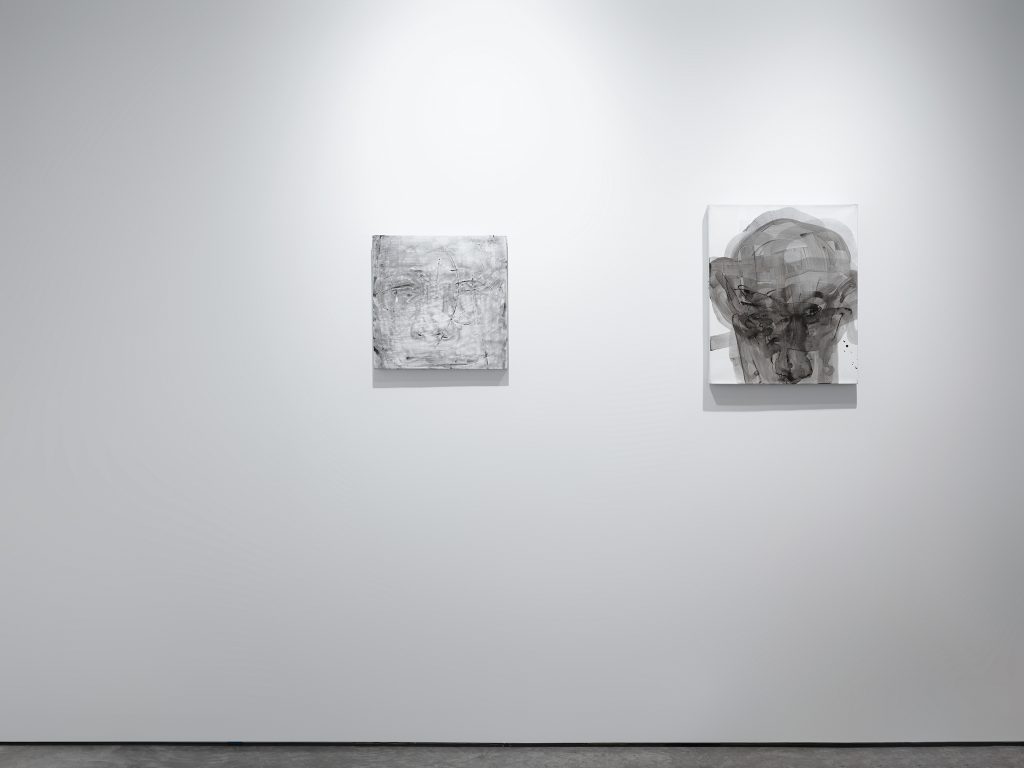
To suspend a sense, such as the mouth, at the threshold of dissolution, pursed yet unopened. A posture of conscious vigilance.
Returning to the prior thought, the operation of the ghost is more like a structural failure than a symbol of horror. It does not ask what has passed, but questions why we continue to imprison it in a state of voluntariness. Memory here is an unreleased accumulation of tension, a systemic failure of the body that chooses to retain unresolved things. This subverts the dominant narrative of recovery. Compared to “healing” or “moving forward,” the subjects in Losing Ghosts participate in their own metabolic delay, maintaining a state of quiet, partial presence. Within it, the works divulge in the silence between stillness and motion, spoken in a fragmented slowness.
In Ziqi (Tree) Xu’s work, this deliberate delay is palpable, embodying a colloquial gesture of “pursuit”— an obsession with images and movements that never truly belonged to the self, yet remain impossible to expel. They carry the memory of cinematic language, though its grammatical context has been subverted. Xu, as the subject, has chosen to preserve “firsthand memories.” By tracing how these cultural specters anchor themselves in everyday spaces, Xu reveals that their persistence is an act of collaboration: a deliberate choice to allow fiction to rewrite the coordinates of our biological and geographical experiences.
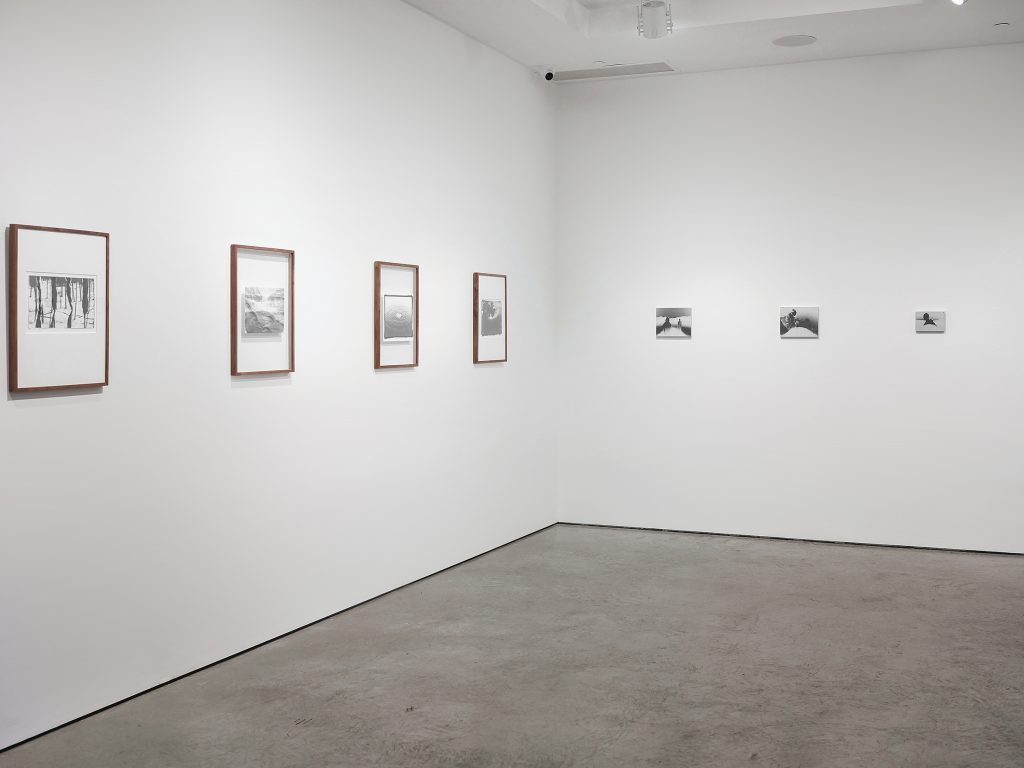
Jiwon Rhie’s work treats identity as a fragile, porous boundary system. In her interactive or process-based creations, she reveals that identity is formed through erosion rather than accumulation. In her space, belonging is always a verb, never a place. Watching her work is to find oneself at the boundary of selfhood, to feel the participation in one’s own suspension rather than the comfort of form. Identity becomes a whispering field, activated by contact, shaped by the soft insistence of relation.
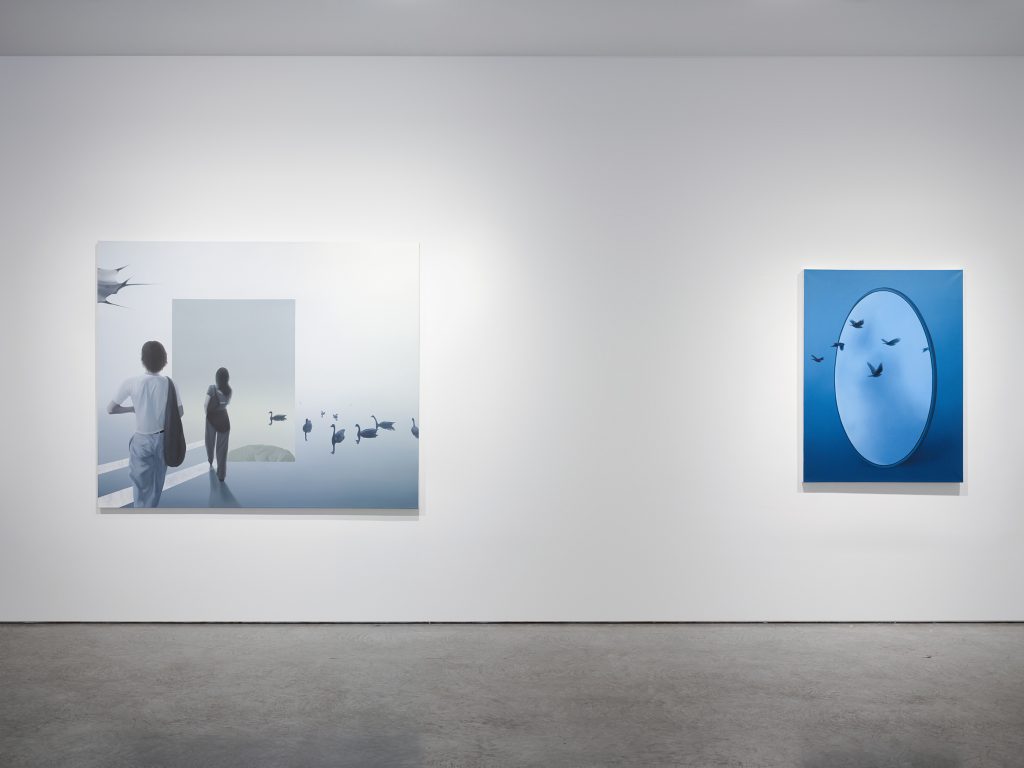
Hongyu Zhang’s imagery exists in a state where the main narrative axis is absent. He allows figures to hang like drifters over a bottomless abyss, dissolving stable subjectivity through drifting frames and resisting narrative closure. Social markers here gradually lose legibility, and disappearance is dramatized; the viewer falls into a state of gazing that neither seeks explanation nor allows escape. Long after the images vanish, they linger, as if they had burrowed beneath the skin.
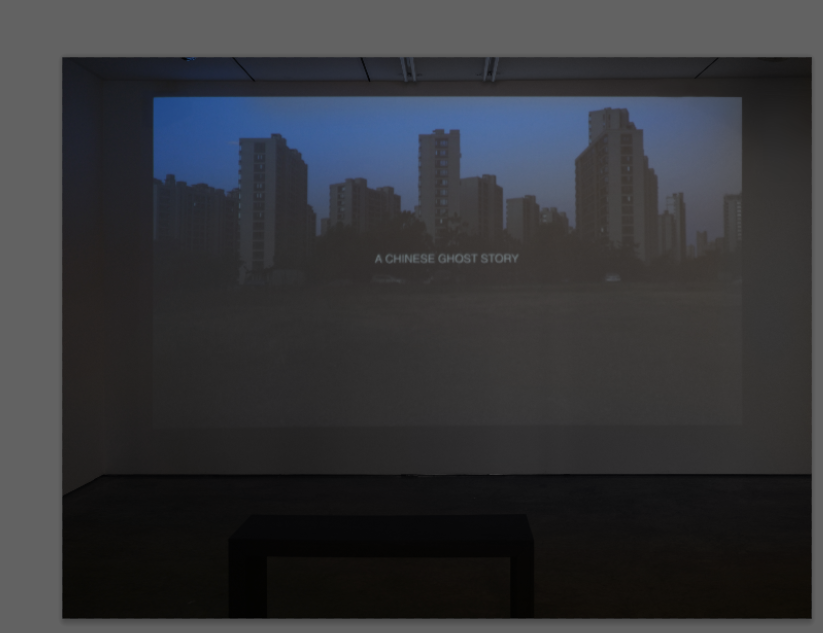
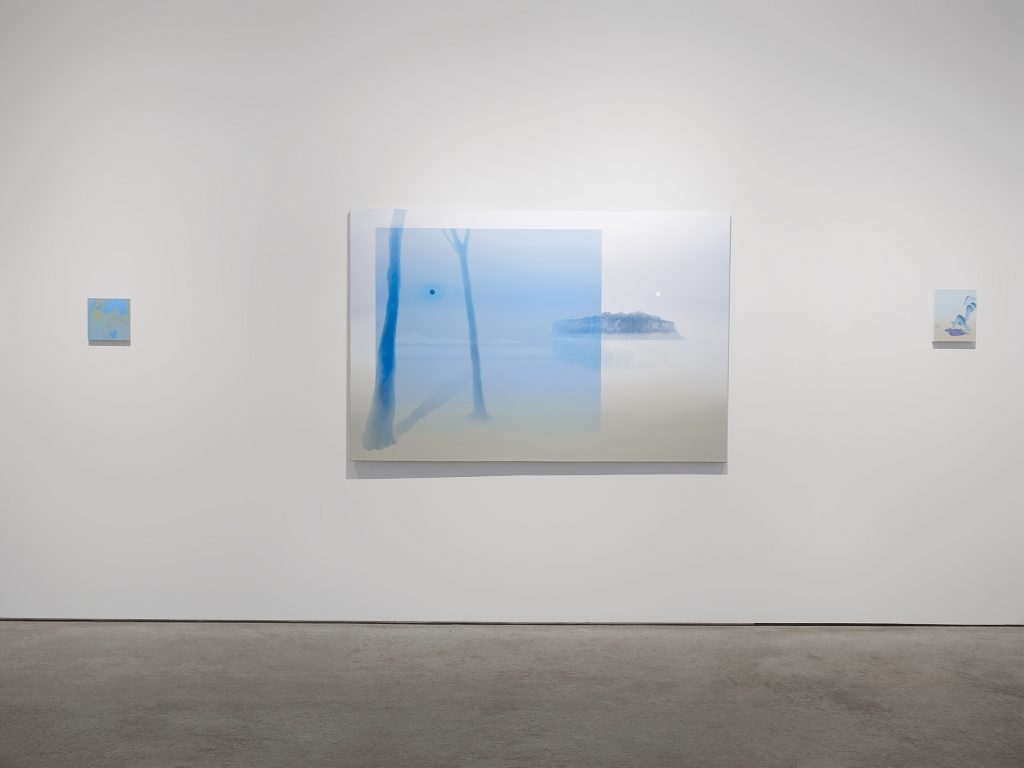
Sona Lee’s visual space sways between dream and reminiscence. Memory refuses corroboration. Lee also refuses to let time, space, or cognition solidify into rigid logic, allowing fluidity to find a chance to breathe, swallow, and not terminate, learning to accept the asymmetry between the subject and the “suspended other” within and beside it. Consequently, the viewer’s gaze finds no place to rest, the illusion of cognition dissolves.
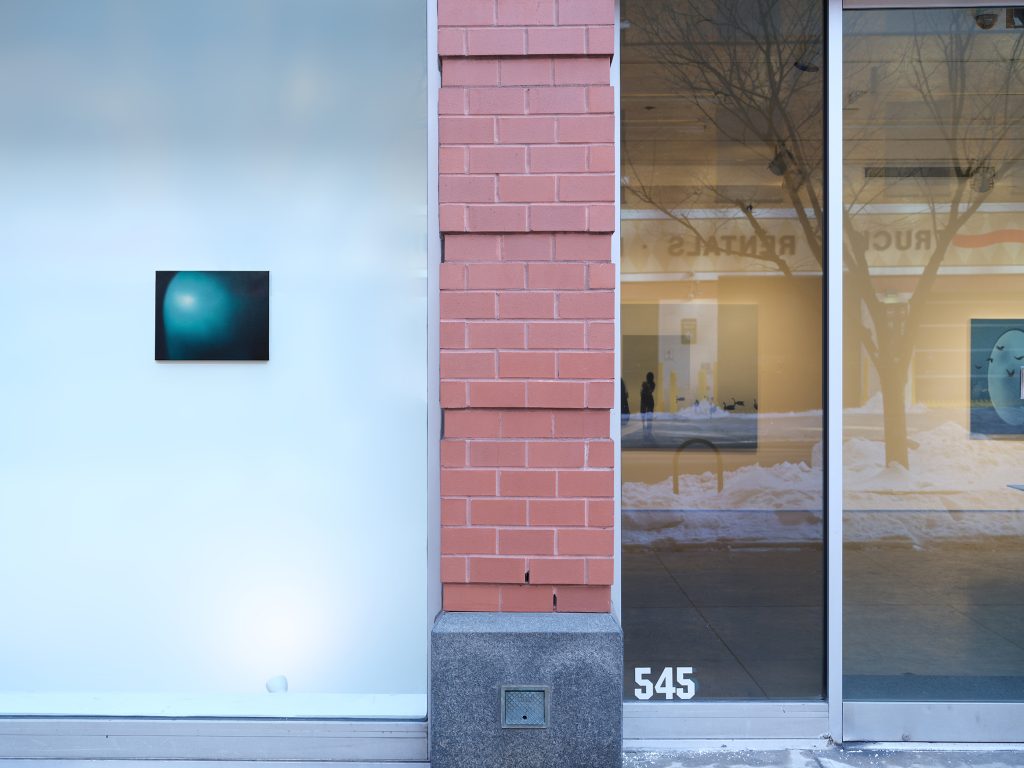
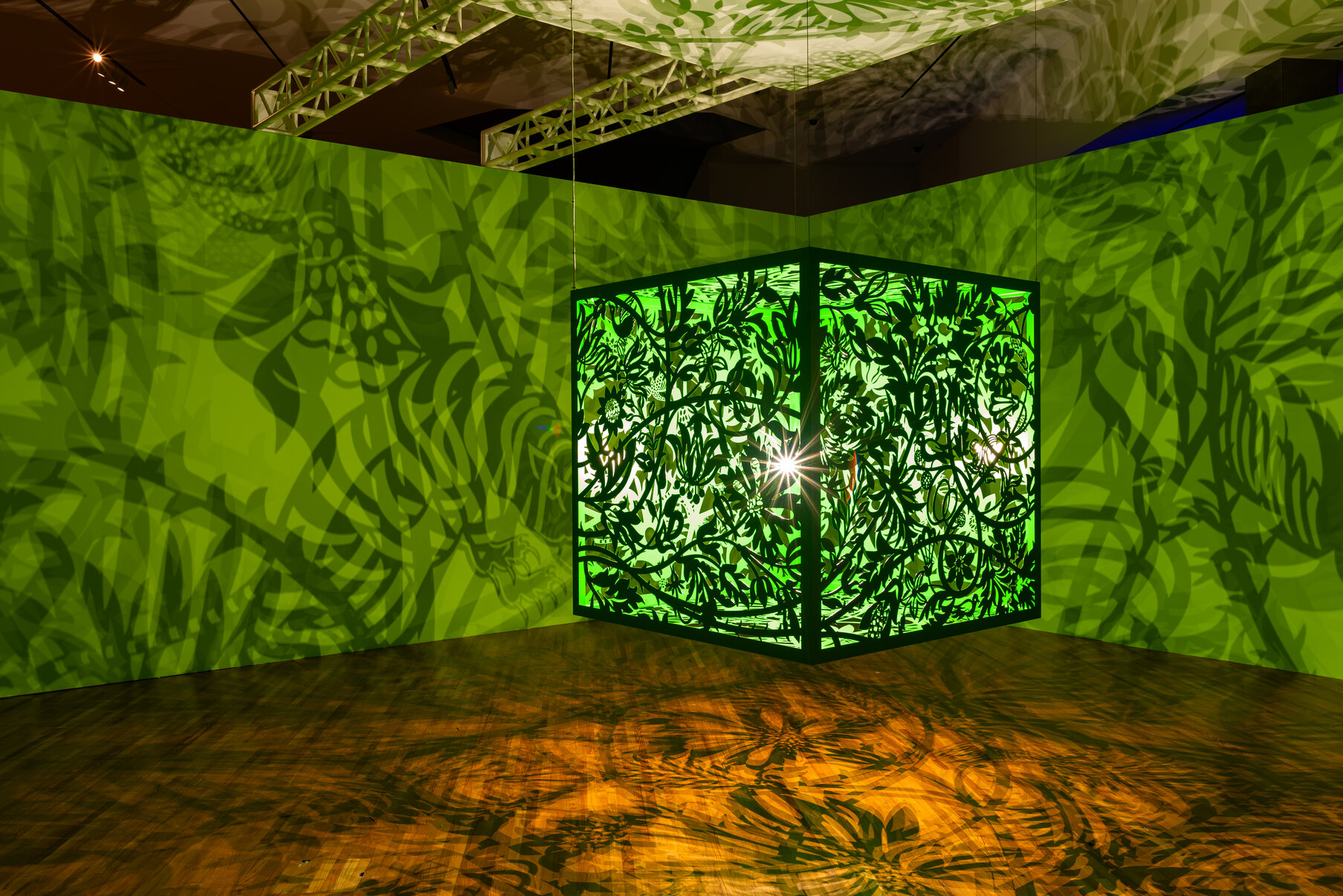
Meanwhile, Xuemeng Li’s installation congeals motion with the power of silence. The entire exhibition defines the state of suspension as an active choice, thereby reconstructing entanglement as a shared responsibility. This concept manifests its most silent subversiveness in Li’s work; he treats “stillness” as a deliberate extension of time. Standing before it, one feels an almost unbearable tension brought by continuous existence. And existence continues to wait, accompanied by the faint sound of broken mechanisms.
The exhibition reconstructs the phenomenon of ghosts as an ethical persistence, making one inevitably raise an even more unsettling question: why do we choose to remain trapped, allowing unfinished business to persist without seeking change? From this, a quieter, more ambiguous form of participation is born. Refusal to conclude was once seen as a critical stance, but now it verges on congealing into inertia. Losing Ghosts does not attempt to resolve this tension, and perhaps this is its most honest proposition. It places us at the entrance, waiting, knowing that to stay is both an act of care and a rehearsal of defeat.