Uncollage—Seamless Unison

Essay by Todd Bartel

Mildred I. Washington Art Gallery/Dutchess Community College
Todd Bartel, Curator

The term ‘Uncollage’ uses the prefix ‘un’ to denote when collage is not glued physically, but is glued intellectually. Uncollage – Seamless Unison examines the neologism by showcasing various practices of imagery fusion and providing comparative examples of cut-and-paste collage demonstrating the differences between physical gluing and immaterial gluing across a wide range of media.
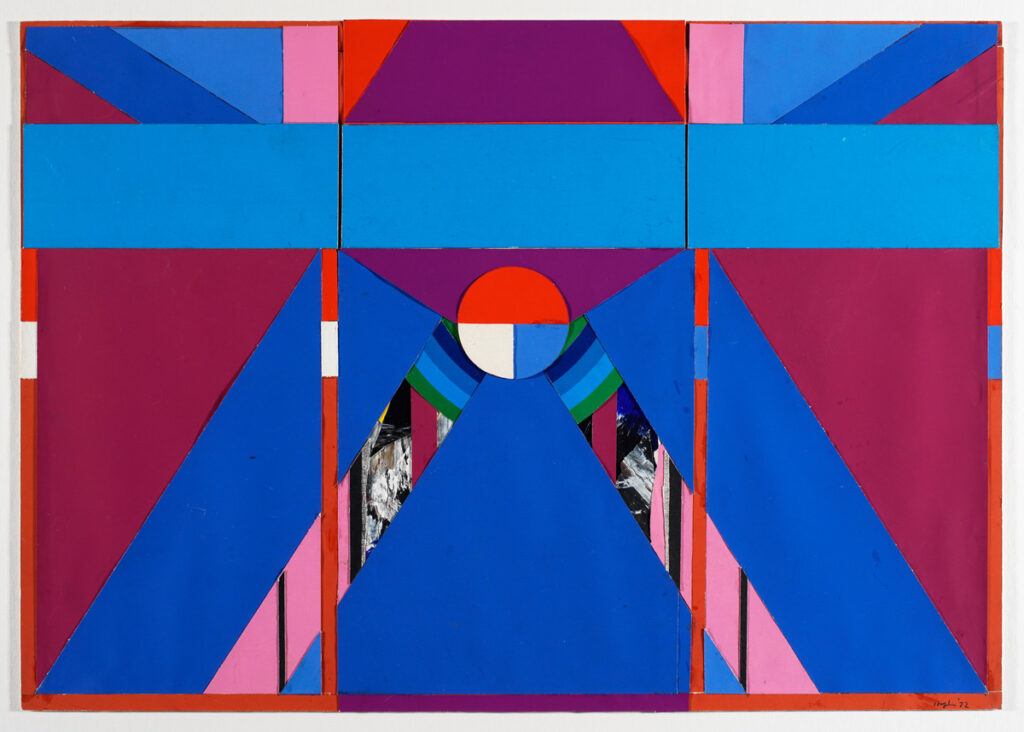
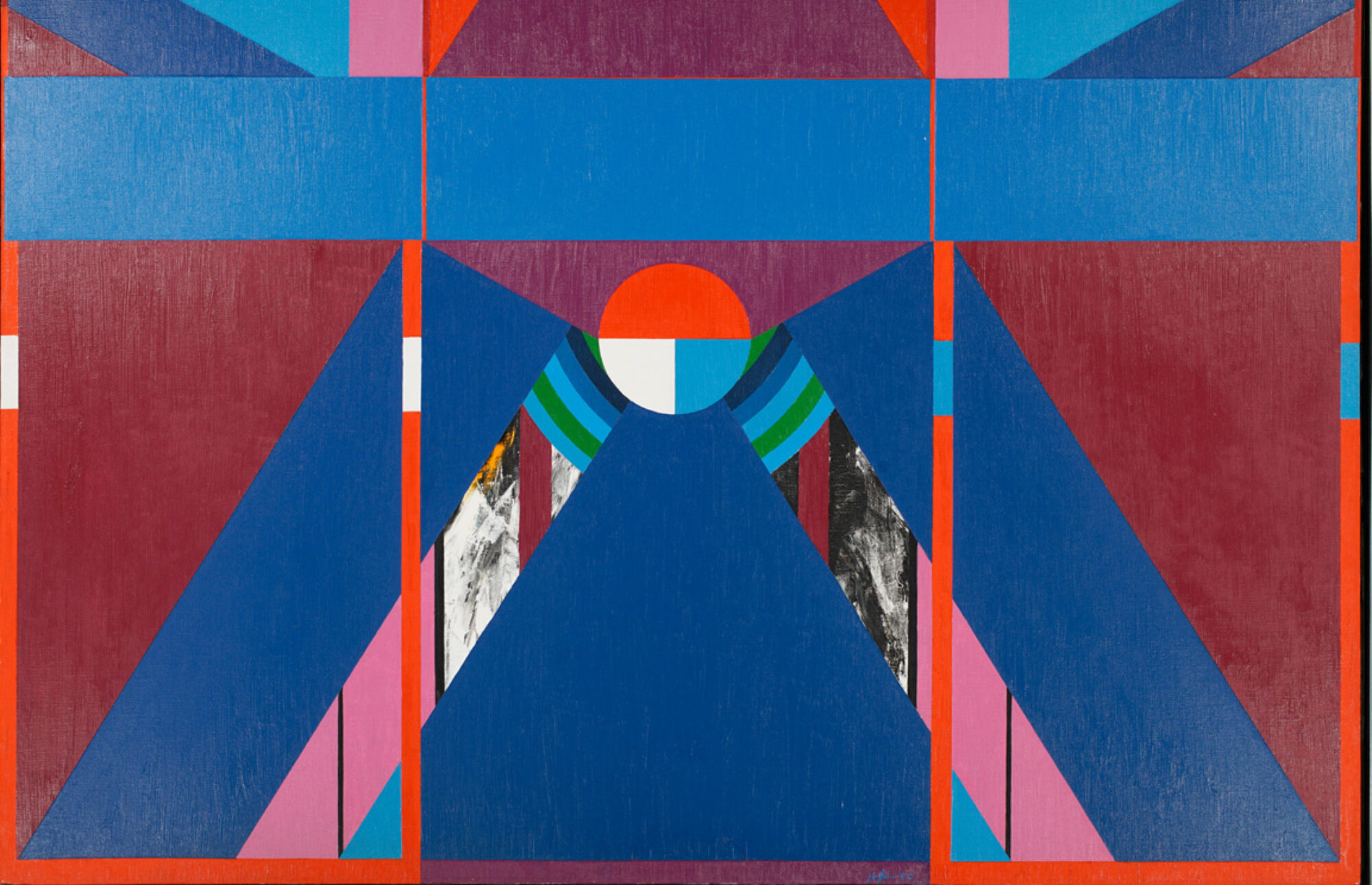
Budd Hopkins, Collage for Mahler's Castle, 1970, collaged paper, paint, 16 x 20 inches (photo Todd Bartel)
Budd Hopkins, Collage for Mahler’s Castle, 1970, collaged paper, paint, 16 x 20 inches (photo Todd Bartel)
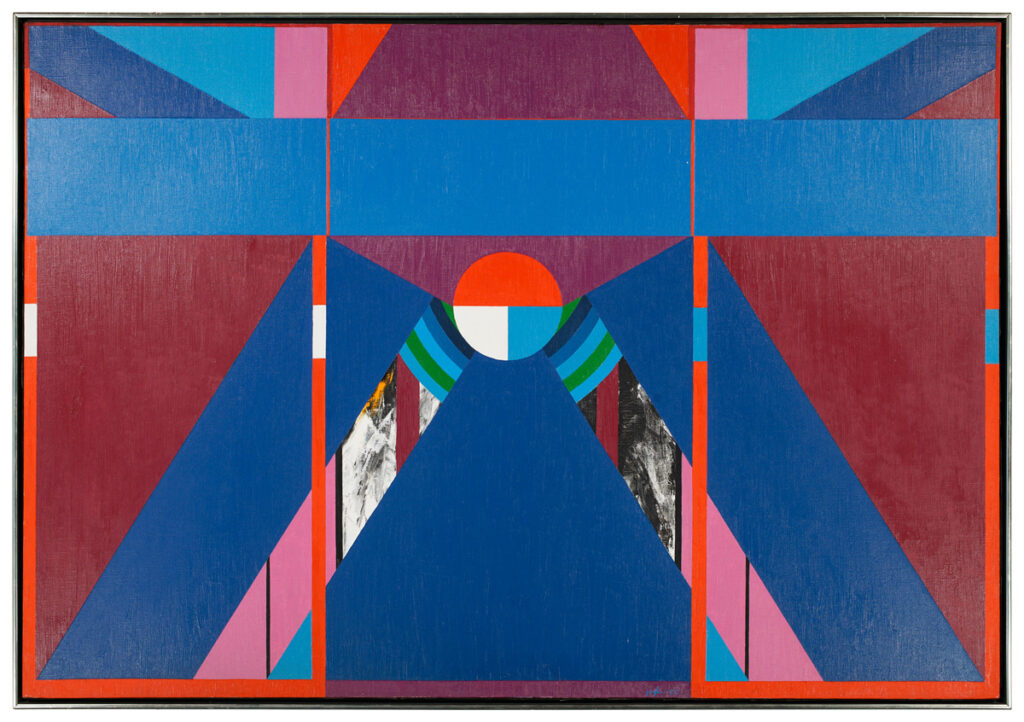
Budd Hopkins, Study for Mahler's Castle, 1972, acrylic on canvas, 36 x 53 inches (photo Todd Bartel)
Budd Hopkins, Study for Mahler’s Castle, 1972, acrylic on canvas, 36 x 53 inches (photo Todd Bartel)

I first used the term ‘Uncollage’ in 1999 to describe paintings that depend on image collection and are painted without physical additions glued to the surface—such as the work of Archibaldo, Grandma Moses, Mark Tansey, and Julie Heffernan, all of whom I have also published articles on. All too often, what comes to mind when the word ‘collage’ is uttered is glued paper, but collage is so much more. Collage is an operation that does not require paper or glue, and can be appreciated any time a creative process involves composite incorporation. I presented my thesis at the first annual Kolaj Fest, in New Orleans in the summer of 2018, a multi-day festival & symposium about contemporary collage and its role in art, culture, and society hosted by Kolaj magazine. After that, I expanded the concept in a series of 4 articles, published by Kolaj magazine in 2019 and another four articles since then, as well as written several exhibition essays for shows in the U.S., Portugal and Spain, which has led me to assemble the essays in a forthcoming book, Uncollage & Immaterial Glue — the Collected Essays of Todd Bartel that will be available in early July, 2026.
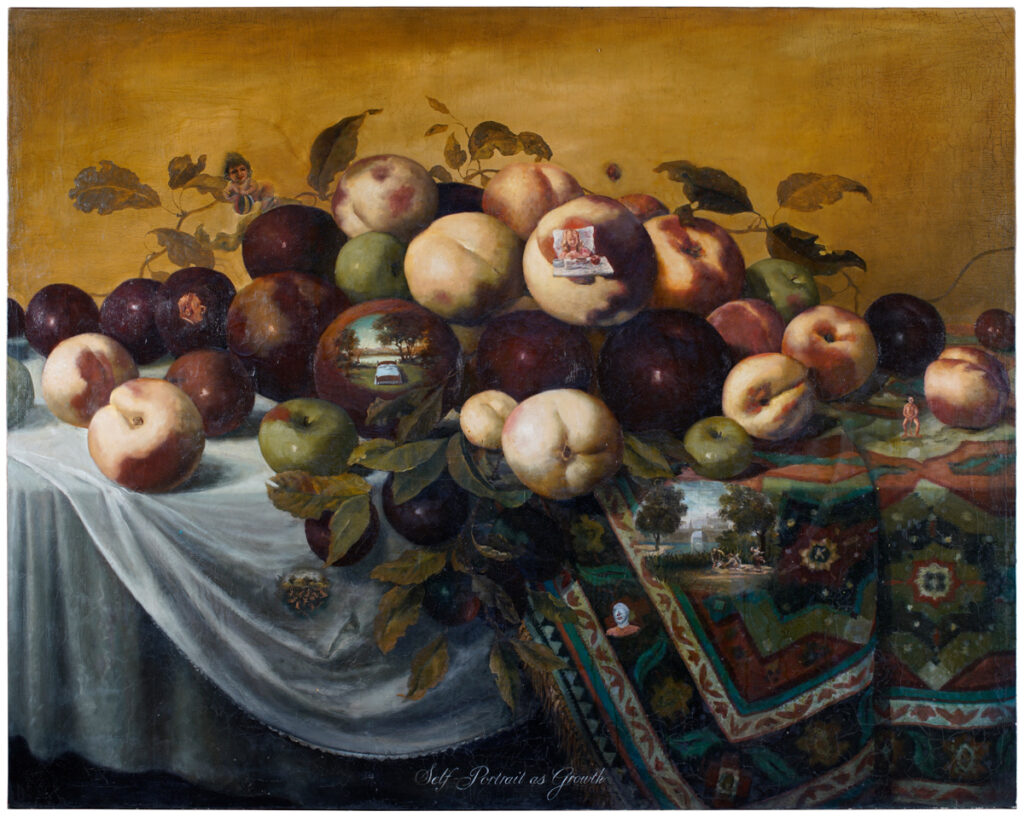
Julie Heffernan, Self-Portrait as Growth, 1994, oil on canvas, 55 ¼ x 69 x 1 ¾ inches (photo Todd Bartel)

Uncollage—Seamless Unison assembles the art of thirty-one emerging, well-established, and historically notable artists, including the Abstract Expressionist painter Budd Hopkins (1931 – 2011). Hopkins, who wrote the influential essay, Modernism And The Collage Aesthetic, often made facsimile collage studies for his abstract paintings, and examples of each are the first works visitors encounter inside the gallery. The show includes paintings by Julie Heffernan, Bo Joseph, Fern Apfel, Brian Bishop, D. Dominick Lombardi, Ginnie Gardiner, Talin Megherian, Justin Richel, Denise Shaw, and Amy Talluto, who all fuse collage-based strategies to import and juxtapose collected imagery. Lombardi’s painting is noteworthy for repurposing a previously “completed” painting with complementary stylistic additions.
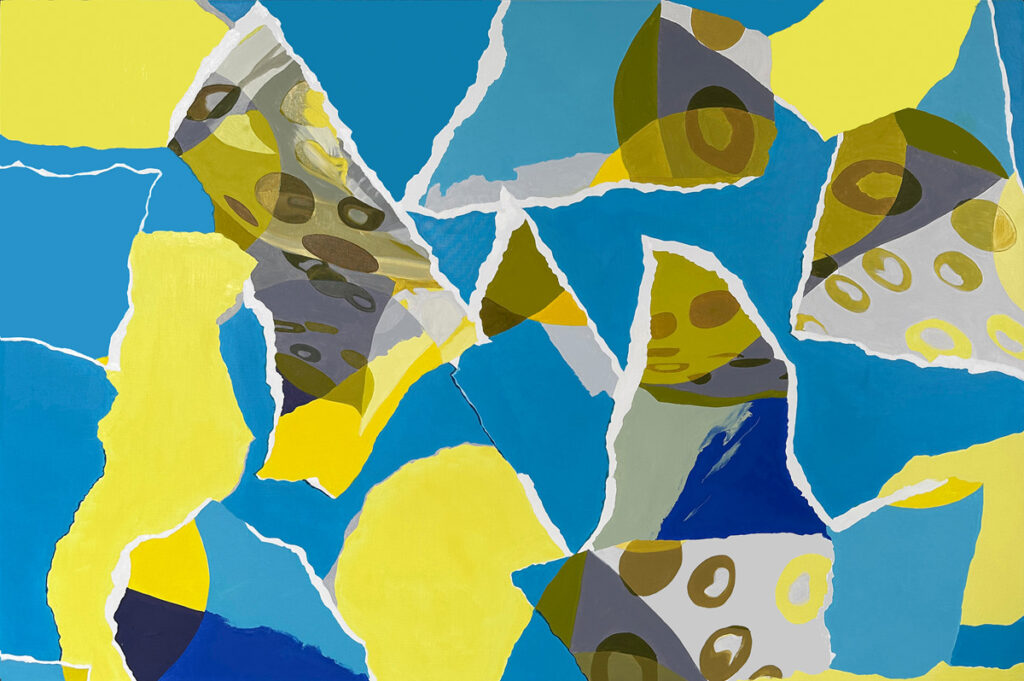
Ginnie Gardiner, Interlusion 45, 2022, oil on linen, 40 x 60 inches (photo Ginnie Gardiner)

The exhibition includes several examples of trompe l’oeil drawing and painting, including works by Brian Bishop, Laura Christensen, Ruth Marten, Leo Sousa, and Amy Talluto, and a trompe l’oeil sculpture by Justin Richel. In all of these pieces, the genre is enhanced by the incorporation of ideas, brought into the work, if not known references to other artists’ works. Similarly, Julie Blankenship, Christensen and Marten explore ‘Uncollage’ through altered readymade, employing various drawn and painted enhancements.
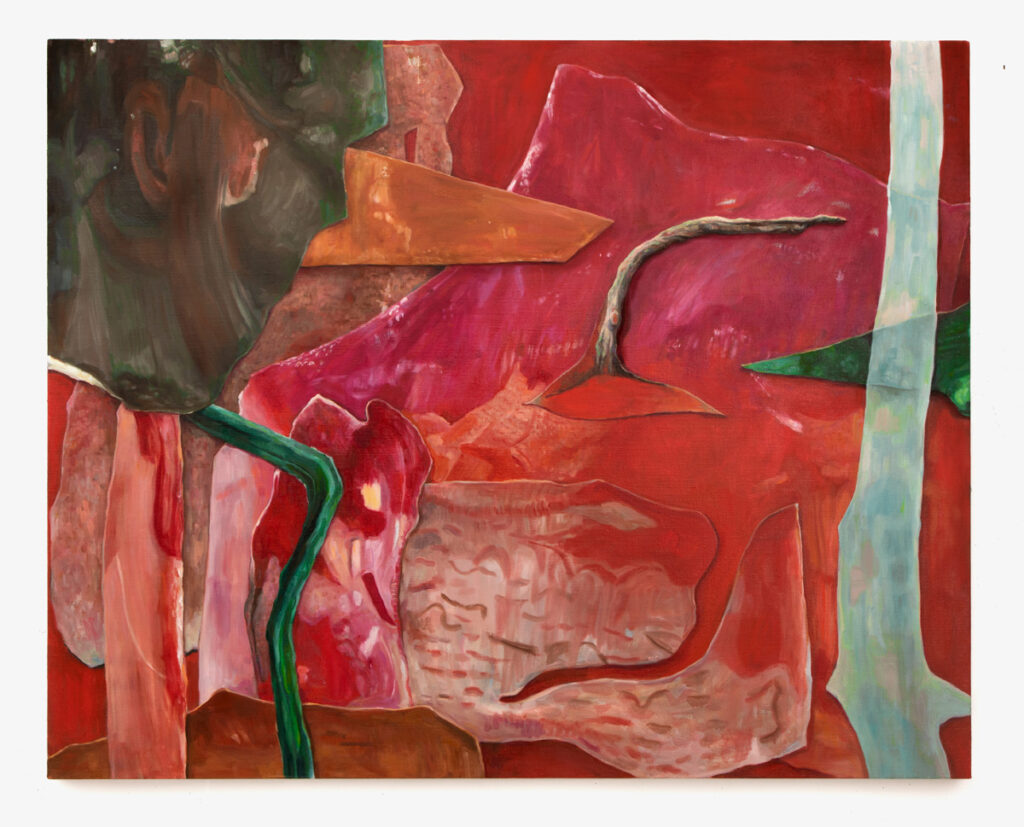
Amy Talluto, Alchemical Wasteland, 2021, oil on canvas, 40 x 50 inches (photo James Petrozzello)

Uncollage—Seamless Unison showcases several works that involve image transfer processes, including a Xerographic print on vintage paper by Michael Oatman, a hand-transferred Xerographic photo presented as an “original photograph” by Roma Megherian Bartel, and a painting with multiple acrylic gel-medium transfers by Denise Shaw.
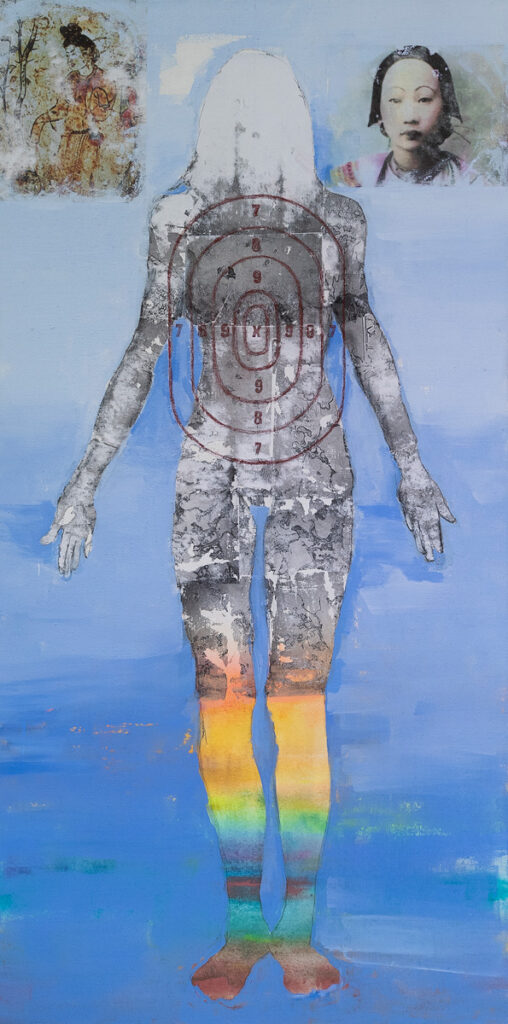
Denise Shaw, Targeting, 2021, acrylic, photo transfer on linen, 60 x 30 inches (photo Katie Zaptka)

The exhibit highlights an iconic multi-negative gelatin silver print by Jerry Uelsmann (1934 – 2022), whose analog work may be said to have anticipated Photoshop, and, emerging photographer Max Labelle, who photographs cutout photographed images of quotidian objects in real-world settings, which confuse flattened depictions of real objects in actual spaces. The show counterbalances these analog photographic processes with the works of veteran digital collage artists Fran Forman and Maggie Taylor, as well as the work of Leslie Fry, Samplerman (Yvan Guillo), Wendy Seller, and Rowan Buffington, whose hybrid piece provides a blended example of analog and digital applications of collage.
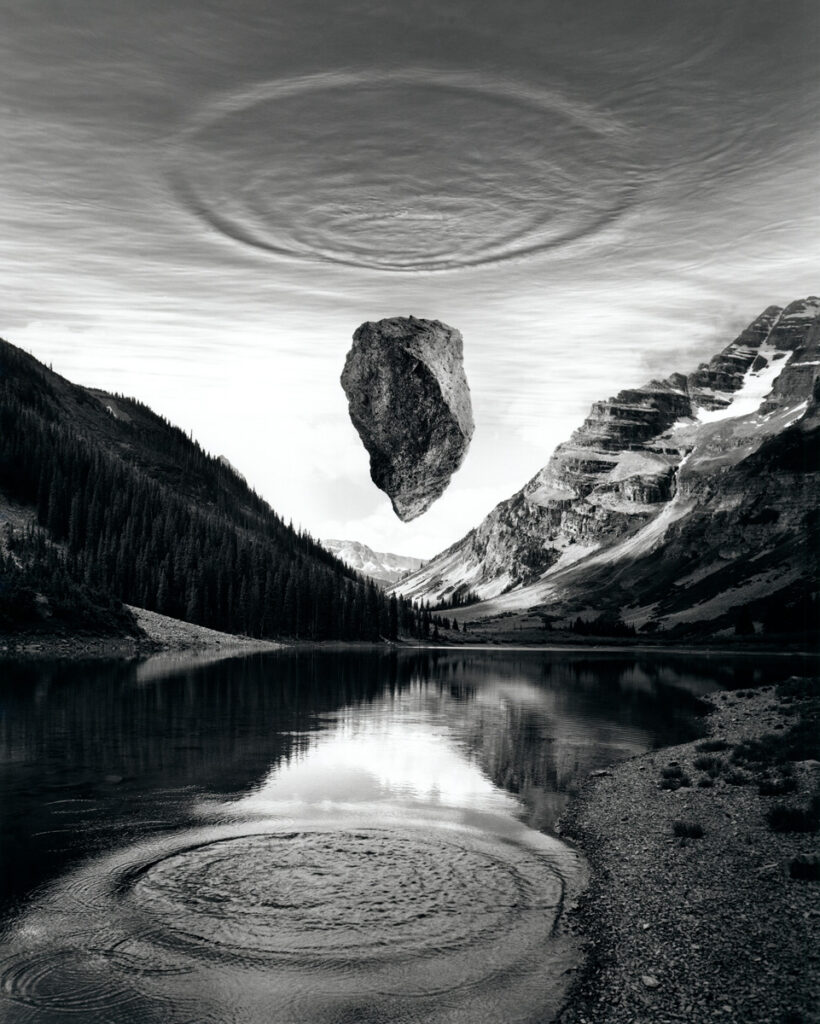
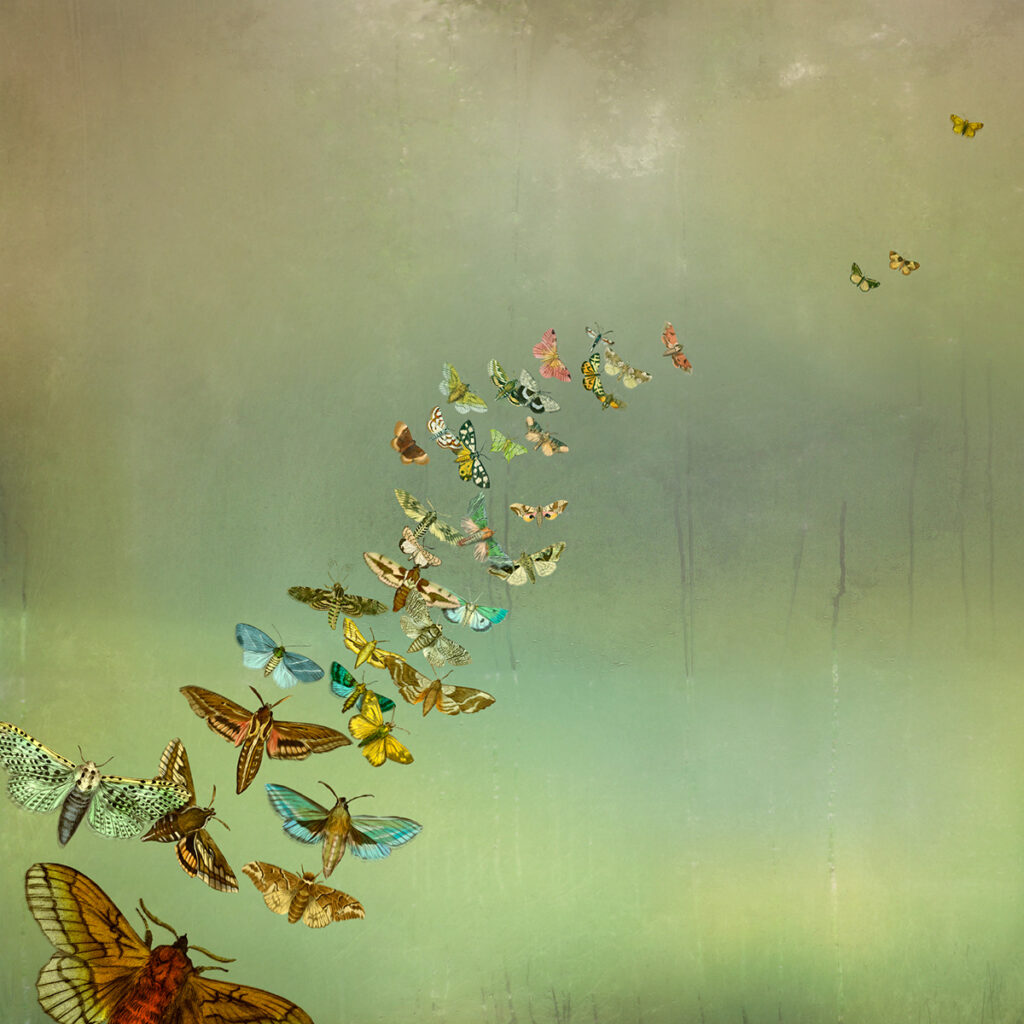
 Jerry Uelsmann, Untitled, 1991, gelatin silver print, 3 negatives – sky ripples, rock, background, 14 x 11 inches (digital scan of original photo Jerry Uelsmann)
Jerry Uelsmann, Untitled, 1991, gelatin silver print, 3 negatives – sky ripples, rock, background, 14 x 11 inches (digital scan of original photo Jerry Uelsmann)
Maggie Taylor, Happiness, 2015, digital collage, archival inkjet print, 15 x 15 inches (courtesy of the artist)

Also included in the show are several sculptures that more or less conceal their composite origins, such as D. Dominick Lombardi’s recycled refuse sculpture and Justin Richel’s stretched-canvas trompe l’oeil brick. There is also a objet trouvé bicycle by Jack Massey, an assisted readymade with an intellectual coupling to a well-known work by Pablo Picasso, as well as the conceptual sculptures of Darryl Lauster and Bo Joseph that expand the neologism into the time-honored practices of lost wax bronze sculpture.
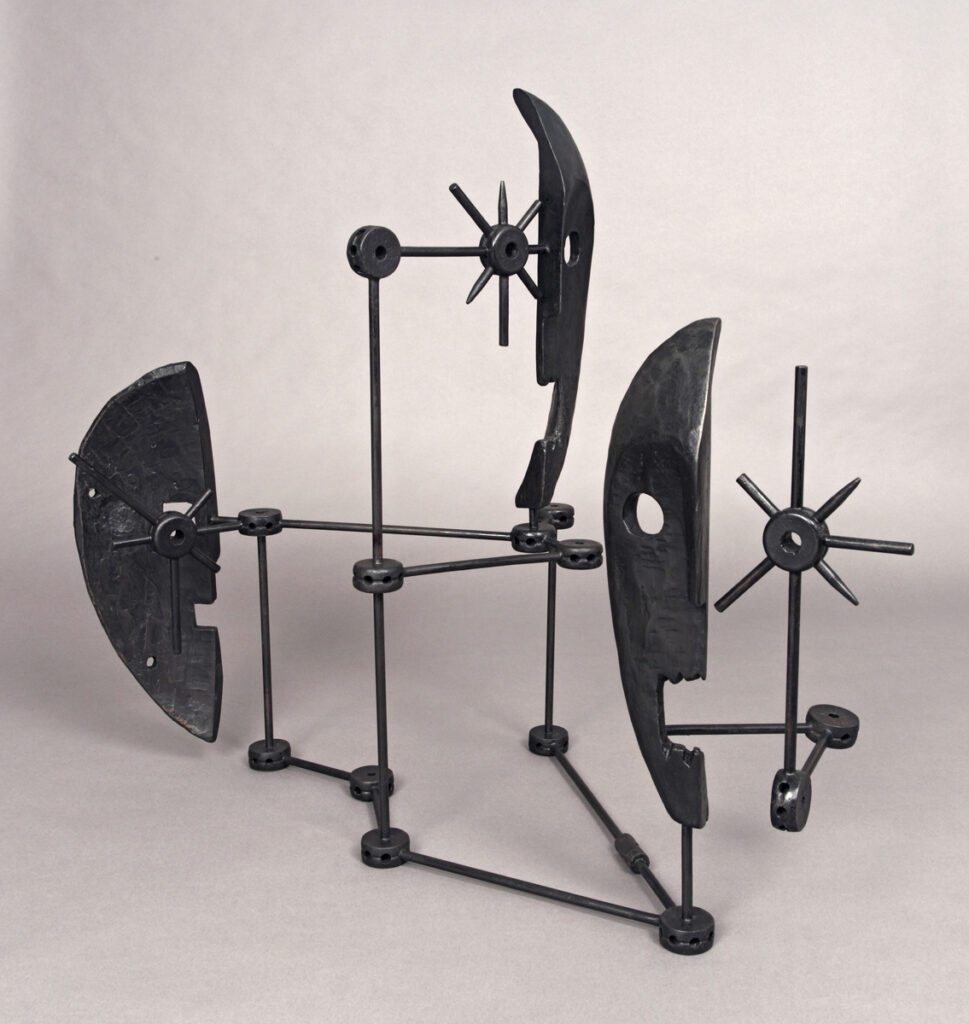
Bo Joseph, Caput Mortuum: Create Yourself from Darkness, 2018, bronze, 20 ¼ x 24 ⅝ x 11 inches, Collection of Eliane van Reesema (photo Bo Joseph)
D. Dominick Lombardi, CC 113 UC (The Impossibility of a Skinned Knee), 2021, found objects, sand, papier-mâché, gesso, acrylic medium, 11 ½ x 12 x 9 inches, photo courtesy of the artist

The show also includes examples of static and moving AI image generation by artists Joann, Will Close, and Máximo Tuja, as well as a multimedia installation by James Andrew Scott that blends analog drawing with pixelated digital video, using an array of four 4 x 4-foot LED panels to display looped video imagery incorporating abstracted versions of many of the works in the exhibition.
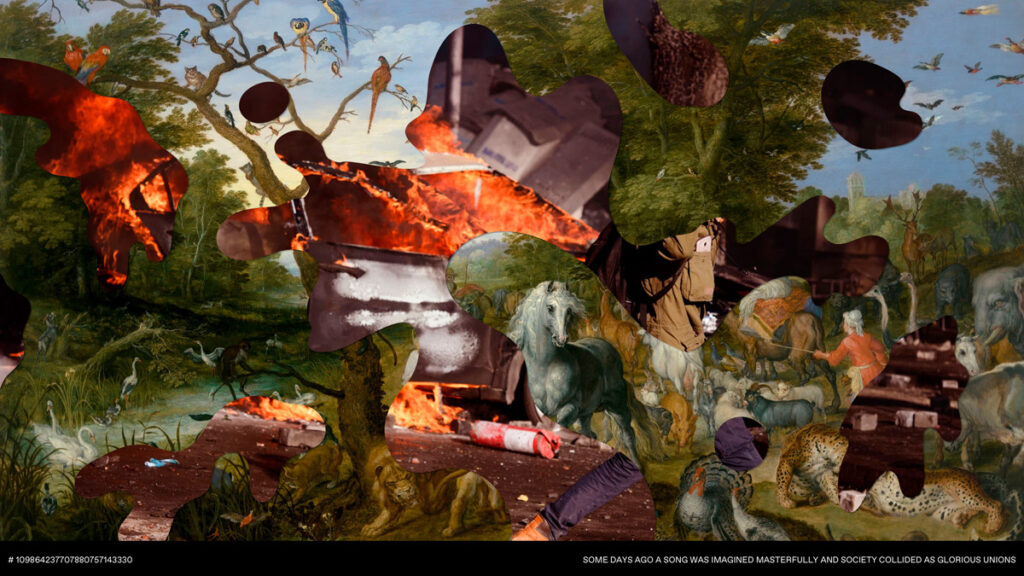
Máximo Tuja / Max-o-matic, 126 sextillion collages (A Microcosm), 2022-24, Digital Files Created with Custom-made Generative Art Software, Running Time: 120 min, (photo Máximo Tuja and Pardon Collection)

The unexpected diversity of media and imagery showcased in Uncollage—Seamless Unison reveals the term’s inclusivity, which credits collage in places not often considered collage-based. Máximo Tuja (Argentina/Spain, a.k.a. Max-o-matic), one of the creative forces behind The Weird Show, an independent platform dedicated to exploring and redefining contemporary collage since 2010, and an artist featured in Uncollage – Seamless Unison, described the concept this way: “Uncollage reminds us that the art of collage is not confined to tangible materials but extends into the realm of the immaterial. It highlights the versatility of collage as an artistic practice, allowing artists to explore and combine various elements, whether physical or conceptual, to create entirely new and meaningful compositions.”
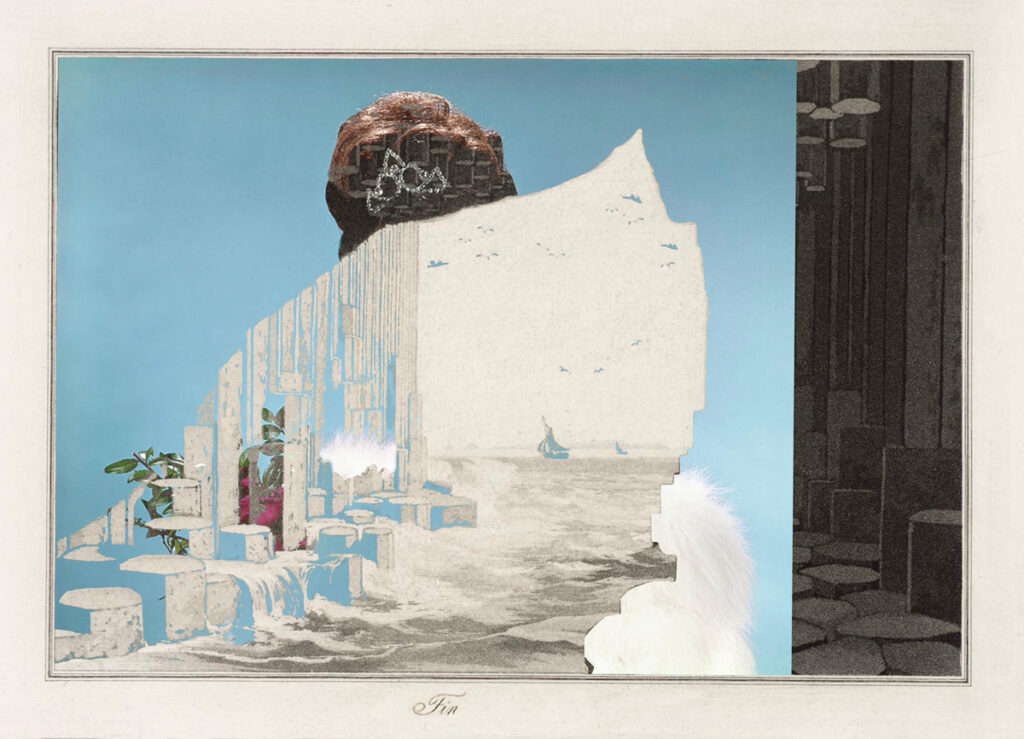
Rowan Buffington, Fin, Rites of Passage series, 2024, digital collage (printed and assembled on vintage and photographic papers), 5 x 7 inches (photo courtesy of the artist)

The unofficial first exhibition of Uncollage paintings appeared at the Knoxville Museum of Art, where I was invited to peruse the museum’s online catalog of holdings and select half a dozen works from the collection that exemplified the concept for inclusion in the museum’s Currents exhibition as part of 2021 Kolaj Live Knoxville. I gave tours of the exhibition and spoke about the differing strategies of collage and uncollage. There was no invitation, title, or museum didactic for that show, which makes the Mildred I. Washington Art Gallery show the first of its kind. Unlike the unofficial show, the official version showcases a much wider breadth of the concept.

Uncollage – Seamless Unison is one of ten satellite exhibitions presented by the Transforming Collage Hudson Valley Exhibition Series this summer. The exhibitions are organized in conjunction with Making Meaning: A Collage Symposium, taking place July 22–24 at the Vassar Institute for the Liberal Arts in Poughkeepsie, NY. From their website, “This important gathering celebrates the evolving language of collage and the role of contemporary artists in shaping cultural dialogue, experimentation, and community connection.” There, I will present a slideshow about Uncollage and the exhibition at the Mildred I. Washington Art Gallery as one of the presenters of the Making Meaning Collage Symposium. Both the exhibition catalog and my forthcoming book, featuring the collection of my Uncollage essays, will be available at the symposium and on Lulu.com. Interested individuals can register to attend the symposium at: https://www.transformingcollage.com

The artist’s reception and gallery talk for Uncollage – Seamless Unison is scheduled for Friday, July 24, 3-6 PM. The exhibition runs from June 29 to July 31st, 2026
Making Meaning, organized and directed by Andrea Burgay & Monica Church, is from July 22 to July 24, 2026.
“Fingindo ou Fingimento (Pretending)”

by D. Dominick Lombardi

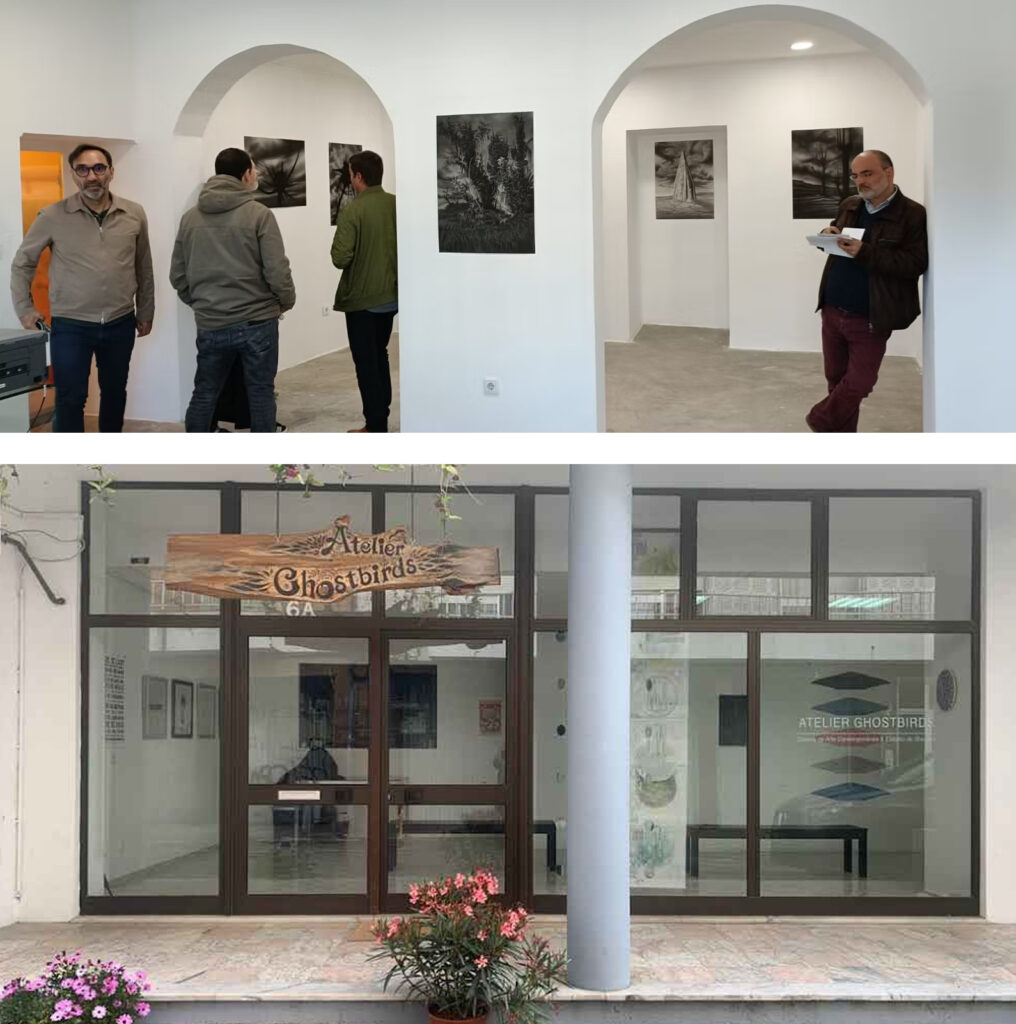
Braço Perna 44 in Lisbon and Atelier Ghostbirds in Caldas da Rainha, Portugal, D. Dominick Lombardi, curator

The online Oxford Dictionary defines pretending in this way: “speak and act so as to make it appear that something is the case when in fact it is not.” Most of us can still remember playing as a child; dressing, behaving, claiming to be something we were not but hoped to be one day. Some of those pretend characters were the classic princess, an adventurous astronaut or explorer, a ballet dancer, a sneaky spy, or simply a person that operates a car, boat, train or plane. What is common with artists, is that childhood pretend playing often occurred with aspects of drawing, painting or just simply creating in an imagined world that was funneled through the images and installations produced by the pretenders.

(top) Braco Perna 44, Lisbon, Portugal, (bottom) Atelier Ghostbirds, Caldas da Rainha, Portugal

As a child, I clearly remember drawing crazy looking fish on paper, cutting them out and playing with them on the floor as if I was immersed in an underwater world. Luís Almeida remembers making drawings where he would represent what it was like living in an underground world where there were traps, bugs and warring soldiers. He also remembers making drawings of tall buildings with a childhood friend, where the windows would show what was going on inside each floor. When Run Jiang was a child in kindergarten, she remembers drawing a picture of a couple all dressed up and getting married. Soon, other children gathered around asking her to draw one for them, all pretending to be all grown up and getting married. Izumi Ueda Yuu remembers her home in Japan, where there was a window between the living room and the hallway that had many wooden slats. Ueda Yuu used those slats as shelves to display her found treasures: pieces of glass with rounded corners that she picked up on the street, scrap metal, some rusty and some still shiny, dried flowers, seeds, especially large camellia seeds, souvenir wrapping paper, and whirring oil paper as she made installations of those precious things every day in her little private gallery.

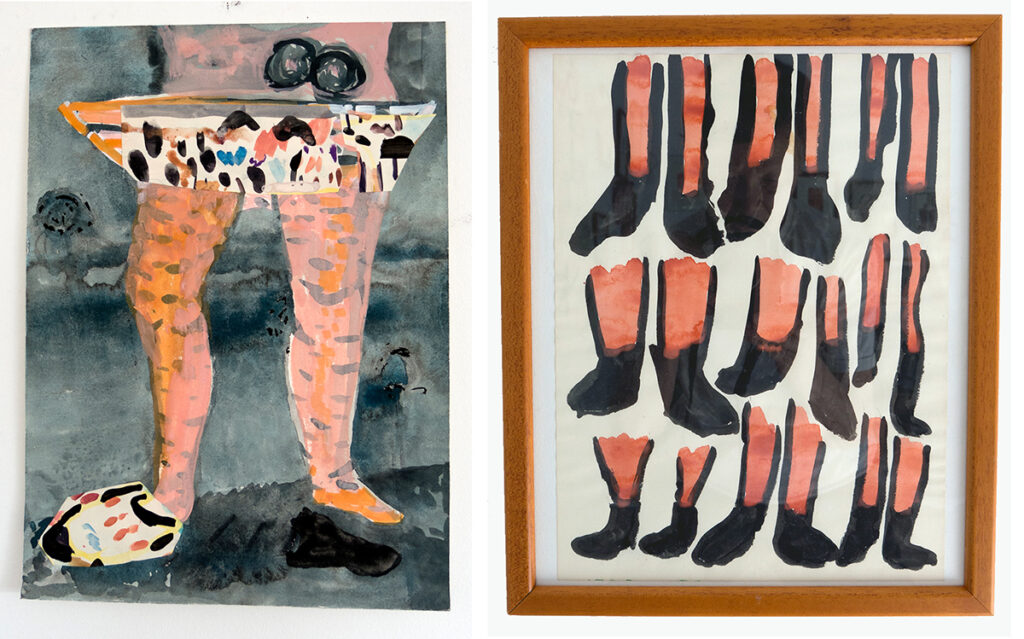
As adults, that ability to move into an alternative place that is under control solely by the creator, that form of pretending, is still very much alive in the work of the four artists in the exhibition: Izumi Ueda Yuu, Luís Almeida, Run Jiang and myself.

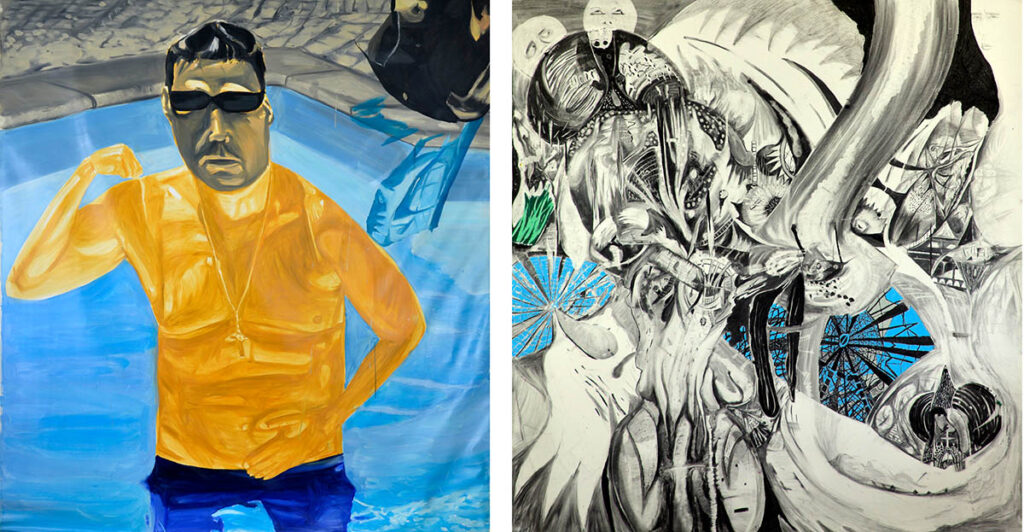
(Left) Izumi Ueda Yuu, Dreamboat (2024), painting, gouache and collage, 53 x 39 cm, (Right) Izumi Ueda Yuu, River, 2022, Mixed media painting, drawing, Sumi painting, water color, shibori, collage and oil stick, 154x118cm
(Left) Izumi Ueda Yuu, Dreamboat (2024), painting, gouache and collage, 53 x 39 cm, (Right) Izumi Ueda Yuu, River, 2022, Mixed media painting, drawing, Sumi painting, water color, shibori, collage and oil stick, 154 x 118 cm

The art of Izumi Ueda Yuu relates very much to Symbolism in the way it conjures up dreamy narratives through pure, poetic, potent iconography. Everything, every belief, emotion, realization is boiled down to its essence, waiting to re-emerge in the mind and thoughts of the viewer. Once the conversation begins between the art and the viewer, the mysterious spiritual aspect of the art comes forward. The artist’s imagined, created place of make believe is one built of memory, childhood dreams, things that sometimes happen in the periphery that later become central and Ueda Yuu’s art lives in that space where the mind transcends the matter.

(left) Luís Almeida, Pool Johnny (2025), oil on canvas, 200 x 175 cm, (right) Luís Almeida, Crazy Movement (2023), pastel and charcoal on paper, 150 x 140 cm

Luís Almeida’s art goes back and forth between fantastical, heroic imagined worlds to a brutal form of representation. His ability to reveal a mystical imagining overrun with narratives to the simple truth of the absurd or benign aspects of the everyday, all with an element of wild humor is the core of Almeida’s art. A brilliant draftsman and a provider of unadulterated color theory, this artist is still very much connected to that inner child that once ruled all his thoughts. The message here is: “There is no art without total freedom of thought and expression.” A mental state that hinges solely on his ability to leave it all out there for everyone to see.

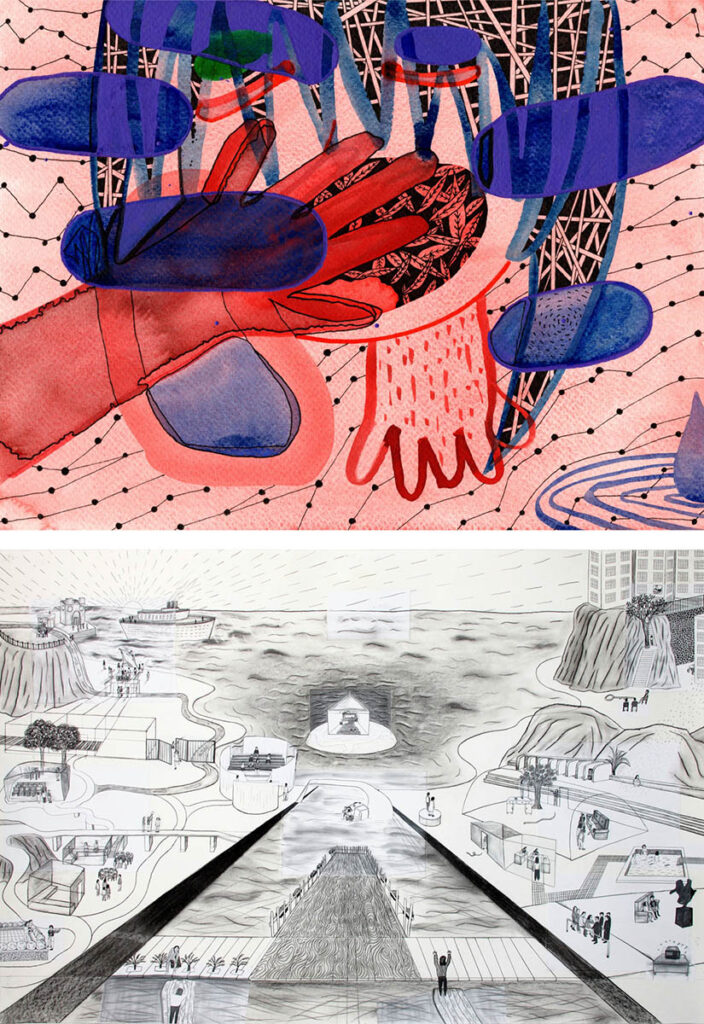
(left) Run Jiang, Sono (2022), ink marker and watercolor on paper, 32 x 24 cm, (right) Run Jiang, Mixed Dream 3 (2022), charcoal pencil and collage on paper, 73 x 110 cm

Run Jiang’s art is a perfect blend of being and pretending. Jiang’s more colorful works focus on the waking dream state, when one’s thoughts are completely unrelated to one’s physical place. In this instance, Jiang puts forth her own unique way of portraying the multi-planar reality theory whereby previously unseen worlds collide. In her black and white ink drawings which she notes as a Dream series, Jiang brings together lifelong experiences, both real and imagined, into a precious series of vignettes and vistas that can at one moment seem bucolic and the next imperiling.

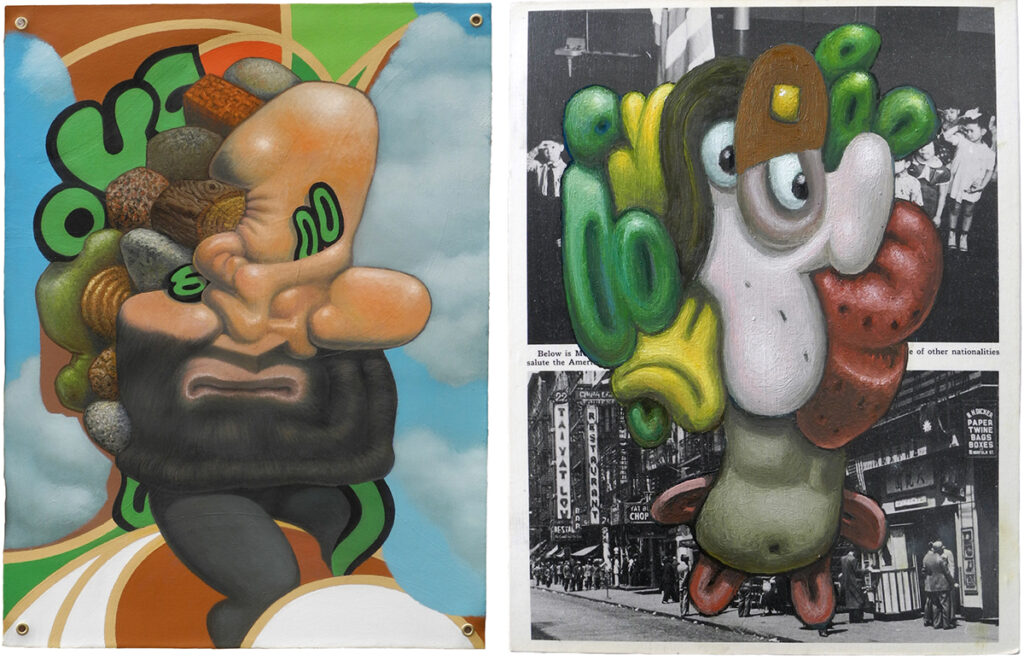
(left) D. Dominick Lombardi, CCWSI 189 (2025), acrylic, oil, canvas, 60.3 x 45 cm, (right) D. Dominick Lombardi, CCWSI 192 (2025), oil, acrylic medium, magazine page, museum board, 125.4 x 19 cm

In my paintings, I am repurposing the thousands of small drawings I made when most of the world was sheltered in place. For an artist, this state of being sheltered and alone is not so unusual. In fact we crave it. However, the danger that lurked just outside the studio door and windows in the time of the worst COVID days was very imposing. Studying, mining and resolving a few of the numerous, relatively automatic drawings I made back then, recreating them into oil on repurposed canvases or on 1960’s and 70’s printed materials gives me the chance to return back to a time when I pretended everything, one day soon, was going to be okay.

The exhibition “Fingindo ou Fingimento (Pretending),” which will include the work of Izumi Ueda Yuu, Luís Almeida, Run Jiang and myself (D. Dominick Lombardi), will be held at two compelling venues. The first will open on October 30, 2025 at Braço Perna 44 in Lisbon. Run by João Fernandes, Braço Perna 44 is one of the more charming spaces in town, where they always present some of the most visually stimulating, intimate and intriguing art in the capital city of Portugal. Luís Almeida and Run Jiang are represented there. The second venue opens on November 7, 2025 at Atelier Ghostbirds, which is run by Mika Aono. Located in Caldas da Rainha, Atelier Ghostbirds is a formidable and central institution in an area where there are many artists living and working. In addition to eye opening and fun exhibitions, the gallery also offers printmaking workshops and art related events.

A Visit to the Capital: Washington DC, The National Portrait Gallery of the Smithsonian Institution

by Roy Bernardi

A trip to the Capital is incomplete without visiting the National Portrait Gallery of the Smithsonian Institution located at 8th and G Streets NW in Washington, DC, even for those who may not have a keen interest in art and culture.

If you could only choose one museum to visit among the many in Washington DC, this would undoubtedly be the one to prioritize. The structure itself is not just a spectacular building but also a remarkable museum. The National Portrait Gallery stands as a significant institution in Washington. It boasts a collection of over 26,000 works featuring renowned historical and contemporary figures. President Abraham Lincoln marked his second inauguration in the Great Hall. 

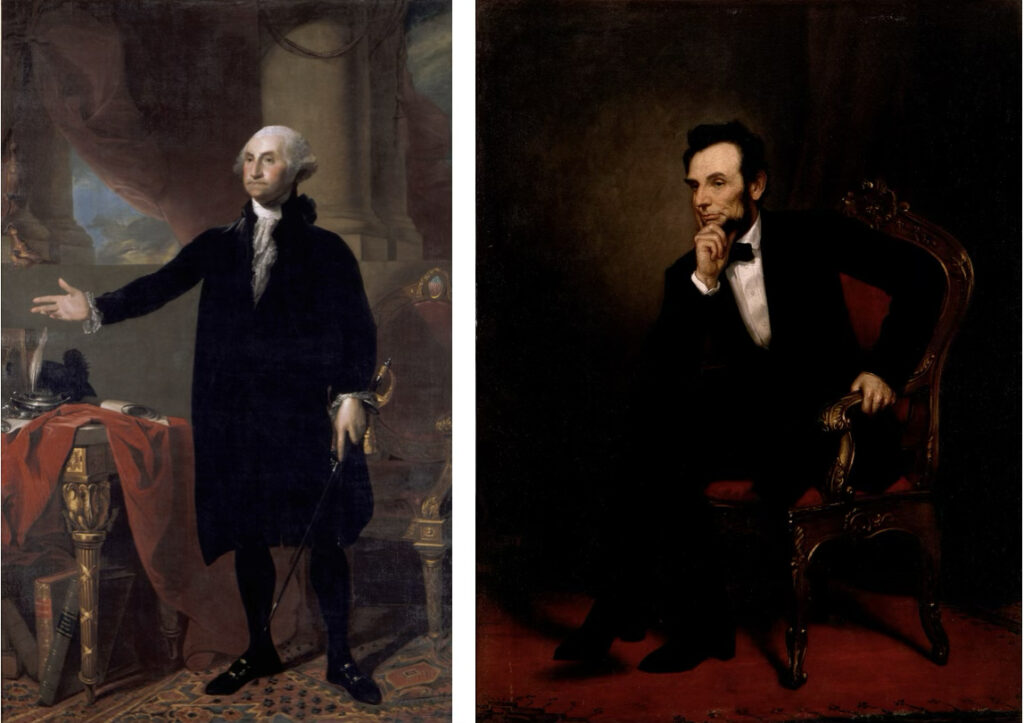
LEFT; Gilbert Stuart (1755-1828) George Washington (1732-1799) 1st President of the United States, 1789-1797, 1797 oil on canvas 95 × 59-13/16 inches.

RIGHT; George Peter Alexander Healy (1813-1894) Abraham Lincoln (1809-1865) 16th President of the United States, 1861-1865, 1869 oil on canvas 73-3/4 × 55-5/8 inches
LEFT; Gilbert Stuart (1755-1828) George Washington (1732-1799) 1st President of the United States, 1789-1797, 1797 oil on canvas 95 × 59-13/16 inches. RIGHT; George Peter Alexander Healy (1813-1894) Abraham Lincoln (1809-1865) 16th President of the United States, 1861-1865, 1869 oil on canvas 73-3/4 × 55-5/8 inches

Historically, the building was home to the nation’s founding documents and functioned as a site for government offices and public collections. In the 1950s, it narrowly escaped demolition and was revitalized as part of the Smithsonian following a comprehensive renovation from 1962 to 1968. A further renovation occurred in 2006, which introduced a distinctive feature that is highly favoured by guests: the Robert and Arlene Kogod Courtyard. This building is among the oldest public structures in Washington. In summary, the historic edifice is nothing short of magnificence. 

I had the opportunity to visit the museum with Elizabeth Diane White, a resident of Washington and the author of the book “55, Underemployed, and Faking Normal.” Upon our arrival at the museum, a fortunate group of eight, myself included, was granted the privilege of a private tour of the collection, which was conducted by a silver haired woman who’s insights revel the hidden stories and quiet wonder surrounding each piece of art. She was not only knowledgeable about the collection but also exhibited great enthusiasm in recounting stories about some of the featured portraits. It was genuinely delightful to listen to her.

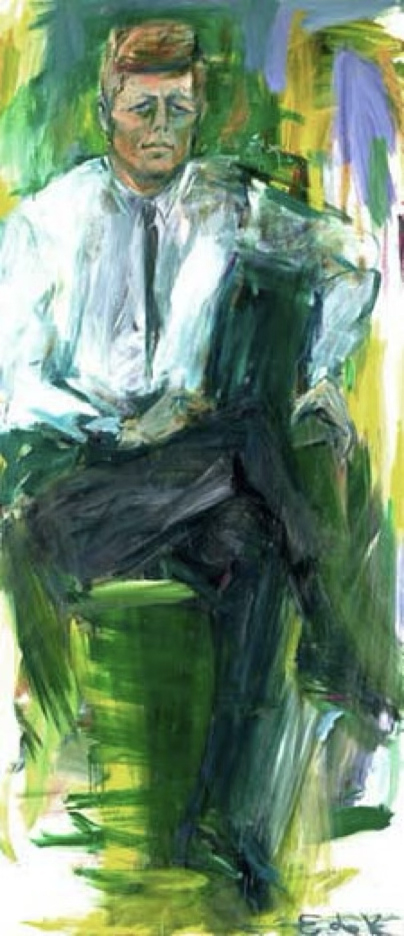
Elaine de Kooning (1918-1989) John F. Kennedy (1917-1963) 35th President of the United States, 1961-1963, 1963 oil on canvas 102 × 44 inches

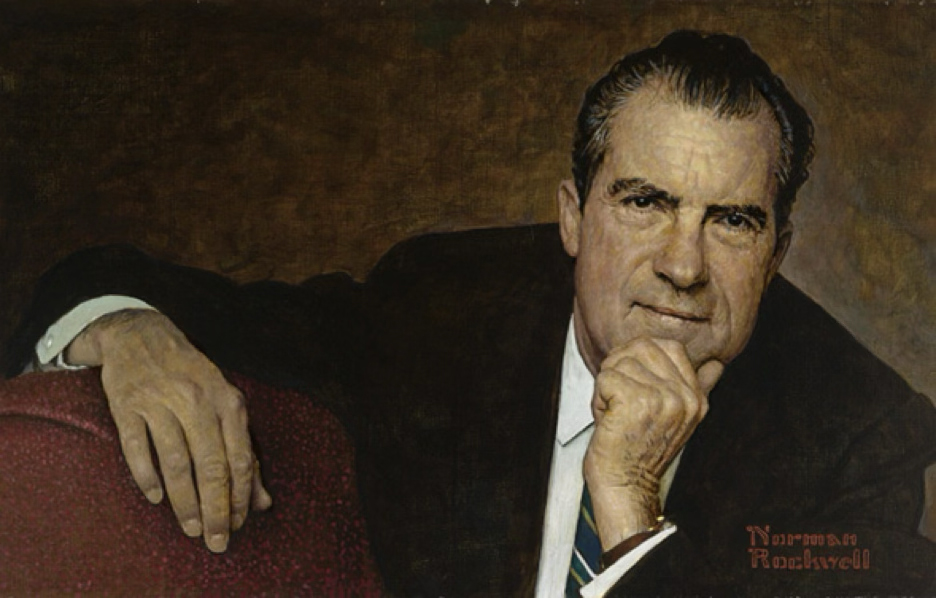
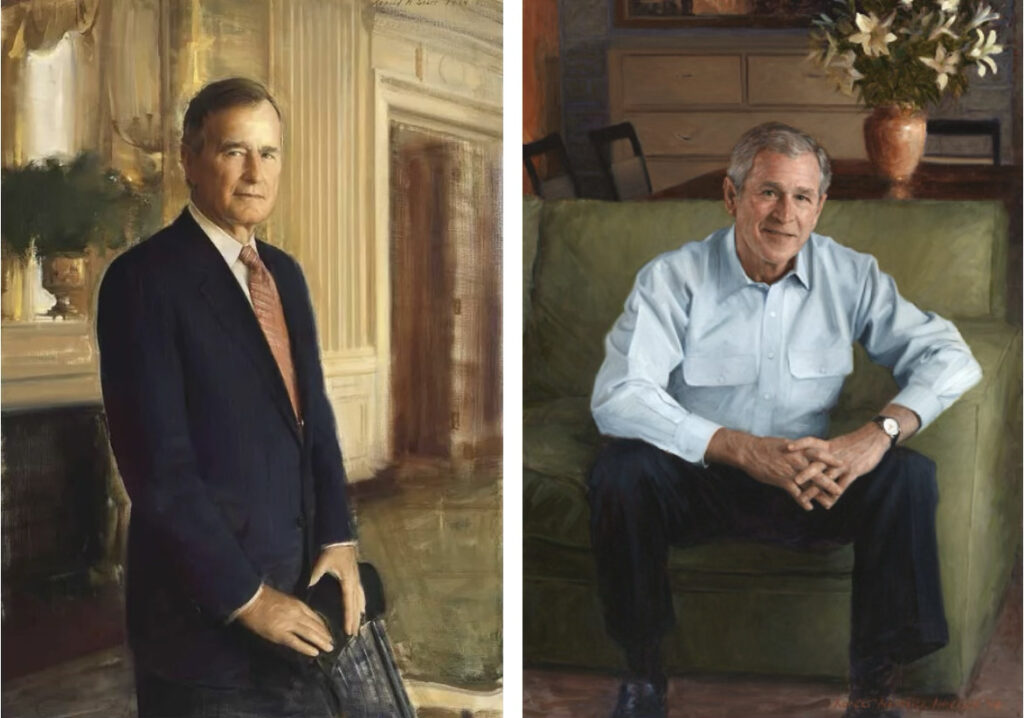
Undoubtedly, the Presidential portraits are the most popular artworks in the museum. They feature every president from George Washington to the current president, Donald J. Trump. Notably, both Trump and Joe Biden do not have a painting/portrait of themselves but do have their photographs displayed on the walls. When asked about the lack of paintings for Trump and Biden in the collection, our tour guide responded, “that’s a very good question, one that I asked myself,” and clarified that portraits are only created after a president has completed their term in office. Joe Biden’s portrait is currently being painted. It is fascinating that one of the most frequently asked about presidential portraits is that of John F. Kennedy, painted by Elaine de Kooning, the wife of the famous abstract expressionist artist Willem de Kooning (1904-1997). Kennedy’s portrait is significant for being the first to break away from the traditional, photorealistic style. Another noteworthy painting is that of Richard M. Nixon, created by the beloved American artist Norman Rockwell, which was actually painted in the year he was elected president. This may have been his tactic to gain the trust of the American public and a way to support his election campaign. Nixon later donated the portrait to the museum, ensuring it would serve as a lasting tribute to himself among the other presidents that came before him. President George H. W. Bush and President George W. Bush were the second father and son to both serve as presidents of the United States. 

Norman Rockwell (1894-1978) Richard M. Nixon (1913-1994) 37th President of the United States, 1969-1974, 1968 oil on canvas 18 × 26 inches
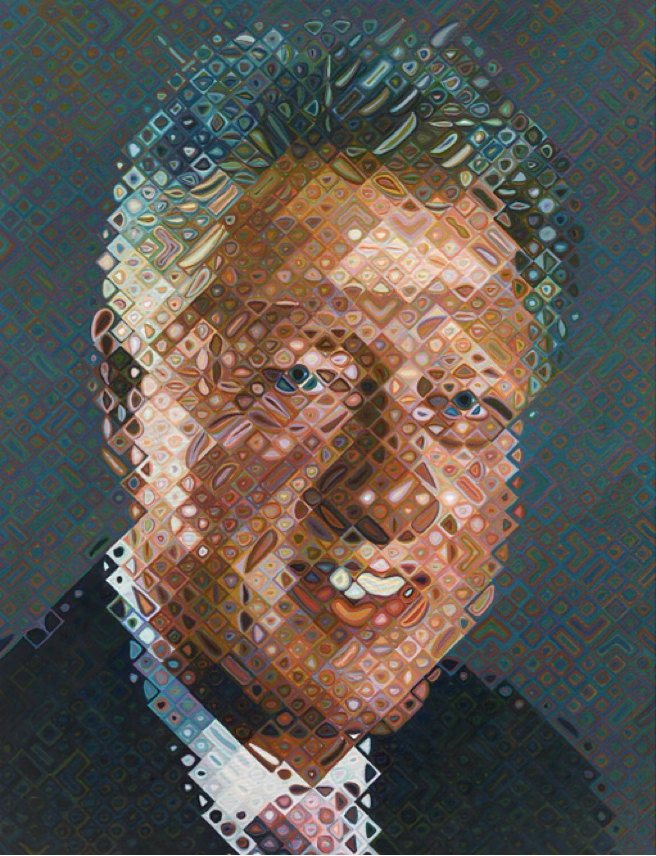
Chuck Close (1940-2021) William J. Clinton (1946-       ) 42nd President of the United States, 1993-2001, 2006 oil on canvas 108 × 84 inches
Chuck Close (1940-2021) William J. Clinton (1946-       ) 42nd President of the United States, 1993-2001, 2006 oil on canvas 108 × 84 inches
LEFT; Ronald N. Sherr (1952 - 2022) George H. W. Bush (1924-1918) 41st President of the United States, 1989-1993, 1994-1995 oil on canvas 58-1/2 x 43-1/2 x 5 inches.

RIGHT; Robert A. Anderson (1946-      ) George W. Bush (1946-        ) 43rd President of the United States, 2001-2009, 2008 oil on canvas 52-1/8 x 36-1/2 inches.
LEFT; Ronald N. Sherr (1952 – 2022) George H. W. Bush (1924-1918) 41st President of the United States, 1989-1993, 1994-1995 oil on canvas 58-1/2 x 43-1/2 x 5 inches. RIGHT; Robert A. Anderson (1946-      ) George W. Bush (1946-        ) 43rd President of the United States, 2001-2009, 2008 oil on canvas 52-1/8 x 36-1/2 inches

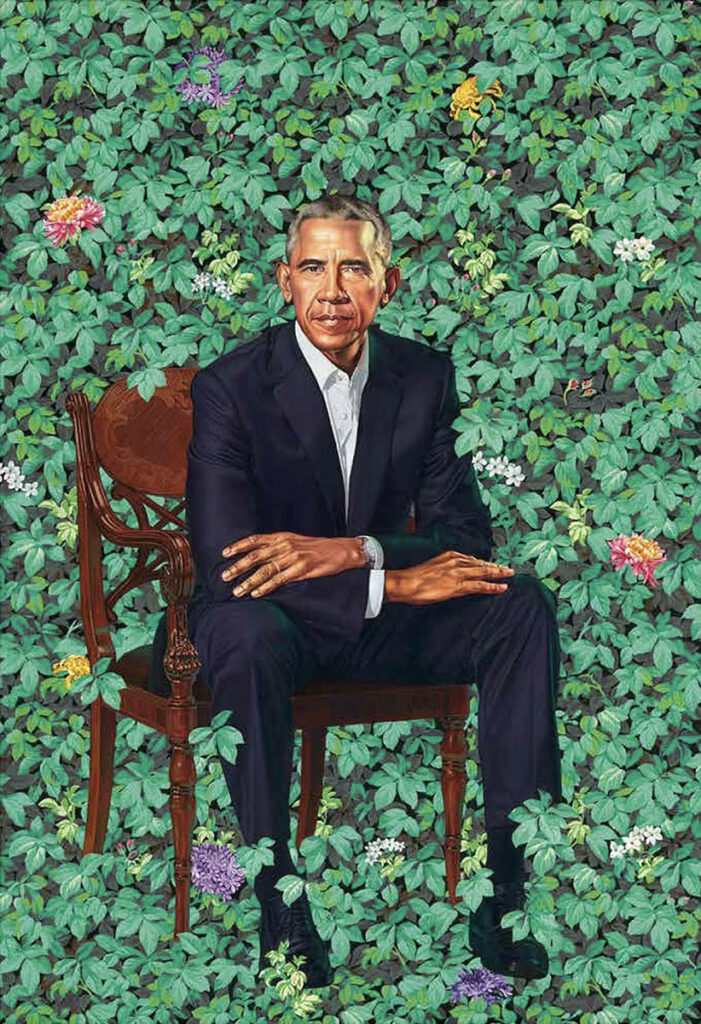
William (Bill) Clinton’s portrait, created by the innovative American conceptual portrait artist Chuck Close, immediately captures attention upon entering the room due to its striking contemporary style and impressive size. Its rich, powerful colours almost sparkle and radiate with a sense of exuberance. In contrast, Barack Obama’s portrait, painted by American portrait artist Kehinde Wiley, evokes multiple meanings that can be interpreted differently by each viewer. For instance, as one observes Obama’s hands, they appear larger than life, symbolizing the burden and weight of caring for the world. The foliage that surrounds him may represent the evolution and fragility of life itself as an ever-growing entity.

Kehinde Wiley (1977-      ) Barack Obama (1961-       ) 44th President of the United States, 2009-2017, 2018 oil on canvas 84 x 58 inches
Kehinde Wiley (1977-      ) Barack Obama (1961-       ) 44th President of the United States, 2009-2017, 2018 oil on canvas 84 x 58 inches

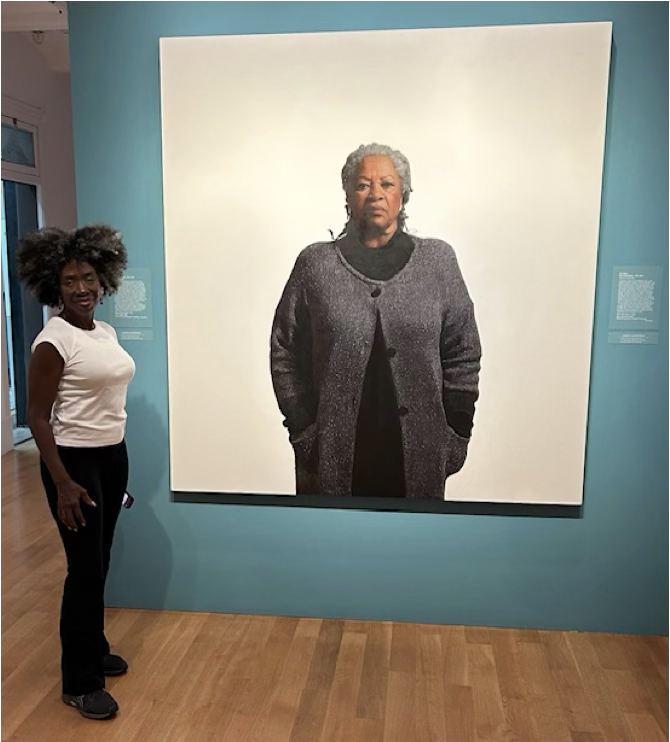
The museum exudes an eerie atmosphere, resonating with the spirits of the lives captured within the portraits, each possessing its own narrative of triumph or sorrow. As you meander through the corridors and rooms, filled exclusively with an array of portraits ranging from the renowned to the obscure, from inventors to innovators, from affluent individuals to the less fortunate, from musicians to sports icons, from centuries past to the current century, and spanning every facet of life, you can genuinely sense and unconsciously feel their presence. One of the most remarkable pieces currently on view is the portrait of Toni Morrison by American artist Robert McCurdy, an oil on canvas that boasts such meticulous detail it resembles a photograph. Upon viewing the portrait, my lovely guide to Washington Elizabeth Diane White promptly requested to have her photograph taken alongside the painting. As a woman of colour, she shares a connection with Toni Morrison, who was also a writer and a significant influence in her life. It is fascinating how various portraits can evoke different responses in different individuals.

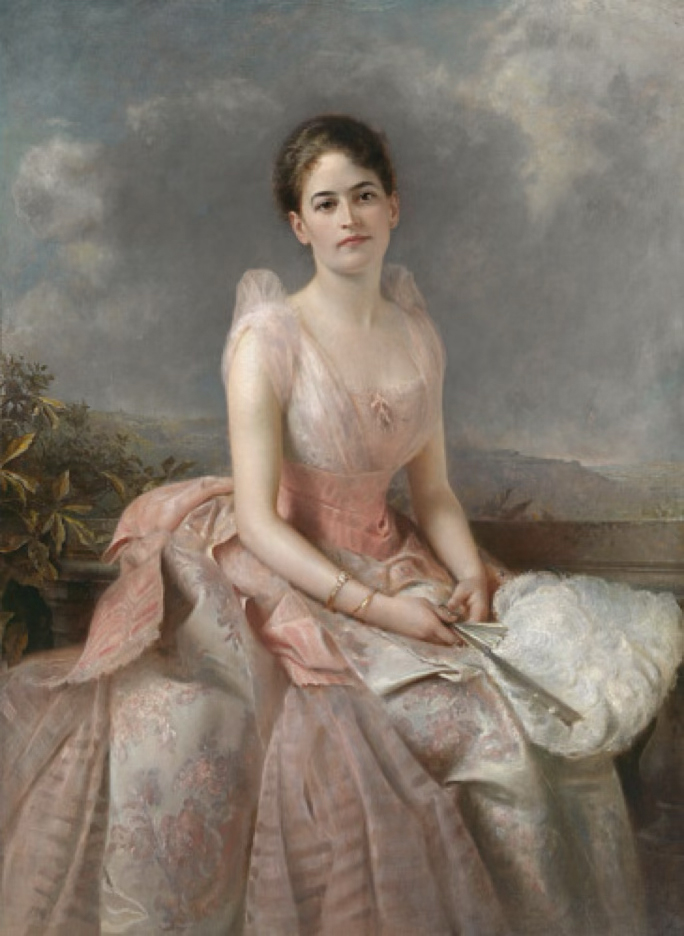
Edward Hughes (1832-1908) Juliette Gordon Low (1860-1927),1887 oil on canvas 52-1/2 x 37-7/8 inches
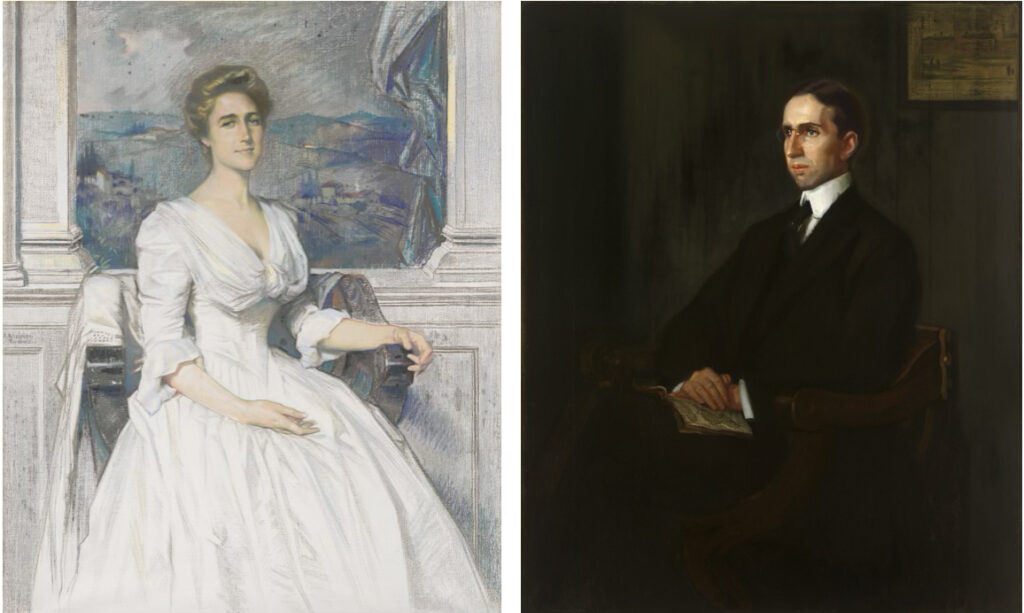
LEFT; Julius Rolshoven (1858-1930) Carol Mitchell Phelps Stokes (1875-1962), circa 1900 oil on canvas 54-1/8 × 44-3/4 inches.

RIGHT; Julius Rolshoven (1858-1930) Anson Phelps Stokes (1874-1958), circa 1900 oil on canvas 54-1/8 × 44-3/4 inches
LEFT; Julius Rolshoven (1858-1930) Carol Mitchell Phelps Stokes (1875-1962), circa 1900 oil on canvas 54-1/8 × 44-3/4 inches. RIGHT; Julius Rolshoven (1858-1930) Anson Phelps Stokes (1874-1958), circa 1900 oil on canvas 54-1/8 × 44-3/4 inches

A portrait that our museum guide particularly admired was that of Juliette Gordon Low, created by the British Victorian artist Edward Hughes, renowned for his royal portraits, including one of Queen Mary in 1895. The guide recounted the poignant story of Juliette’s life, which ultimately led her to establish the Girl Scouts of the United States of America. Born into a socially and financially prominent Southern family, Juliette married the affluent cotton merchant William Mackay Low, whom she regarded as her true love, on December 21, 1886. However, their marriage was marred by William’s frequent travels to Warwickshire, England, where he began an affair with actress Anna Bateman. In 1901, William’s request for divorce shocked society, leaving Juliette heartbroken as she returned to America. There, she encountered William Baden-Powell, the founder of the Boy Scouts, which inspired her to create the American Girl Guides. Tragically, before the divorce could be finalized, William passed away from a seizure while traveling with his mistress. On March 12, 1912, Juliette registered the first troop of American Girl Guides, consisting of 18 girls, which was later renamed the Girl Scouts in 1913.

Elizabeth Diane White (Author and Entrepreneur) at the National Portrait Gallery in Washington, DC posing in front of Robert McCurdy (1952-       ) Untitled (Toni Morrison 1931-2019), 2006, oil on canvas 73 x 68 inches.
Elizabeth Diane White (Author and Entrepreneur) at the National Portrait Gallery in Washington, DC posing in front of Robert McCurdy (1952-       ) Untitled (Toni Morrison 1931-2019), 2006, oil on canvas 73 x 68 inches

The staff at the National Portrait Gallery are exceptionally kind and eager to assist you in locating any portrait you might be seeking. I inquired about the portraits created by the Detroit-born artist Julius Rolshoven, of which the museum possesses two in its collection. Rolshoven painted a portrait of Anson Phelps Stokes, a prosperous American merchant, banker, and property developer, as well as a portrait of philanthropist Carol Mitchell Phelps Stokes. Unfortunately, these works are currently stored away and not on display, but they were generous enough to provide me with images of them. I was genuinely impressed by their willingness to help me find a portrait of interest. An interesting remark was also made; I was informed that 90% of the collection is in storage, although it is rotated frequently.

Titans of Sculpture: Henry Moore and Marino Marini

by Roy Bernardi

Henry Moore (30 July 1898 – 31 August 1986) was an English artist. He is best known for his semi-abstract monumental bronze sculptures which are located around the world as public works of art. His sculpture style was significantly influenced by his experience as a soldier in World War I. Moore also produced many drawings, including a series depicting the Second World War, along with other graphic works and studies on paper. 

Marino Marini (27 February 1901 – 6 August 1980) was an Italian sculpture and educator. He initially trained as a painter in Florence before transitioning to sculpture. While he continued to engage in drawing and painting, Marini focused mainly on sculpture starting around 1922. Known for his figurative sculptures, particularly the “horse and rider” theme, which he explored throughout his career. In 1929, he took over from Arturo Martini as a professor at the Scuola d’Arte di Villa Reale in Monza, close to Milan, Italy, a role he held until 1940.

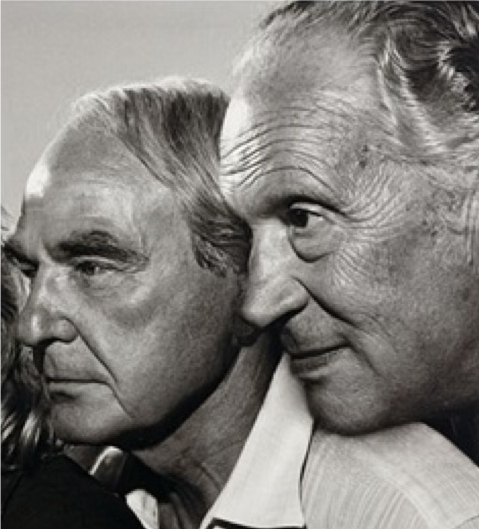
Henry Moore and Marino Marini, 1970, (detail) Gelatin silver print by Yousuf Karsh

Henry Moore and Marino Marini were introduced in 1951 by the New York art dealer Curt Valentin, leading to a significant friendship that endured throughout their careers. They often met along the Tuscan coast in Italy during the 1960s and 1970s, where Marini lived and Moore had a vacation residence. Both artists sought to revisit and modernize the European sculptural tradition, which Tuscany offered many exceptional examples. They shared numerous creative interests and held deep admiration for one another. Together, they cultivated a network of friendships and professional relationships with notable artists and intellectuals, including Jean Arp, Max Beckmann, Salvador Dali, Alexander Calder, Yves Tanguy, Lyonel Feininger, Alberto Giacometti, and Jacques Lipchitz.

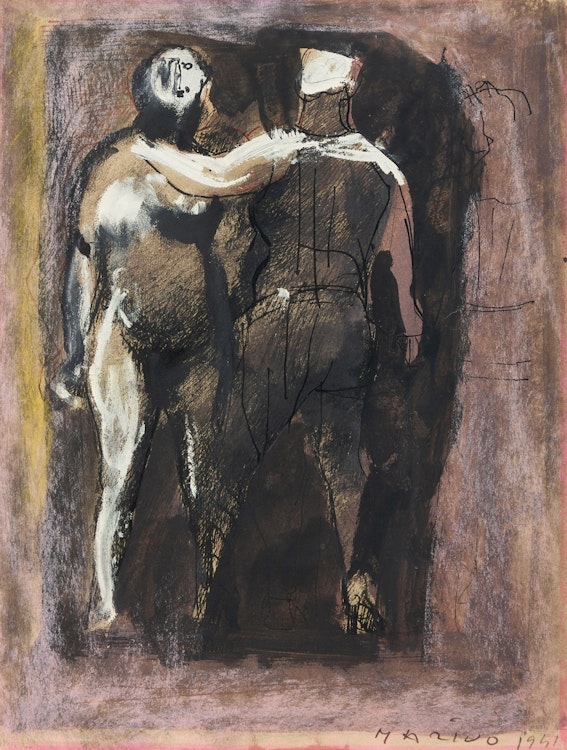
Marino Marini, Due Figure, 1941, oil, tempera, pen, india ink, brown ink and pastel on paper (13.5 x 10.25 inches)

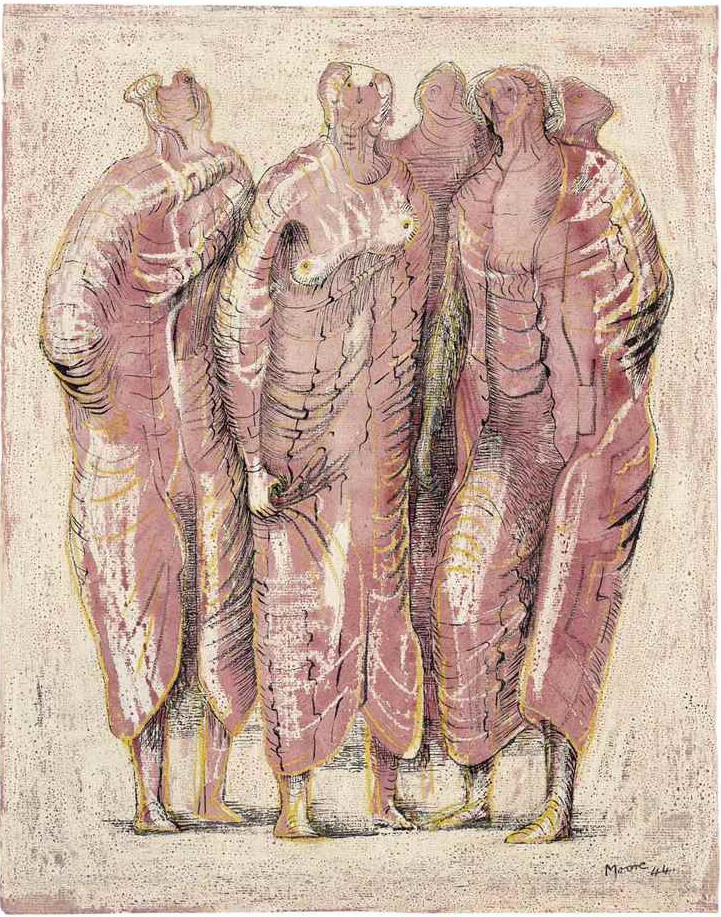
It is intriguing to note that both artists subconsciously exhibited remarkably similar artistic styles in their drawings, particularly in their early drawings from the 1940s. Their drawings predominantly focused on potential sculptural figures, as demonstrated in the drawings presented here. The figures in Marini’s Due Figure from 1941, created with oil, tempera, pen, India ink, brown ink, and pastel on paper, and Moore’s Draped Standing Figures in Red from 1944, executed in pencil, ink, wax crayon, and watercolour, reveal a striking resemblance when placed side by side. Both artists are utilizing mixed media materials on paper of comparable dimensions. It is clear that these illustrations depict figures arranged as non-objective prospective subjects in a sculptural context. The Vatican Museum contains a small drawing by Moore and features a collection specifically focused on Marini’s early works on paper.

Henry Moore, Draped Standing Figures in Red, 1944, pencil, ink, wax crayon and watercolour (15.75 x 12.25 inches)

Two talented artists who unknowingly shared a strikingly similar artistic journey in their early works. Both artists hailed from different backgrounds (Marini from Italy, Moore from England) but found their calling in the realm of art, showcasing unique perspectives and creative flair in their works on paper. From a young age, these artists displayed a natural inclination towards art, doodling on any surface they could find and immersing themselves in colours and shapes that ignited their imagination. Haunted by the war and the suffering of civilians he observed during the bombings, Moore’s artistic themes were significantly shaped by these experiences. Meanwhile, Marini’s artistic style underwent a transformation due to the war, moving away from the smoother, classical forms of his earlier works towards a more jagged, Expressionist style that reflected his anxieties and disillusionment with humanity in the aftermath of the war.

Combining the enigmatic allure of artistic expression with the intricacies of the subconscious mind, the intriguing parallels between two renowned artists’ early works have captivated art enthusiasts and scholars alike. It’s a fascinating intersection of creativity, influence, and individual style as these artists, perhaps unknowingly, manifested remarkably similar artistic techniques in their works during the formative stages of their careers. Through a journey of discovery and analysis, we can unravel the threads that connect these artists’ early artistic endeavours, shedding light on the subconscious forces at play in shaping their distinctive visual languages. 

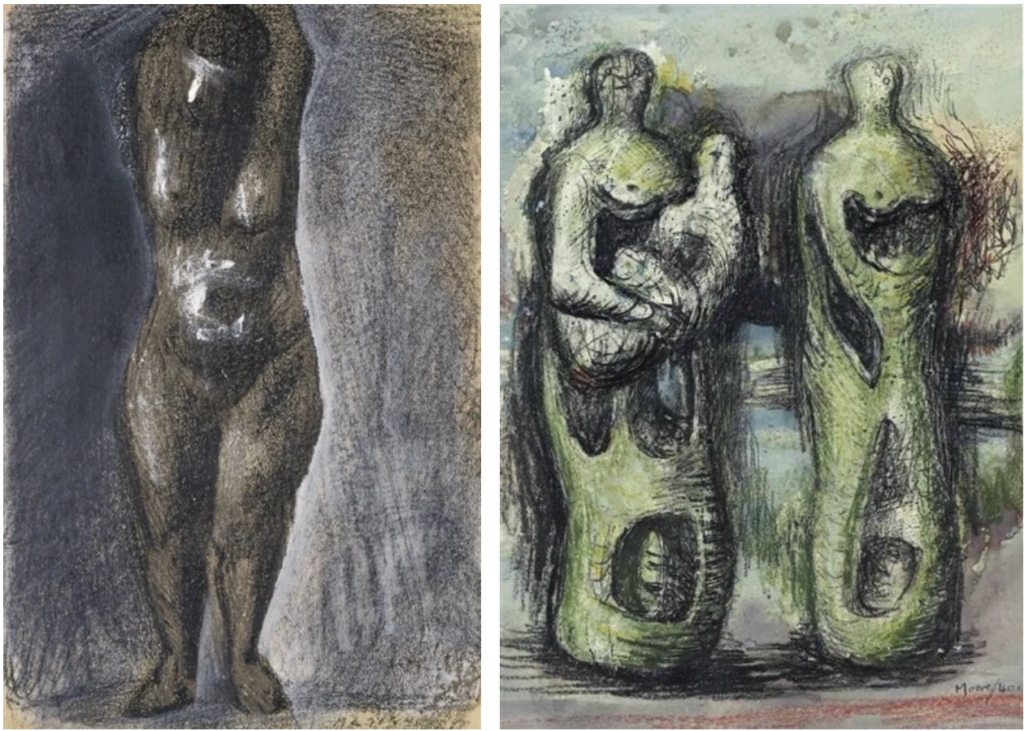
Marino Marini, Pomona, 1943, oil, pastel and black crayon on paper (15.12 x 11.12 inches) (left) - Henry Moore, Two Women and a child, 1940, pencil, wax crayon, coloured crayon, watercolour wash and ink (15.75 x 11.75 inches) (right)
Left: Marino Marini, Pomona, 1943, oil, pastel and black crayon on paper (15.12 x 11.12 inches). Right: Henry Moore, Two Women and a child, 1940, pencil, wax crayon, coloured crayon, watercolour wash and ink (15.75 x 11.75 inches)

Despite their unique perspectives, these artists often incorporated similar elements in their compositions, from the arrangement of subjects to the harmonious blend of colours that evoked a sense of unity and cohesion in their artworks. It is intriguing to explore how unconscious influences, such as personal experiences, emotions, and cultural backgrounds, may have shaped the artists’ early artistic expressions. Delving into the depths of the subconscious unveils a rich tapestry of inspiration within their works. They collectively transformed classical sculpture into a more figurative semi-abstract style that aligned with contemporary trends.

They shared a profound admiration for Michelangelo’s sculptures, particularly David (1501-1504) and Pietà (1498-1499), the latter illustrating Mary holding the lifeless body of Jesus after the Crucifixion. Both masterpieces were crafted from marble extracted from the nearby Carrara quarries. Notably, the Pietà is distinguished as the only artwork that Michelangelo ever signed. On 21 May 1972, this sculpture, located in St. Peter’s Basilica in Vatican City, suffered damage when a mentally unstable geologist, originally from Hungary and residing in Australia, entered the chapel and assaulted the statue with a geologist’s hammer, proclaiming, ‘I am Jesus Christ; I have risen from the dead!’.

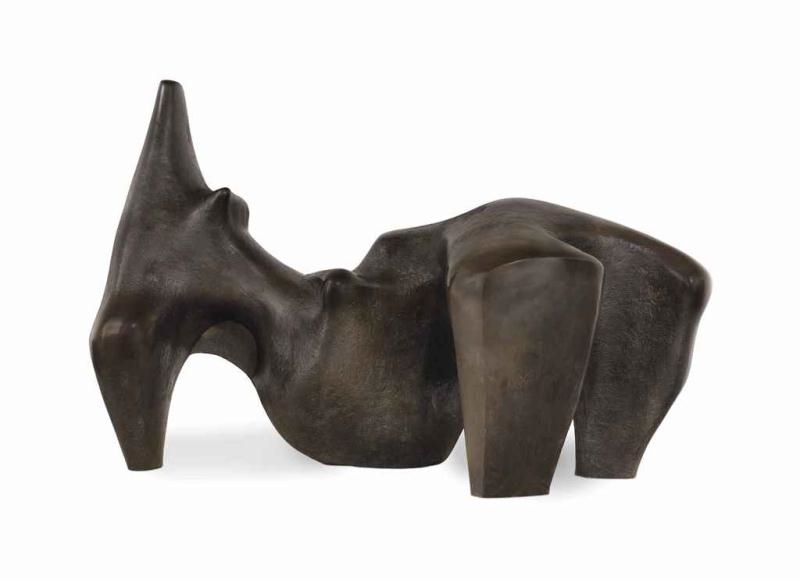
Henry Moore, Reclining Figure, 1969-1970, Bronze with brown patina

On the 15 December, 2005, a bronze statue by Moore, entitled Reclining Figure (1969-1970), depicting an abstract female figure, lying on her back with her legs raised and feet grounded, supported on one arm and resting on her hip. Valued at £3 million, was stolen from the courtyard of the Henry Moore Foundation located in Perry Green, Hertfordshire, England. The sculpture which weighed 2.1 tons and measured 3.6 metres in length was lifted using a crane and transported away on a flatbed truck. It is believed that the statue was melted down and sold for £5,000 as scrap metal. Six casts of the reclining figure were created in total.

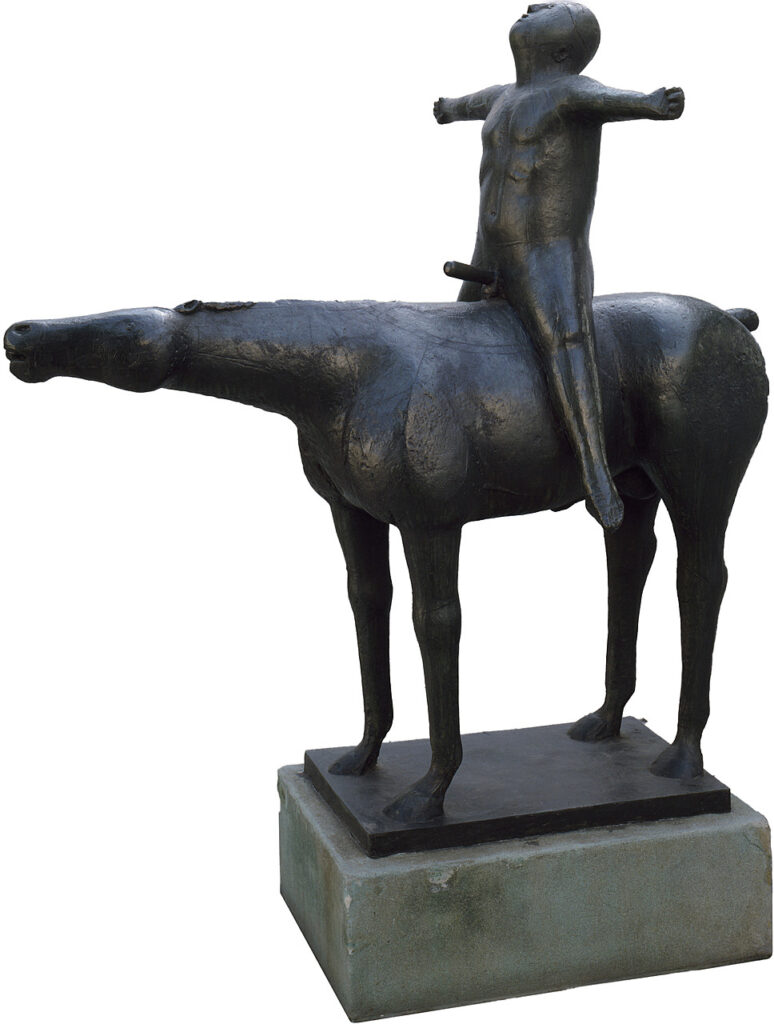
Marino Marini, The Angel of the City, 1948, Bronze with brown patina

Marini’s sculpture titled The Angel of the City (1948) a seminal work by the Italian artist depicts a nude man sitting with outstretched arms on a horse. There are castings on display at the Peggy Guggenheim Collection in Venice, as well as the J. Paul Getty Museum in Los Angeles. This piece was one of Fallingwater, Pennsylvania, USA’s most prominent pieces of art lost during a flood at Bear Run Nature Reserve in August 1956. The sculpture was part of the Kaufmann family collection and was lost for years until found in fragments in August 2009.

Both artists achieved global recognition during their careers, showcasing their art work at prominent museum exhibitions and receiving numerous accolades worldwide for their work. Both are in collections with works in hundreds of galleries, museums and public spaces throughout the world.

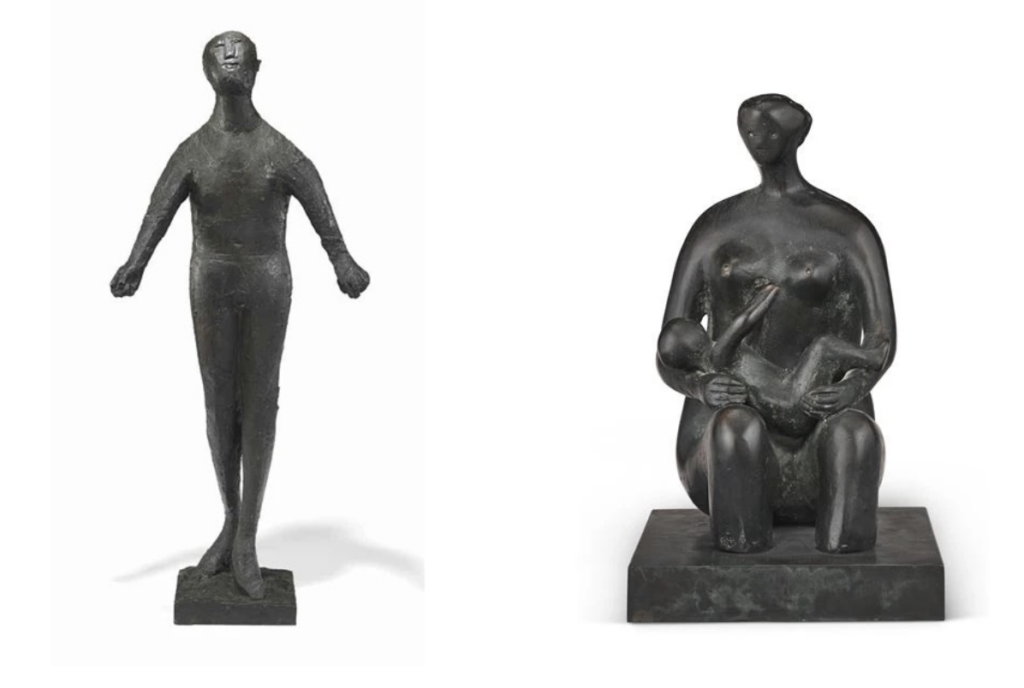
Marino Marini, Ballerino, 1954, Bronze with dark brown patina (left) Henry Moore, Mother and child, 1980, Bronze with dark brown patina (right) 

The Art Gallery of Ontario (AGO) located in Toronto, Ontario, Canada, is home to the world’s most extensive public collection of Henry Moore’s art, encompassing sculptures, maquettes, and works on paper, largely donated by the artist himself during the years 1971 to 1974. The Henry Moore Sculpture Centre was inaugurated at the AGO in 1974 to showcase Moore’s original donation and has since become a landmark in Toronto.

The Marino Marini Museum, located in Florence, Italy, is dedicated to the artist’s legacy and creations. Occupying the former San Pancrazio Church, the museum displays a rich collection of Marini’s sculptures, paintings, and drawings, offering valuable insights into his artistic progression and journey.

Lorien Suarez-Kanerva: New Spiritual Abstraction

by Steve Rockwell

Lorien Suarez-Kanerva’s New Spiritual Abstraction carries a vital charge that fulfills Bruce Nauman’s claim in the text of his iconic 1967 neon wall sign, The True Artist Helps the World by Revealing Mystic Truths. There is an import to Suarez-Kanerva’s paintings that impels the viewer toward the sublime, the evident dynamism of the artist’s execution rendering its draught irresistible. 

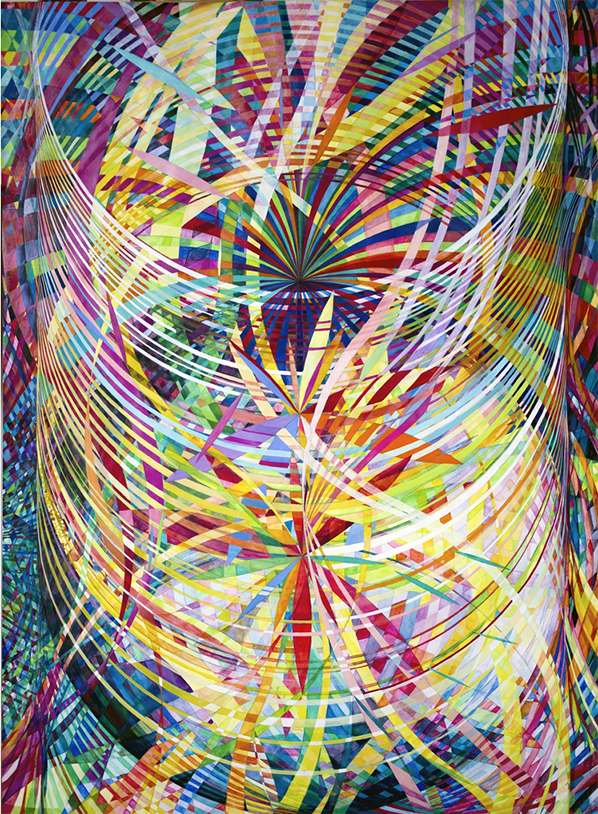
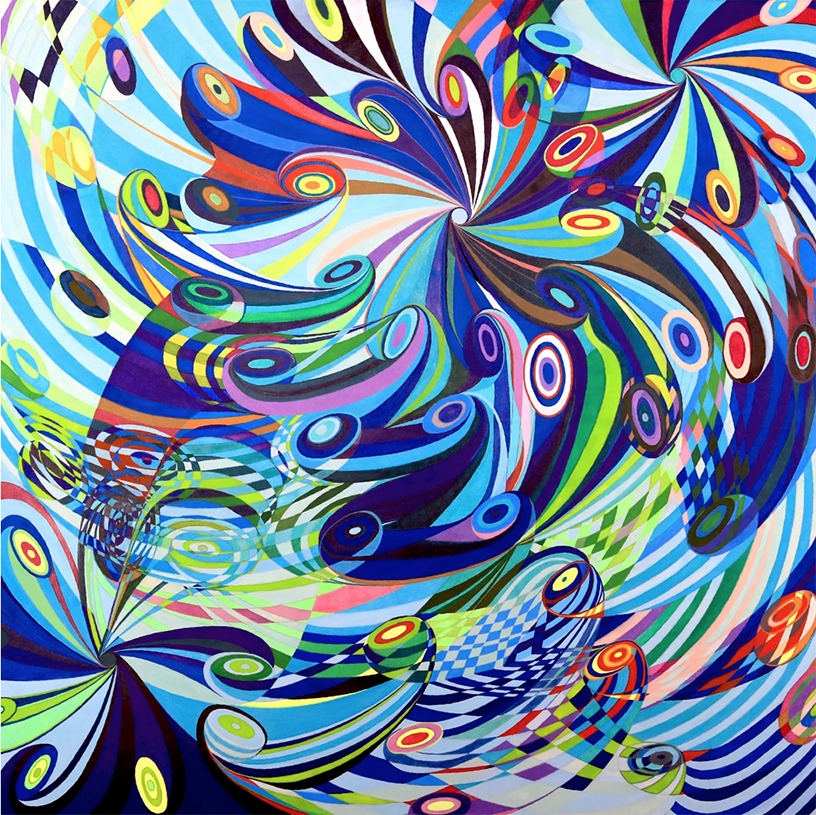
Lorien Suarez-Kanerva, Wheel within a Wheel 50, 2008, watercolor and gouache, 62  x 45 inches

The visual gestalt of Elan Flow 6, and particularly Wheel within a Wheel 50, form whirlpools of meticulously painted slivers that deliver A Descent into the Maelström as described by Edgar Allen Poe in his 1841 short story. While Suarez-Kanerva depicts a wheel within a wheel, Poe’s is a story within a story, both revelatory encounters with nature, altogether beautiful and awesome as creations. 

The Old Testament prophet Ezekiel experienced his Wheel within a Wheel as a rupture of the visible heavens, revealing the fiery fabric beneath its skin. He described the appearance and structure of the wheels as sparkling like topaz, all four alike, “Each appeared to be made like a wheel intersecting a wheel. As they moved, they would go in any one of the four directions the creatures faced; the wheels did not change direction as the creatures went.” Not surprisingly, interpreters of our age have imagined alien space craft.

Attempts over the centuries to depict what Ezekiel saw tended to the literal. Modernism, however, has bestowed Suarez-Kanerva the mantle of abstraction, a providential gift to tell her own visual story through her art. The employment of her own brand of the fractal contrasts with the complex mathematical class of geometric shapes. While computers by means of Mandelbrot Sets may generate these forms from virtually anything in our environment from coastlines to mountains, and clouds to hurricanes, each Suarez-Kanerva painting is a unique synthesis of elements directly observed in nature. A fluency in the language of abstraction has made the transcription of her insights in paint authoritative. 

Lorien Suarez-Kanerva, Breath of Life 3, 2022, acrylic, 40 x 30 inches

Suarez-Kanerva’s art conforms to a law of geometry that generates a sense of the living from the inorganic. The connection to nature rooted in childhood memories of nature-hikes and world travels had clearly seeded the artist’s vision for creative possibilities. Having grown up in diverse environments such as Oregon and Venezuela further broadened her scope, enabling the inference of broader principles at play in the biosphere. This identification with the “living matrix” has found its medium of expression in the material tools of her craft. The inherent qualities of ink, pencil, pastels, water-colour, gouache and acrylic combined with the properties of paper canvas, and wood, are chemically reactive within the viewer’s sensorium, producing a virtual light show in the rods and cones in the retinal wall of the eye. When channeled through a variety of geometric forms and templates, energy is released. Within the “wheel within a wheel” theme alone, the painterly possibilities presented are virtually infinite. 

In Donald Kuspit’s Whitehot Magazine article, The New Abstraction: Lorien Suarez-Kanerva, he observed that the artist has tapped into the sublime by means of a play of opposites, effectively harnessing the tensions between “biosphere and noosphere,” something that Kant had found terrifying and beyond comprehension. Through an active “spiralling” of the universe as a whole, a kind of unity or Omega Point is inferred, arriving at the transcendence that Emerson in his philosophy advanced. Suarez-Kanerva clearly substantiates Nauman’s contention that the work of true artist plays an essential role in the revelation of “mystic truths.” 

Lorien Suarez-Kanerva, Beholder, 2023, watercolor and gouache, 30 x 41 inches

The 2023 water-colour and gouache, Beholder is an integration and refraction of tree, flower and insect as if by laser beam, the 2022 Breath of Life acrylic a dissolution into gentle waft, a dematerialization to airy essence. Each atomized fragment, like DNA, carries its blueprint as seeded potential, sealing the image with the hope for perpetuity. With the Elan Flow series, the germinative release of energy verges on the explosive. Here again is an echo of what Poe described as sublimely beautiful, yet awesome in power as latency.

Lorien Suarez-Kanerva, Elan Flow 6, 2019, acrylic, 60 x 60 inches

Suarez-Kanerva is a metamodernist by virtue of the vitalist optimism that infuses her art. The artist’s ability to integrate multiple techniques and theories allow for a plumb of the “the structure of feeling.” Works such as Wildflower Fields, (California Native Plants #2) 2023 and Wheel within a Wheel 112, 2017 retain evidence of the hand, the living gesture as affirmation. Within the diversity of Suarez-Kanerva’s “Visionary Geometries” the point of unifying singularity is the circle, a restless orb in perpetual motion, seeding a harvest from one series of works into another. While the recent Wooded Terrain series of raw wood panel works are devoid of this element, the aura of restless vitality remains.

Lorien Suarez-Kanerva, Wooded Terrain 5, 2021, charcoal, pastel and ink on raw wood panel, 20  x 24 inches

“I build multiple levels and layers of elaborate designs that emerge from an underlying matrix to create a strong sensation of growth, movement and depth.” The artist’s operating principle of constructing her painting in levels and layers is an understatement. More aptly, Suarez-Kanerva engages in a joyous plunder of the corpus of modernism, its roots and the art of the past. Having surveyed the dazzling complexity of her output, this romp through art history has yielded amply productive treasure. The artist possesses the gift of precisely gleaning the element required from an artist. With Joseph Stella it might have been his dense lattice of abstracted forms. A gloss of the Bauhaus zeitgeist combined with the Abstraction-Creation artists of the 1930s has streamed her influences into an apex in harmony with the Orphism of Robert and Sonia Delaunay. As Robert Delaynay elegantly summarized, “Painting by nature is a luminous language.”

Lorien Suarez-Kanerva’s New Spiritual Abstraction Exhibitions:

June 14 – August 30, 2024 at the Mary G. Hardin Center for Cultural Arts in Gadsden, AL

June 13 – October 18, 2025 at the Museum of Arts and Sciences in Macon, GA

January 2026 – April 2026 at the Phillips Museum of Art, Franklin and Marshall College, Lancaster, PA